San Francisco ballot measures could reshape big business taxes, revenue
A split tax fight could cut bills for smaller firms or lift them for big employers, with up to $300 million a year on the line for San Francisco services.

San Francisco voters are being asked to choose between two very different tax paths for the city’s biggest businesses, and the choice could shape everything from city services to hiring and office demand.
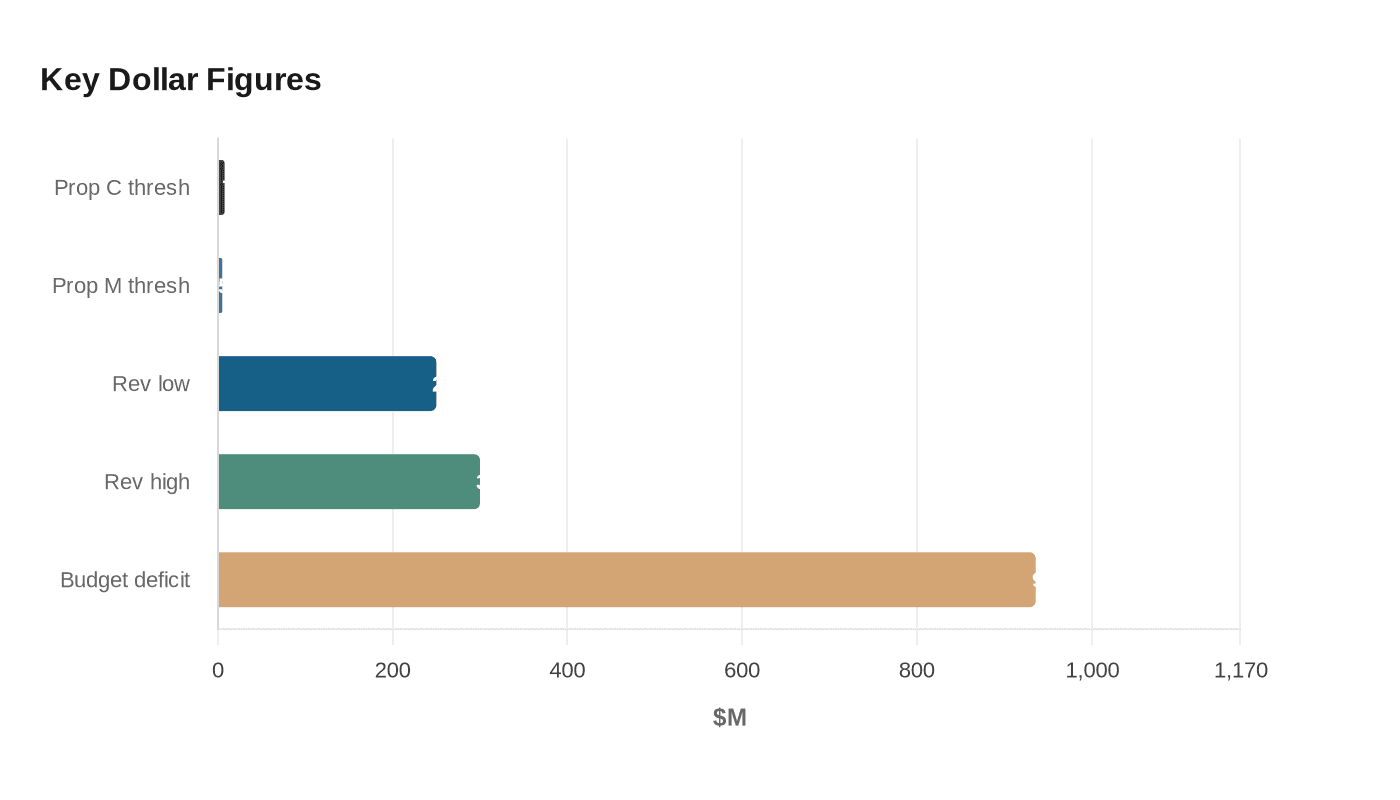
On the June 2, 2026 ballot, Proposition C would decrease some business taxes and raise the small-business exemption threshold to $7.5 million in gross receipts. Proposition D would do the opposite for large firms, raising the city’s Overpaid Executive Gross Receipts Tax and changing how it is calculated.

The city’s Office of Economic Analysis says Prop. D would hit certain large businesses whose highest-paid managerial employee is paid more than 100 times the median compensation of their workers. The controller’s office estimates the measure would bring in an additional $250 million to $300 million each year for the General Fund, roughly twice what the Overpaid Executive Tax produced in 2023, its first year of operation. Because the tax is a general tax, the money could be used for any government purpose.
Prop. C is framed as relief for smaller operators. Supporters say it would make the tax system more predictable and help San Francisco’s economic recovery by lowering some business taxes and expanding the exemption for smaller companies. For neighborhood merchants and service firms, that could mean less pressure on margins in a city where rent, labor and insurance costs remain high.
Prop. D, by contrast, would push more of the burden onto firms with top executives earning far more than their employees. Backers say that is the cleanest way to raise money for public services without cutting into neighborhood businesses, especially as San Francisco faces a $936 million budget deficit over two years. Labor unions argue the city needs higher corporate taxes to avoid cuts to public services. Business leaders warn the measures could accelerate companies leaving San Francisco, a shift that would ripple through hiring decisions and office occupancy as well as the city’s tax base.
The contest is also another rewrite of San Francisco’s business tax code in short order. Voters approved the original Overpaid Executive Tax in 2022. Then Proposition M, approved on Nov. 5, 2024, cut OET rates by 80 percent, raised gross-receipts taxes to offset the lost revenue, increased the small-business exemption to $5 million, and changed how several business taxes are calculated. City officials described that overhaul as an effort to adapt to post-pandemic work patterns and strengthen economic resilience.
Now Prop. C and Prop. D are back-to-back tests of what San Francisco wants from its largest employers: lighter taxes and more room to grow, or a bigger city checkbook with the risk that some companies decide the bill is too high.
Know something we missed? Have a correction or additional information?
Submit a Tip