San Francisco confirms first clade I mpox case, travel-linked
San Francisco’s first clade I mpox case was in an unvaccinated adult who is improving, and health officials say the risk remains low outside higher-risk groups.
San Francisco health officials are urging people in higher-risk communities to stay current on mpox vaccination after confirming the city’s first clade I case in an unvaccinated adult who was hospitalized and is now improving. The patient reported close contact with someone who had traveled internationally, pointing to a travel-linked exposure rather than broad community spread.
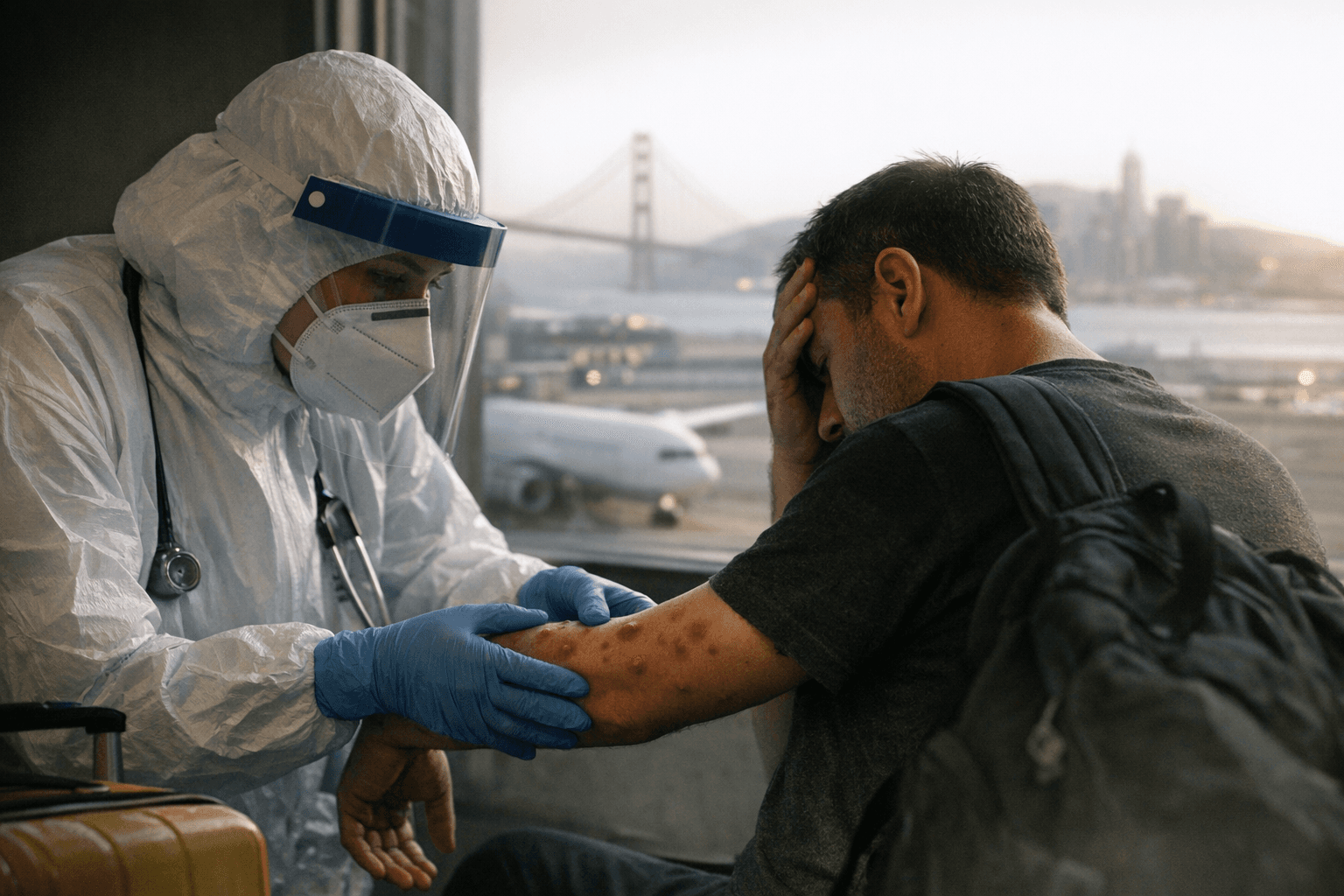
The San Francisco Department of Public Health said the risk for people outside higher-risk groups remains low, but it also reminded residents that mpox can spread through close skin-to-skin contact, including sex. Symptoms can include fever, chills, swollen lymph nodes, exhaustion, muscle aches, headache, respiratory symptoms and, most recognizably, a rash.
Officials said the best protection is the JYNNEOS vaccine, which they said protects against both clade I and clade II mpox. Booster doses are not recommended. The California Department of Public Health recommends vaccination for people at higher risk, including gay and bisexual men, transgender, nonbinary and gender-diverse people, people with HIV or who take or are eligible for PrEP or doxy PEP, and people who have been exposed to mpox in the last 14 days.
State officials also recommend vaccination for people planning travel to sub-Saharan Africa, the Middle East or any country with a clade I outbreak if they expect sexual or intimate contact while away. That guidance underscores the city’s immediate message: the issue is not panic, but preparation, especially for people in sexual networks where exposure risk is higher.
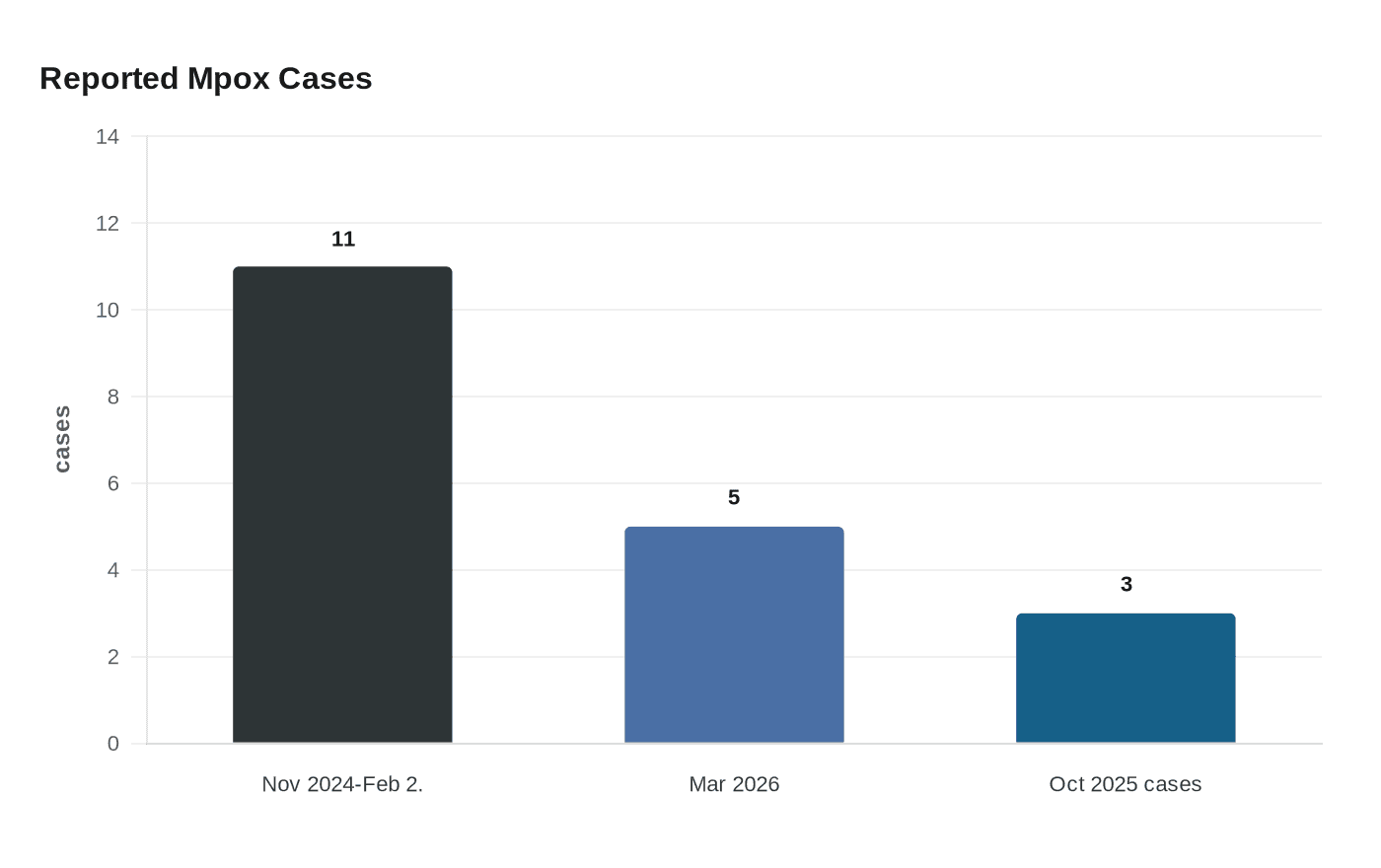
The local case fits into a wider national pattern that has stayed limited but persistent. The Centers for Disease Control and Prevention said the risk posed by the clade I outbreak to most people in the United States remains low, while reporting 11 U.S. clade I cases from November 2024 through February 2026 and five more in March 2026, bringing the national total to 16 by the time San Francisco’s case was confirmed. The CDC also said three October 2025 cases with no recent travel were genetically linked to an August 2025 travel-associated case, showing that domestic transmission has occurred even as most cases have remained travel-linked.
San Francisco’s public health data page says its mpox counts are based on confirmed and probable cases among city residents and are updated with symptom-onset dates when available. That kind of tracking matters now: it gives residents a clearer view of whether the case remains isolated, and it gives the city a fast check on whether a new virus import is staying contained.
This article was produced by Prism’s automated news system from verified source data, official records, and press releases, then run through automated quality and moderation checks before publishing. The system is built and supervised by the people who set the standards it runs under. Read our full AI policy.
Did this article answer your question?