San Francisco overdose death rate second only to Baltimore, federal data shows
San Francisco’s overdose death rate is now second only to Baltimore’s, with more than 580 deaths in the latest federal window and 624 deaths in 2025. The city’s decline is real, but so is the scale of the crisis.
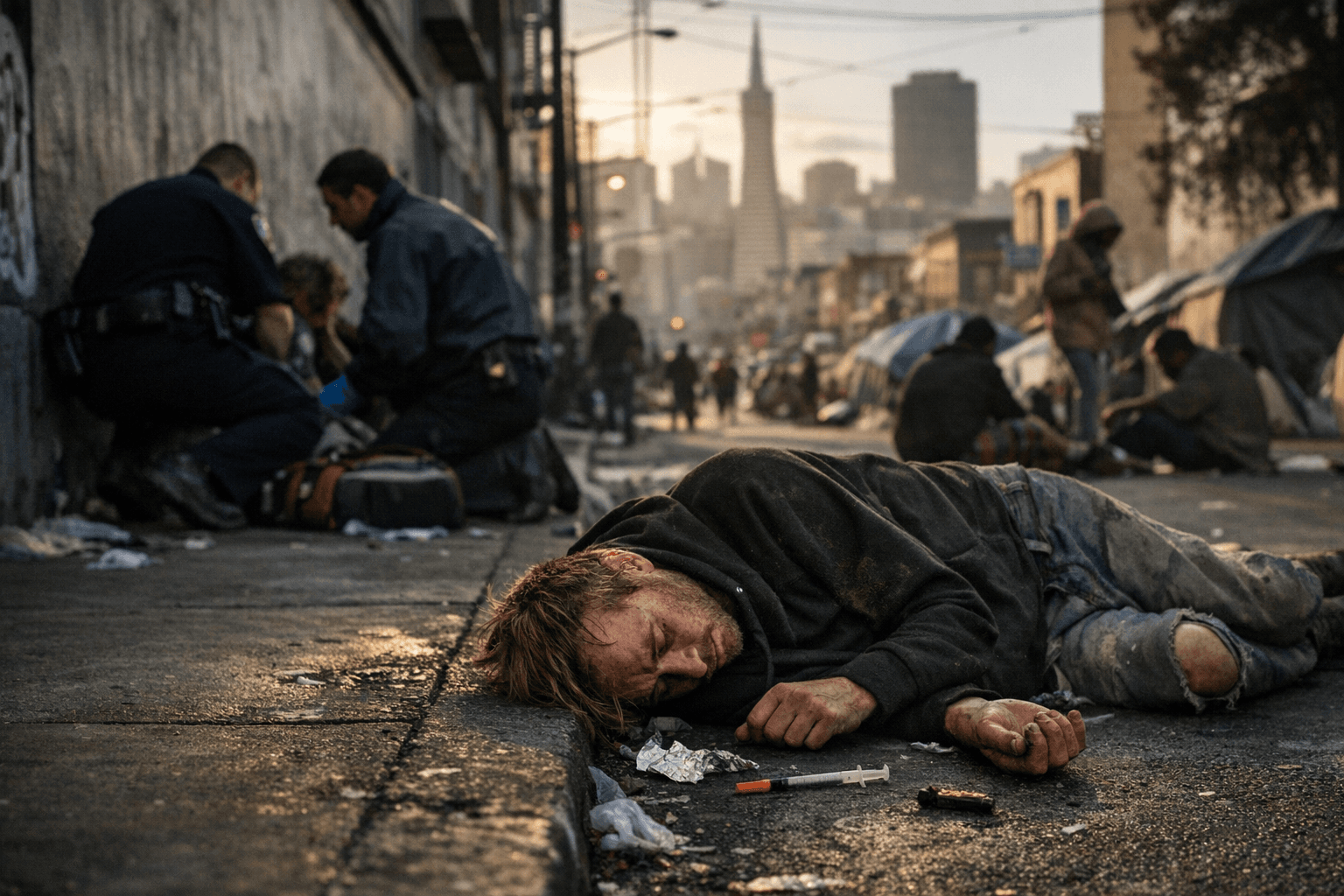
San Francisco now has the second-highest overdose death rate among large U.S. cities and counties, a ranking that lays bare how badly the city’s addiction response is still failing some of its most vulnerable residents. Federal data covering September 2024 through August 2025 shows more than 580 overdose deaths in San Francisco, a rate of 70.5 deaths per 100,000 people. Only Baltimore was worse, at 108.6 per 100,000.
The raw numbers have edged down, but only slightly. San Francisco recorded 624 overdose deaths in 2025, down from 635 in 2024, and the city’s own data shows the wider pattern of devastation: 698 deaths in 2020, 623 in 2021, 635 in 2022, 805 in 2023, and 606 confirmed unintentional fatal drug overdoses in 2024. The San Francisco Office of the Chief Medical Examiner reported 635 unintentional drug overdose deaths in 2024, underscoring how many families have been touched even in a year of modest decline.
City officials have pointed to several reasons for the drop. San Francisco’s overdose prevention plan said fatal overdoses fell by more than 20% in the first 10 months of 2024 compared with the same period in 2023, a reduction it said amounted to 159 fewer lives lost. The plan credited wider naloxone access, greater public awareness of fentanyl, and expanded treatment and street outreach. SFDPH said it added 400 residential treatment and care beds, more than tripled the number of street care workers, expanded contingency management and telehealth for medication treatment, and increased culturally congruent outreach.
But the crisis is still hitting unevenly. The city’s overdose prevention materials say Black/African Americans have an opioid overdose death rate more than five times higher than the citywide rate. KQED reported in 2025 that Black men born between 1951 and 1970 accounted for 12% of overdose deaths from January 2020 through October 2024, even though they made up less than 1% of San Francisco’s population.
The drug supply has also changed in ways that have made overdoses harder to prevent. UCSF reported in 2024 that San Francisco reached an all-time high of 806 overdose deaths in 2023, including 653 from fentanyl, and noted that more people were smoking fentanyl rather than injecting it. Free naloxone kits and fentanyl test strips are available at the Behavioral Health Services Pharmacy at 1380 Howard St., but the city’s ranking shows that access alone has not been enough to stop the deaths. A Brown University addiction researcher has warned that federal cuts to health care could make treatment harder to provide in San Francisco and elsewhere, just as the Trump administration has moved to cut billions in addiction, mental-health, and public health funding. For San Francisco to do more than inch off the top of a grim national list, leaders will have to keep treatment and street outreach expanding while confronting the racial inequities that have made the crisis so deadly.
This article was produced by Prism’s automated news system from verified source data, official records, and press releases, then run through automated quality and moderation checks before publishing. The system is built and supervised by the people who set the standards it runs under. Read our full AI policy.
Did this article answer your question?