San Francisco launches 24/7 Journey Home, consolidating relocations with train, plane options
San Francisco consolidated relocation programs into a 24/7 Journey Home, adding train and plane travel plus 90-day social-work follow-up to improve coordination and post-travel support.
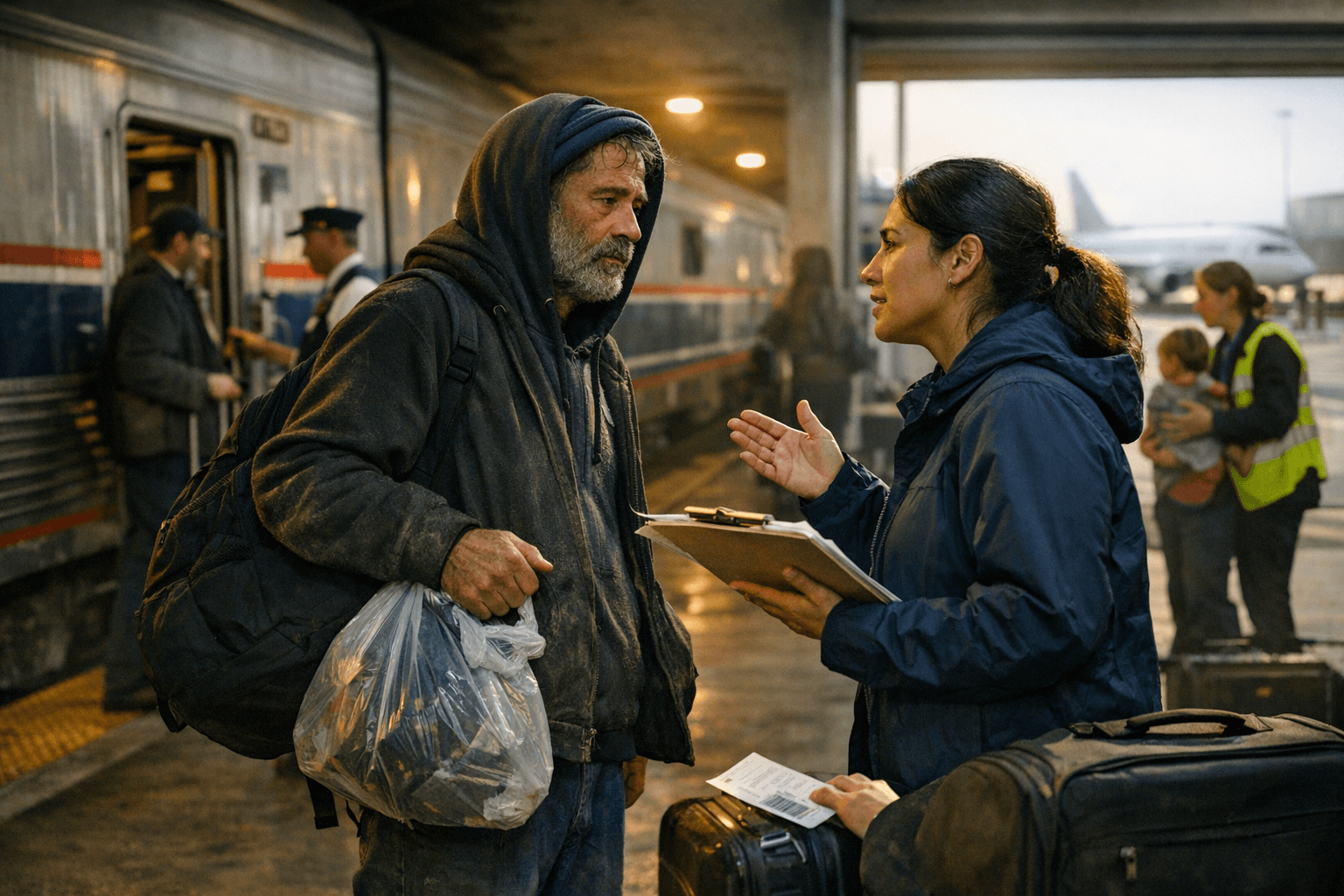
San Francisco expanded its Journey Home relocation program into a citywide, round-the-clock operation designed to streamline exits from unsheltered situations and strengthen post-travel support. The move consolidates Homeward Bound and Problem Solving Relocation Assistance into a single effort that will operate 24 hours a day beginning in February.
Mayor Daniel Lurie announced on Jan. 22, 2026, that the Department of Homelessness and Supportive Housing will administer the expanded Journey Home with partner organizations including Glide Memorial Church. The program will continue to provide bus tickets and will now offer train and plane travel options. Participants will receive social-work follow-up for up to 90 days to help reconnect with services in their home communities.
City officials framed the consolidation as an attempt to improve coordination across service providers and to tighten logistics around relocations. Centralizing Homeward Bound and Problem Solving Relocation Assistance under Journey Home creates a single point of administration for transport arrangements, intake and aftercare tracking. For residents of San Francisco, the change could mean more continuous access to departure services at any hour and a standardized post-travel case management period intended to reduce returns to homelessness.
The addition of train and plane travel expands the geographic reach of relocations and may alter how staff and volunteers plan departures. The 90-day social-work window is positioned as a bridge to reestablishing benefits, medical care and housing supports in receiving communities. Those operational details will be key to evaluating whether the program achieves long-term stability for people who leave San Francisco.
Critics have questioned the long-term efficacy of relocation programs. Some analysts and advocates argue that moves without durable housing or sustained services can become temporary solutions that shift rather than solve homelessness. City leaders acknowledged those critiques while emphasizing improved post-travel supports and administrative consolidation as steps toward better outcomes.
Implementation will require coordination with transit providers, receiving counties and nonprofit partners to manage schedules, paperwork and follow-up services. For service providers and community groups in San Francisco, the consolidated model changes referral pathways and on-the-ground logistics. For residents, the most immediate effects will be the availability of relocation assistance at any hour and new transportation modes for people leaving the city.
The expanded Journey Home marks a policy shift toward centralized relocation management paired with short-term casework. San Francisco will need to monitor return rates, service continuity in receiving communities and whether 90 days of follow-up translates into lasting reconnection to housing and care.
This article was produced by Prism’s automated news system from verified source data, official records, and press releases, then run through automated quality and moderation checks before publishing. The system is built and supervised by the people who set the standards it runs under. Read our full AI policy.
Did this article answer your question?