San Francisco man finally becomes U.S. citizen after immigration delays
Yar Zar Min stood with husband Kenny Kruse outside the USCIS office in the Castro as a long-delayed oath finally made him a U.S. citizen.
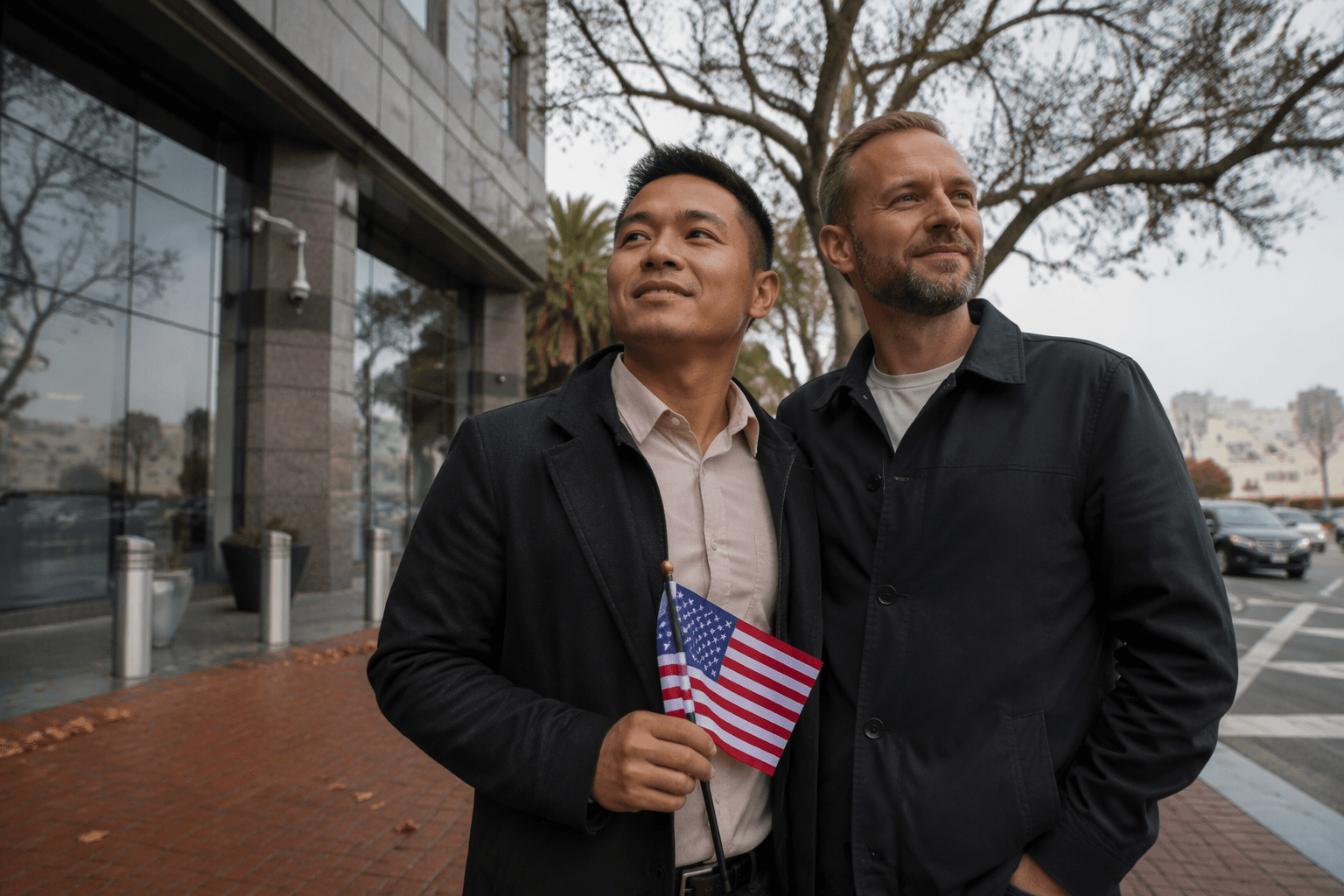
Yar Zar Min became a U.S. citizen in San Francisco this month, standing with his husband, Kenny Kruse, outside the USCIS San Francisco Field Office in the Castro District for his oath ceremony.
His path to citizenship had been disrupted by the Trump administration’s immigration crackdown, turning a legal milestone into a drawn-out wait that ended only when the system finally allowed him to complete the process. The setting mattered: the Castro is one of the city’s most visible neighborhoods, and the field office sits at the center of a place where immigrant life, civic identity and LGBTQ history all overlap in public view.
The strain of that disruption is easier to see in another Bay Area case tied to Myanmar. Eight days before a scheduled oath ceremony, one immigrant received a letter saying it had been canceled “due to unforeseen circumstances.” That kind of abrupt change left people who had already cleared major hurdles facing a final delay that could upend family plans and push back the moment when they could vote, travel and be fully recognized as citizens.
The Bay Area’s naturalization numbers show why those delays matter locally. More than half of the region’s foreign-born population are U.S. citizens, making citizenship a central part of life here rather than a distant federal abstraction. In San Francisco, the oath ceremony outside the USCIS office is the last step in a process that connects federal policy to individual households, including Zar Min and Kruse’s.
San Francisco’s role in citizenship debates has also been visible beyond one ceremony. KQED has described birthright citizenship as having deep ties to San Francisco, and the City and County of San Francisco has issued statements after Supreme Court action on the issue. That local attention reflects how closely immigration policy is watched here, especially when national shifts ripple into neighborhood institutions and personal milestones.
For Zar Min, the wait ended in the Castro, on a sidewalk outside a federal office where one long-delayed oath became a public finish line.
This article was produced by Prism’s automated news system from verified source data, official records, and press releases, then run through automated quality and moderation checks before publishing. The system is built and supervised by the people who set the standards it runs under. Read our full AI policy.
Did this article answer your question?