San Francisco Opens Climate-Resilient $50.5M Floating Fireboat Station at Pier 22½
San Francisco opened a $50.5 million floating fireboat station at Pier 22½ to boost maritime rescue, firefighting, and climate resilience for waterfront communities.
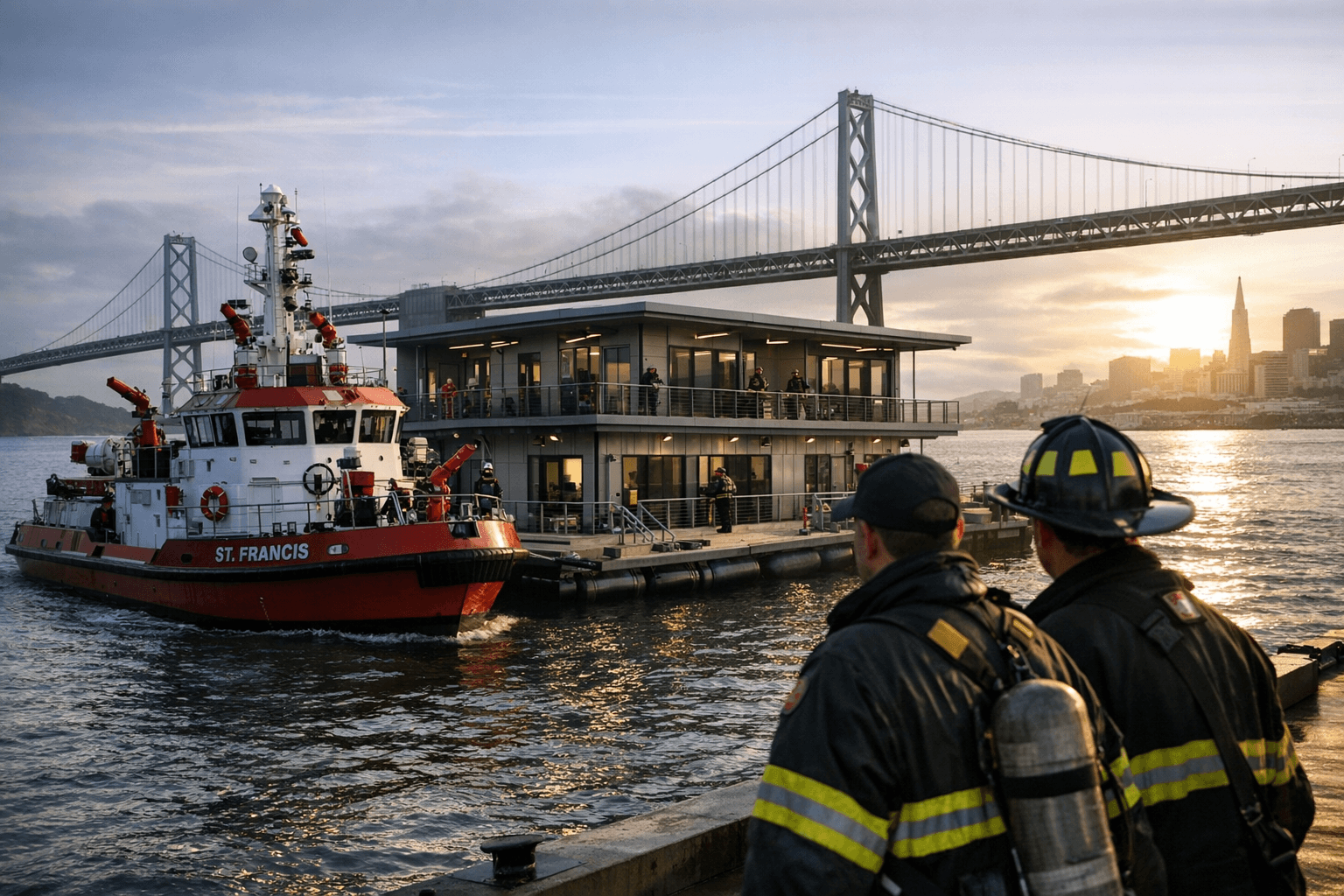
A new, climate-resilient Fireboat Station No. 35 began operations at Pier 22½ on Jan. 21, 2026, providing San Francisco with upgraded marine firefighting and rescue capacity and infrastructure designed to adapt to rising tides. The two-story, 14,900-square-foot facility sits on a 173-by-96-foot steel float that is seismically strengthened and anchored by guide piles so it will rise and fall with tides and projected sea-level rise.
City officials said the $50.5 million project was funded by the ESER earthquake-safety bond and replaces an older waterfront facility. The station will house the city’s fireboats and marine rescue craft, support a rotating staff, and aim to shorten response times for incidents on the water and along shoreline properties. Officials highlighted the station’s role in maritime rescue, firefighting along waterways, and broader climate-resilient infrastructure planning for the waterfront.
The new station includes public artwork titled "Bow" by Walter Hood, integrating cultural investment into a public safety project. For residents and businesses along the Embarcadero and adjacent waterfronts, the installation represents both a visible improvement in emergency capability and an example of how bond funds are being deployed on resilience projects.
Institutionally, the project reflects a continued emphasis by city leadership on earthquake and sea-level rise preparedness. Funding through the ESER earthquake-safety bond ties the station to a larger slate of capital investments intended to address seismic vulnerability and emergency response capacity. The floating design and guide-pile anchoring respond directly to projections of elevated water levels, signaling a shift in how municipal infrastructure is engineered to remain operational under changing conditions.
Operationally, faster on-water responses could affect outcomes for commercial traffic, recreational boaters, and shoreline residents in emergencies ranging from vessel fires to rescues in strong currents. Planners emphasized the station’s dual mission of firefighting and marine rescue, with a rotating staffing model intended to maintain around-the-clock readiness.
For taxpayers and voters who approved the ESER bond, the station will be a test case in delivering promised safety upgrades and in the long-term stewardship of waterfront assets. Questions for City Hall moving forward include ongoing maintenance budgets for floating infrastructure, coordination between marine operations and port authorities, and metrics for measuring response-time improvements.
The opening of Fireboat Station No. 35 is a buoyant investment in San Francisco’s shoreline safety and a concrete example of climate adaptation meeting emergency services. Residents and waterfront stakeholders should watch for forthcoming operational plans, performance data, and budget details that will show whether the station delivers the faster, more resilient responses it was built to provide.
Know something we missed? Have a correction or additional information?
Submit a Tip