San Francisco premiere of Goat Blood spotlights queer Latinx storytelling
Goat Blood turns Theatre Rhinoceros into a case study in how queer Latinx art survives as San Francisco's creative space keeps shrinking.

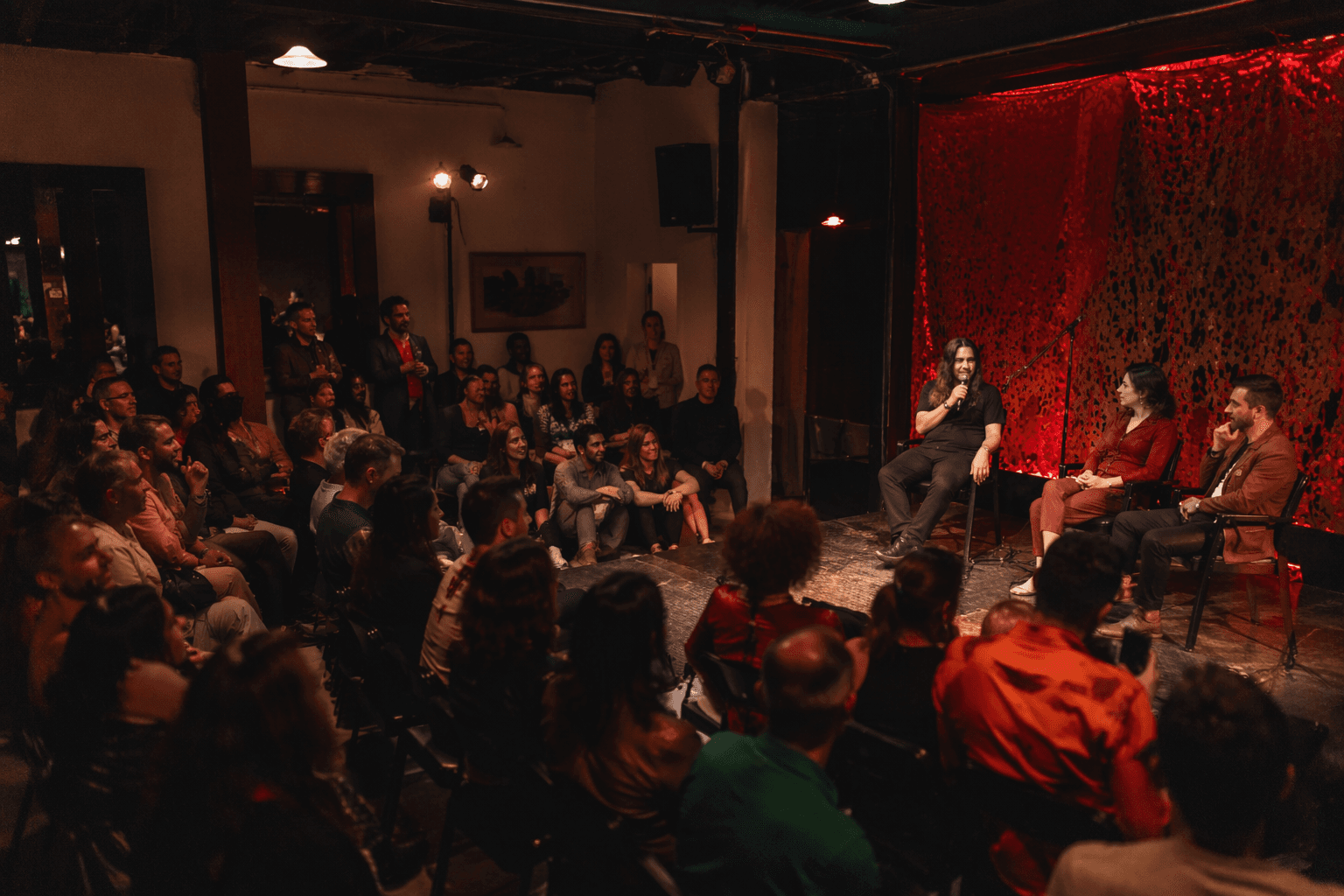
At Theatre Rhinoceros in the Castro, Goat Blood lands as more than a West Coast premiere. Alejandro Torres, a San Francisco native, has built the production around a queer horror-comedy that pairs monster-movie energy with Latine representation, while the city around it keeps making room for artists harder to find. That tension gives the run at 4229 18th St. a stake that reaches beyond one play.
A Castro stage with deep San Francisco roots
Theatre Rhinoceros says it was founded in San Francisco in 1977 and is the world’s longest-running continuously producing professional queer theatre. Its own history places the company’s beginnings in South of Market, where it first staged Doric Wilson’s The West Street Gang in The Black and Blue leather bar. That lineage matters here because Goat Blood arrives not as a novelty booking, but as the latest chapter in a company that has long treated queer performance as a civic necessity.
The production runs from June 25 to July 19, 2026, at Theatre Rhinoceros, 4229 18th St., San Francisco, CA 94114. The cast includes Eric Esquivel-Gutierrez, Raye Goh, Adrian Nava, and Casey Spiegel, bringing the premiere into one of the city’s most historically layered queer neighborhoods.
Why Alejandro Torres said yes
Torres’s connection to the project is personal as well as artistic. He is a native San Franciscan and a freelance theatre director whose work has spanned the Bay Area and beyond, which gives his comments about the local arts ecosystem extra weight. For him, Goat Blood was an easy yes because it brought together several things he cares about at once: monster movies, Latine representation, and the chance to work on a play with a distinct cultural viewpoint.
That matters in a city where the question is no longer just who gets funded, but who gets to stay. Torres’s attachment to San Francisco makes the production feel rooted in the city’s own pressures, not simply imported into it. The play becomes a local act of cultural survival, staged by someone who knows exactly what has been lost when artistic space gets priced out.
Inside Goat Blood
Mark-Eugene Garcia’s Goat Blood follows two men on a bad double date who end up in a farm town where mutilated goats and the myth of El Chupacabra begin to warp the story. Material tied to the play describes it as a dark comedy-horror work running about 100 to 120 minutes, which puts it in the range of a full evening of genre theater rather than a short experimental piece.
The play’s earlier life shows that it has already been moving through queer and Latinx performance spaces. Its first scene appeared in INTAR’s Queergazmo series, and a full reading was presented at MEXFEST at The Tank in New York City from September 19 to 22, 2024. That reading featured Sergio Caetano, Gabriel Rosario, and Billy Peck, with a creature designed by Coyote Caliente, underscoring how much the play leans into theatrical invention as well as story.
Garcia has described the piece as a queer horror thriller built around grief, masculinity, memory, and survival. The production’s multilingual frame adds another layer to that idea, with English, Castilian Spanish, and Mayan K’iche’ woven into the performance. In a city with deep Latinx roots and persistent pressures on bilingual arts spaces, that mix reads as both aesthetic choice and cultural claim.
Why the chupacabra still feels local
Part of Goat Blood’s charge comes from the creature at its center. The chupacabra was first reported in Puerto Rico in 1995, and the name comes from Spanish for “goat-sucker.” That relative newness gives the legend a different feel from older monster myths: it is a modern folk figure, one that spread fast enough to pick up local meanings across the Americas.
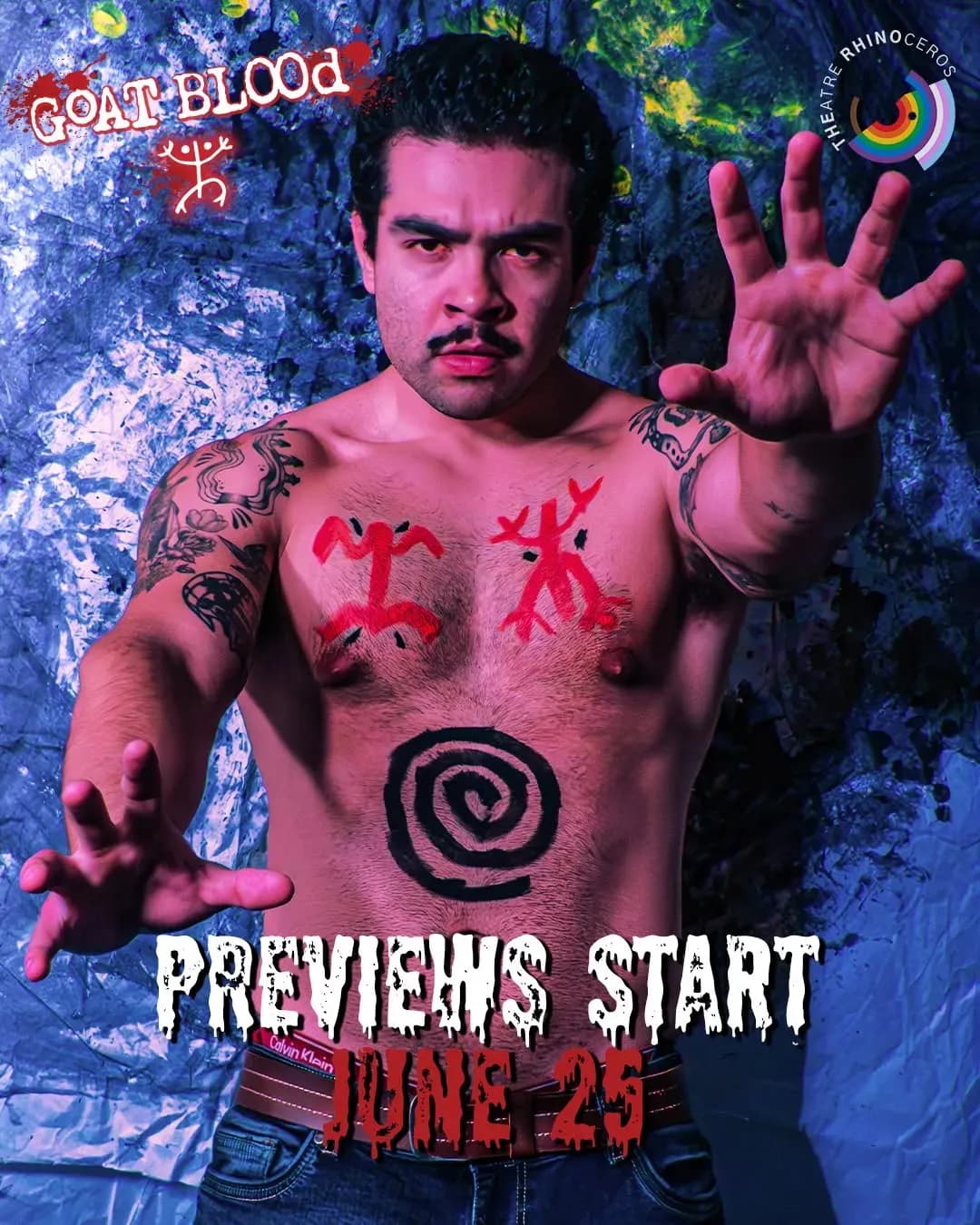
In Garcia’s hands, the creature is not just a horror gimmick. The story’s mutilated goats, rural setting, and sense of unease connect the legend to fears about instability, scarcity, and what happens when ordinary life starts to unravel. The result is a play that uses the language of genre to carry grief and desire without sanding off the cultural specificity of where those feelings come from.
What the production says about San Francisco now
Torres’s blunt view of the city’s arts climate sits at the center of the piece. He says San Francisco feels less and less friendly to the arts, with venues pricing out artists and fewer places left to create or show work. That is not a side comment. It is the pressure point that makes Goat Blood feel urgent in the first place.
The city has been hearing versions of that warning for years. A 2015 San Francisco Arts Commission survey found that more than 70 percent of nearly 600 artist respondents had been or were being displaced from home, workplace, or both. More recently, on July 1, 2025, Mayor Daniel Lurie and the San Francisco Arts Commission announced $10.4 million in arts grants for 145 local artists and arts nonprofits, plus six cultural centers, a sign that the public sector still sees the problem as active.
CAST, the Community Arts Stabilization Trust, gives a more concrete picture of what holding onto space requires. In 2024, it stewarded more than 86,000 square feet of studio, theater, and cultural space, with another 100,000 square feet in development. Those numbers matter because they show the scale of the infrastructure needed just to keep artists visible in a city where every rehearsal room, storefront theater, and cultural center has to fight for survival.
Goat Blood sits inside that reality. It is a queer Latinx story, a horror-comedy, and a San Francisco premiere, but it is also a stress test for the city’s cultural promise. If the play feels bigger than one theater run, that is because it is asking the same question San Francisco keeps facing: who still gets to make art here, and where is that art allowed to live?
This article was produced by Prism’s automated news system from verified source data, official records, and press releases, then run through automated quality and moderation checks before publishing. The system is built and supervised by the people who set the standards it runs under. Read our full AI policy.
Did this article answer your question?