San Francisco warns of deadly new opioid found in counterfeit pills
A counterfeit pill death in San Francisco involved an opioid officials say is 10 times stronger than fentanyl and invisible to fentanyl test strips.
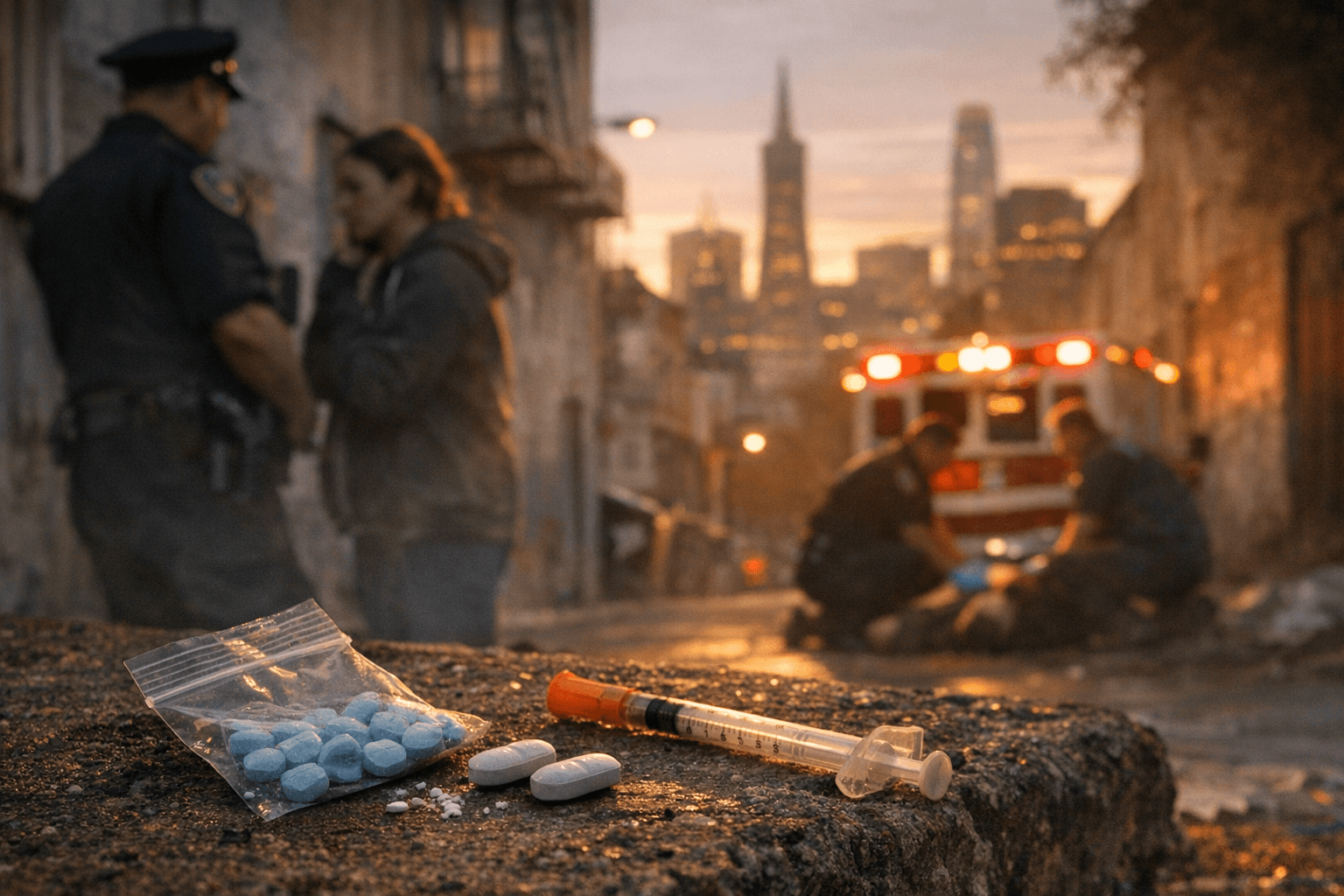
A counterfeit pill death in San Francisco exposed a new and more dangerous layer in the city’s overdose crisis: a synthetic opioid officials say is about 10 times stronger than fentanyl, and invisible to the fentanyl test strips many people rely on.
The San Francisco Department of Public Health issued its warning on April 24 after toxicology from a recent overdose victim found N-Propionitrile chlorphine, also known as cychlorphine, along with N-Desethyl isotonitazene. Fentanyl was not detected. Officials said the case was the first reported fatal overdose in San Francisco involving these drugs, underscoring how quickly the local street-drug market is changing.
Health officials said the victim is believed to have taken counterfeit pills that looked like legitimate medication but contained a toxic mix that also included ethyl bromazolam, a benzodiazepine that is not FDA-approved. That combination makes fake pills especially dangerous because they can be visually indistinguishable from real prescription medication while carrying a dose that can kill in a fraction of a pill.
The warning matters because standard harm-reduction tools can miss this threat. Fentanyl test strips are not expected to detect cychlorphine, leaving people with no simple way to screen for the drug before use. The city’s overdose guidance continues to urge naloxone use and emergency response for suspected opioid overdose, a reminder that every suspected poisoning should be treated as a medical emergency.

The local case also fits a wider national picture. The Drug Enforcement Administration says nitazenes are synthetic opioids that can match or surpass fentanyl in potency, were first developed in the 1950s, and were never approved for medical use in the United States or any other country. The agency has said these drugs are increasingly being found mixed with fentanyl, heroin and cocaine, and on August 15, 2025, it issued an emergency scheduling order placing two nitazenes in Schedule I.
The World Health Organization’s 47th Expert Committee on Drug Dependence reviewed N-Desethyl isotonitazene in October 2024 and found it has no recognized therapeutic use. The agency also said it has been identified in falsified pharmaceuticals and has been associated with deaths and hospital admissions in multiple regions. For San Francisco, the message is stark: the overdose epidemic is no longer defined by fentanyl alone. A new class of synthetic opioids is now in the supply, and one counterfeit pill can still be fatal.
This article was produced by Prism’s automated news system from verified source data, official records, and press releases, then run through automated quality and moderation checks before publishing. The system is built and supervised by the people who set the standards it runs under. Read our full AI policy.
Did this article answer your question?