Seven candidates clash at California's first televised gubernatorial debate in San Francisco
San Francisco residents will learn which seven candidates shared the stage, the policy fights they staged over homelessness, housing, climate and public safety, and what it means locally.
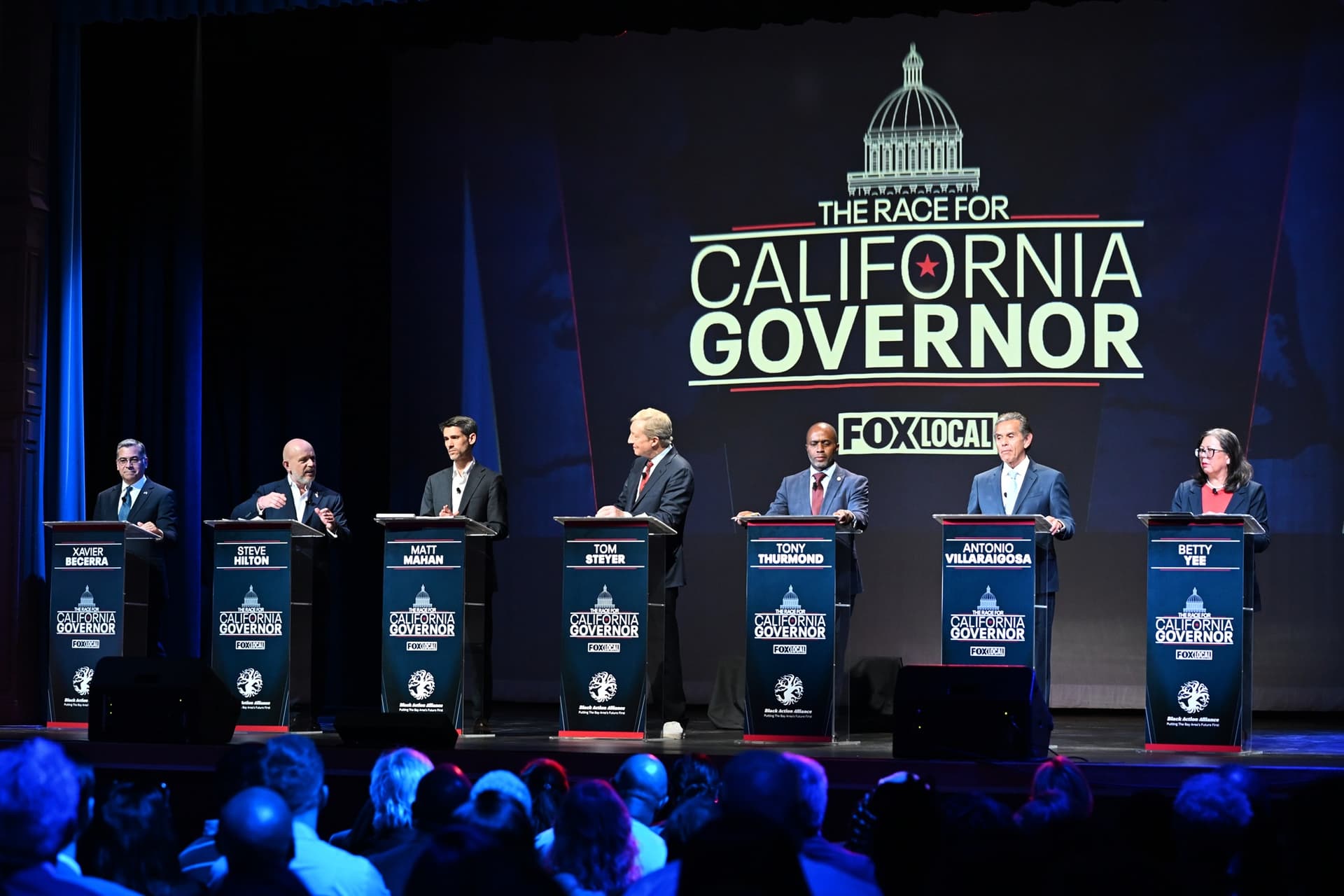
1. Steve Hilton
Steve Hilton appeared as the sole Republican on the stage and used the forum to try to shape the conservative lane in a crowded field. KQED and KTVU reports describe him clashing with Democrats on homelessness, climate and campaign finance, and KDH News explicitly says he “called on his top GOP rival, Riverside County Sheriff Chad Bianco, to drop out of the race.” For San Francisco voters, Hilton’s presence matters less for local governing experience than for how his messaging seeks to consolidate right‑leaning turnout in the June primary; his interventions also pushed Democratic rivals to define distinctions on public safety and the state’s climate policies.
2. Tom Steyer
Tom Steyer stood among the Democrats who sparred over homelessness, climate policy and campaign finance, issues KQED flagged as central to the evening’s exchanges. With several high‑profile contenders absent, KQED noted that Steyer had extra room to press positioning ahead of the June primary, making the debate an early test of his ability to translate name recognition into persuasive policy arguments. For San Francisco voters, Steyer’s performance will be measured against whether he can propose credible spending and accountability mechanisms on homelessness that resonate across the Bay Area’s diverse neighborhoods.
3. Matt Mahan
Matt Mahan joined the onstage Democrats in confrontations over housing affordability, homelessness and the cost of living, alongside climate and campaign finance disputes reported by multiple outlets. As one of the trio highlighted by KQED that benefited from prominent absences, Mahan used the debate to sharpen contrasts with both progressive and moderate rivals while seeking to appeal to voters four months before the primary. Local implications include how Mahan’s stances on rent and public safety map onto suburban and urban San Francisco constituencies that prioritize different mixes of housing access and neighborhood safety.
4. Xavier Becerra
Xavier Becerra, identified in source reporting as a former U.S. Health and Human Services secretary, brought a public‑health and administrative background into the debate’s broader conversation about health care and state policy. Multiple accounts place him among the onstage Democrats engaging key statewide questions, and his résumé frames him as a candidate who can speak to the institutional levers of state government. For San Francisco voters, Becerra’s presence signals a campaign focus on governance capacity and health policy detail, which could be consequential for debates over mental‑health services, homelessness interventions and Medi‑Cal implementation.
5. Tony Thurmond
Tony Thurmond, explicitly noted as California’s superintendent of public instruction in reporting, represented a statewide official’s perspective on the stage and joined other Democrats in scrutinizing Newsom’s record and policy outcomes. His background in statewide office offers a constituency interested in education, youth services and social supports, areas that intersect with homelessness and housing debates raised repeatedly during the forum. Thurmond’s arguments at the debate may matter locally where parents, educators and community‑based organizations expect specific cross‑sector proposals connecting schools, housing stability and public safety.
6. Antonio Villaraigosa
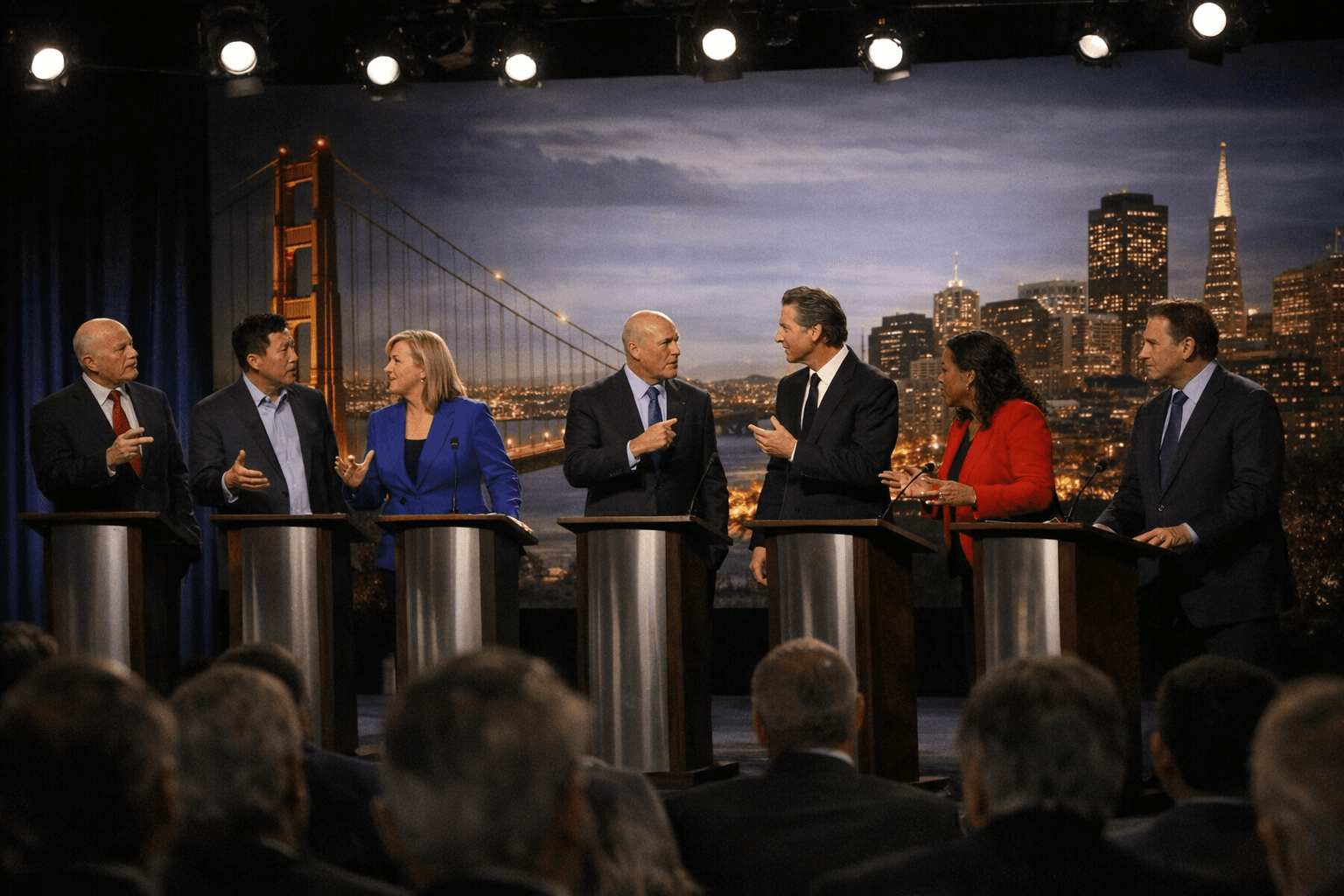
Antonio Villaraigosa used the podium to challenge the state’s approach to homelessness with a blunt accounting of past spending: “We spent $24 billion at the state, along with billions more from the counties and the cities throughout the state, and homelessness went on. We cannot be afraid to look in the mirror,” he said. That explicit line, reported by KDH News, framed the debate’s accountability thread and pushed all candidates to explain whether new or different structures of governance would produce better outcomes. For San Francisco, where visible homelessness, encampments and housing scarcity are immediate civic concerns, Villaraigosa’s critique underscores voters’ demand for measurable returns on large state expenditures and clearer mechanisms for coordination with local governments.
7. The seventh onstage candidate (not fully identified in available reports)
Sources consistently report that seven candidates took the stage in San Francisco, described by KTVU and others as “seven candidates” and by KDH News as “six Democrats and one Republican,” but the snippets provided do not name every individual present. That gap matters: full transparency about who spoke and what they proposed is a baseline for civic accountability and informed voting. For San Francisco residents seeking to hold contenders to specific promises, the missing roster item is a reminder to consult the full debate feed or official post‑event materials, KTVU produced a full webcast, so voters can evaluate every candidate’s record and proposals on homelessness, housing, climate and public safety.
Closing practical wisdom This debate was an early institutional stress test: it exposed fault lines on homelessness, housing affordability, climate policy and public safety while demonstrating how candidate absences reshaped the competition. San Francisco voters should watch the full debate feed, compare specific policy proposals (not just sound bites) on homelessness and affordable housing, and prioritize attending local town halls or candidate events to press for implementation details and timelines. Register for the June primary, map each candidate’s plan to city‑level capacity, and weigh not only rhetoric but measurable accountability mechanisms that would affect services and budgets across the Bay Area.
This article was produced by Prism’s automated news system from verified source data, official records, and press releases, then run through automated quality and moderation checks before publishing. The system is built and supervised by the people who set the standards it runs under. Read our full AI policy.
Did this article answer your question?