SF Leaders, Youth Unite at City Hall to Combat Rising Violence
SF homicides are up 250% in 2026 after last year's historic low. Mayor Lurie and SFPD Chief Lew rallied youth at City Hall Thursday, but the data demands more than solidarity.
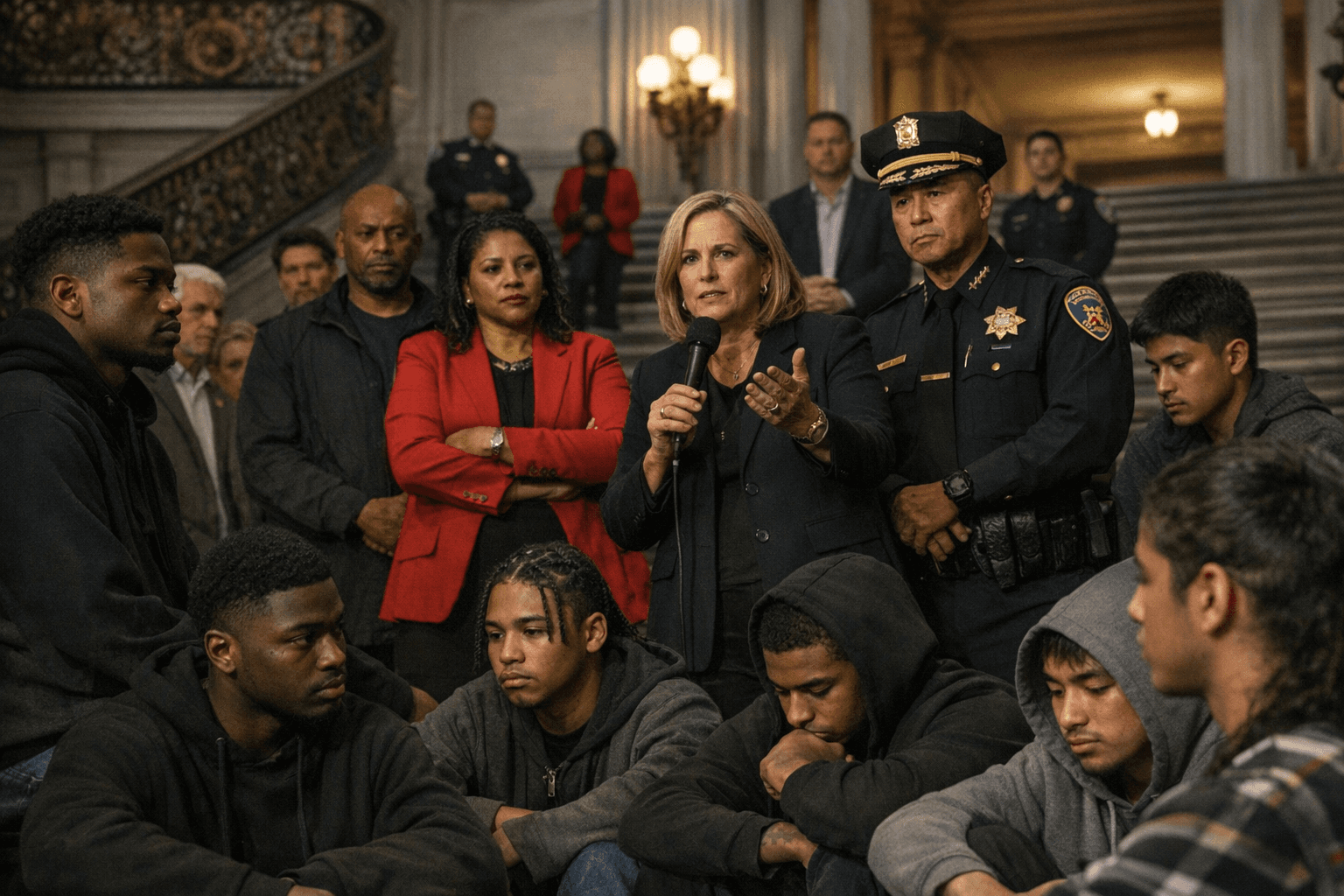
San Francisco entered 2026 on the strength of its safest year in seven decades, with 28 homicides in 2025, the lowest count since 1954. By the end of the first quarter of this year, the city had already recorded 14 killings, more than three times the four logged at the same point last year. That jarring reversal formed the urgent backdrop for a gathering Thursday at City Hall, where Mayor Daniel Lurie, SFPD Chief Derrick Lew, the District Attorney, and a group of youth leaders called for collective action to stem a rising tide of street violence.
The neighborhoods absorbing the worst of it are familiar: the Tenderloin, where a man was shot dead on Turk Street near Taylor in February; Potrero Hill, where a drive-by on Dakota and 25th Streets on February 27 killed one person and wounded others; and Bayview-Hunters Point, where violent crime rates remain among the highest in the city. The pattern of concentrated, recurring violence in those corridors underscores a long-standing challenge: that citywide rallies often do not reach the specific blocks where the gunfire is actually happening.
Chief Lew appeared before the San Francisco Police Commission last week to address the spike, framing the uptick in context of still-declining gun violence overall. His argument, that more people are dying but more are not being shot, has done little to quiet concern among residents and advocates who watched 2025's hard-won gains erode in a matter of weeks. The rate of roughly one killing per week through the first 10 weeks of 2026 is a metric that has no room for contextual softening.
Lurie's administration has moved on the institutional side, launching the Special Events Officer Program under the Rebuilding the Ranks plan, which brings recently retired peace officers back into uniform on a part-time basis to free active-duty SFPD personnel for core patrol and investigative work. The city's Violence Reduction Initiative, a joint framework pairing SFPD with the Sheriff's Department, the DA's Office, Probation, and community nonprofits, remains the primary vehicle for intervention on the street level.
The question Thursday's event could not fully answer is whether this gathering represents a genuine enforcement and prevention commitment, or whether it follows the pattern of prior public assemblies that generated momentum without moving the homicide numbers. The spring and summer months, historically the most violent in San Francisco, will provide the real measure of whether the pledges made at City Hall translate into sustained results in the Tenderloin, on Third Street in Bayview, and in the Potrero Hill blocks where the year's bloodiest incidents have already occurred.
This article was produced by Prism’s automated news system from verified source data, official records, and press releases, then run through automated quality and moderation checks before publishing. The system is built and supervised by the people who set the standards it runs under. Read our full AI policy.
Did this article answer your question?