SF Mayor Lurie Signs Law Opening Sidewalk Flower Stand Permits to New Vendors
A permit system dating to the 1920s helped shrink SF's downtown flower vendors from 120 to a handful. Mayor Lurie just opened the gates.
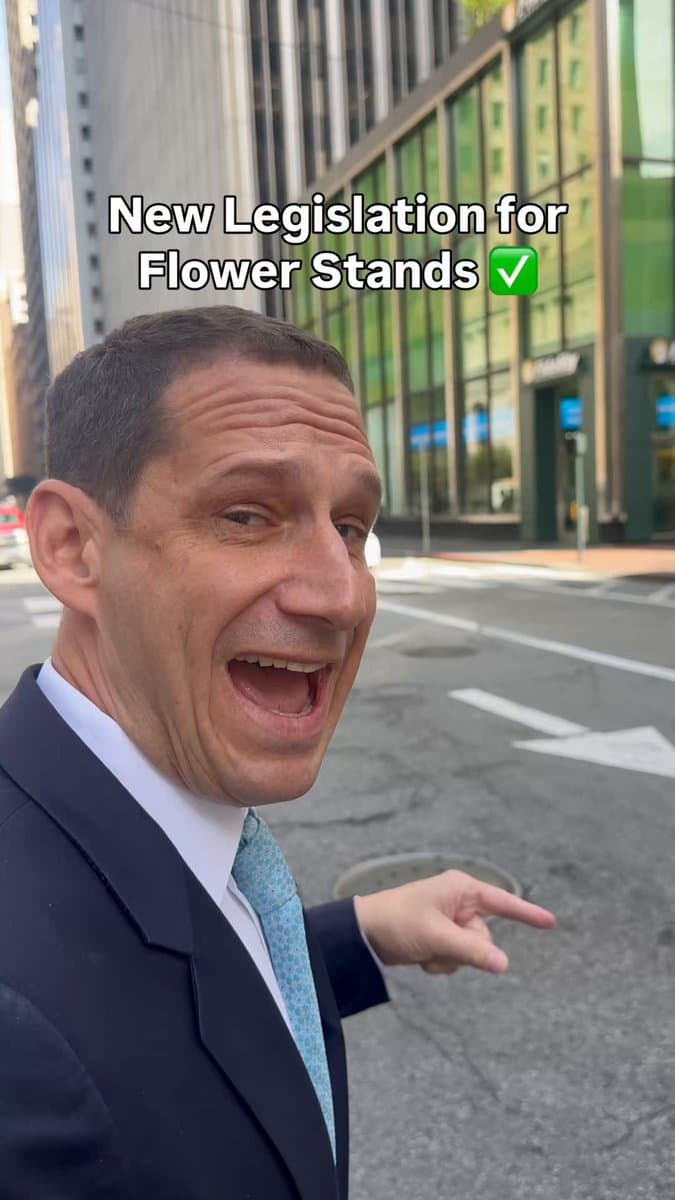
San Francisco's downtown sidewalks once held roughly 120 flower stands. Today only a handful remain, squeezed out over decades by a permit system so restrictive that many licenses could be passed only to direct family members, some carrying rules that trace back to the 1920s.
Mayor Daniel Lurie signed legislation March 26 to dismantle that framework, opening the city's Sidewalk Flower Stand permit program to any licensed San Francisco business that meets tax and licensing requirements. The reform is the first major overhaul of the rules in decades, and it is designed to reverse the slow disappearance of the small flower stalls that once animated Market Street and neighboring downtown corridors.
The change eliminates the family-succession restrictions that effectively locked permits within bloodlines, clarifies fees and application requirements, and establishes direct coordination between the Office of Public Works and the Office of Small Business to identify and screen eligible applicants. New vendors, entrepreneurs, and community organizations can now apply for the low-footprint stalls that the city says help activate sidewalks and draw pedestrian traffic to struggling downtown blocks.
The legislation was co-sponsored by Supervisor Danny Sauter and packaged as part of Lurie's broader PermitSF initiative, a citywide push to simplify permitting and lower entry barriers for small businesses. The city tied the flower-stand overhaul to PermitSF's stated goal to "bring more color, foot traffic, and small business opportunities downtown."

The new law does not rewrite sidewalk vending rules broadly; it is a targeted fix for a single permit category that advocates and internal city reviewers flagged as an outlier. Some preservation-minded residents had previously called for phased transitions to protect legacy vendors, and the city signaled an intent to balance heritage with broader access as implementation proceeds.
Before new stalls can open, the Office of Public Works must publish administrative guidance covering fees, eligibility screening, and application timelines, with the Office of Small Business handling outreach to prospective vendors, including community-based organizations. The first new permits are expected in the weeks to months after that guidance is released.
For downtown blocks still rebuilding pedestrian foot traffic, a return of street-level flower stalls is a small but concrete wager: that retiring a century-old bureaucratic lock can put a few more small vendors on the sidewalk, and that those vendors draw people back with them.
This article was produced by Prism’s automated news system from verified source data, official records, and press releases, then run through automated quality and moderation checks before publishing. The system is built and supervised by the people who set the standards it runs under. Read our full AI policy.
Did this article answer your question?