SF Median Home Price Hits $2.15 Million, Up 18% Amid AI Boom
SF's median home now costs $10,800 a month to carry, essentially consuming a typical city household's entire gross monthly income, as AI wealth drives prices 22 times the national pace.
A buyer who closed on the median San Francisco home in March, at $2.15 million, walked out of escrow carrying a monthly mortgage payment of $10,826 in principal and interest alone, assuming a 20 percent down payment at the prevailing 6.46 percent 30-year fixed rate. That figure is almost exactly equal to the entire gross monthly income of a household earning the city's median of roughly $130,000. To keep housing costs at the conventional 28 percent threshold, a buyer would need annual earnings of about $464,000 - more than three and a half times what a typical San Francisco household earns. The $430,000 down payment required just to reach the closing table eliminates most of the city's residents before the math even starts.
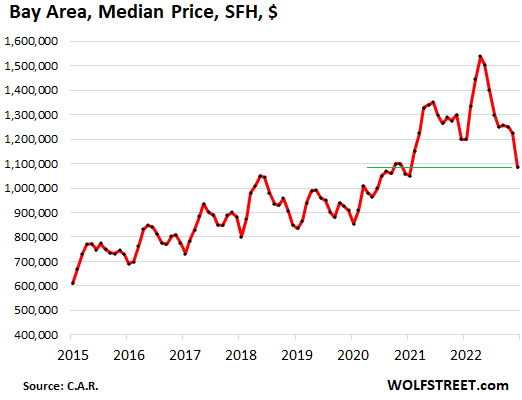
San Francisco's median single-family home price rose 18 percent year over year in March, according to Compass, surpassing the previous record of roughly $2.05 million set during the pandemic-era frenzy of April 2022. The acceleration is almost entirely a local phenomenon: national home prices grew 0.8 percent over the same period, as tracked by Zillow, meaning San Francisco appreciated at 22 times the national rate. The engine is concentrated AI-sector wealth, and it is about to get more fuel. OpenAI, Anthropic, and Databricks are all expected to go public this year, which would mint a new wave of buyers flush with IPO cash and a preference for neighborhoods inside the city rather than the South Bay campuses of earlier tech generations.
The luxury tier captured the most extreme version of the surge. Twenty-two San Francisco homes sold for more than $5 million in March, edging past the previous monthly record of 21 set in June 2021. The condo market delivered an even sharper jolt: 24 units changed hands above $3 million, nearly four times the number sold in March 2025 and well beyond the prior record of 17 in August 2021. Condo prices overall climbed nearly 30 percent year over year. "The luxury market has just gone crazy in the last four months," said Compass agent Butch Haze.
Real estate agents broadly describe the surge not as a bubble but as a correction after five years of slow sales, and even appraisers are struggling to keep pace with valuations. Whether that framing holds depends largely on decisions that sit not with sellers or agents but with City Hall.

San Francisco's Family Zoning Plan, approved in December 2025 after three years of deliberation, rezones major transit corridors for mid-rise and high-rise development. The plan's impact, however, depends on permits actually being issued. Under state housing law, the city must clear more than 20,000 new permits in 2026 to avoid triggering a circuit breaker that would force even more aggressive upzoning. Planning Director Sarah Dennis Phillips has acknowledged that the current pace "would not lead us to where we need to be." A proposed 25-story tower at the Marina Safeway site, which would deliver 800 units including 86 below-market-rate homes, illustrates both the ambition the plan requires and the neighborhood opposition it routinely encounters.
Beyond the permit pipeline, the city retains tools it has applied inconsistently: enforcement of short-term rental rules that pull housing stock off the long-term market, inclusionary requirements that extract affordable units from market-rate projects riding the AI-era appreciation wave, and commercial-to-residential conversions in a downtown still carrying significant vacancy. The distance between a $2.15 million median and the $464,000 income needed to afford it is the price of years of delayed action on each of those fronts.
This article was produced by Prism’s automated news system from verified source data, official records, and press releases, then run through automated quality and moderation checks before publishing. The system is built and supervised by the people who set the standards it runs under. Read our full AI policy.
Did this article answer your question?

