SF Supervisors Reopen Debate on Renaming Cesar Chavez Street After Abuse Allegations
Cesar Chavez Street's 3.5 miles through the Mission may get a new name; Mayor Lurie and Supervisor Fielder back renaming after abuse allegations against the labor icon.
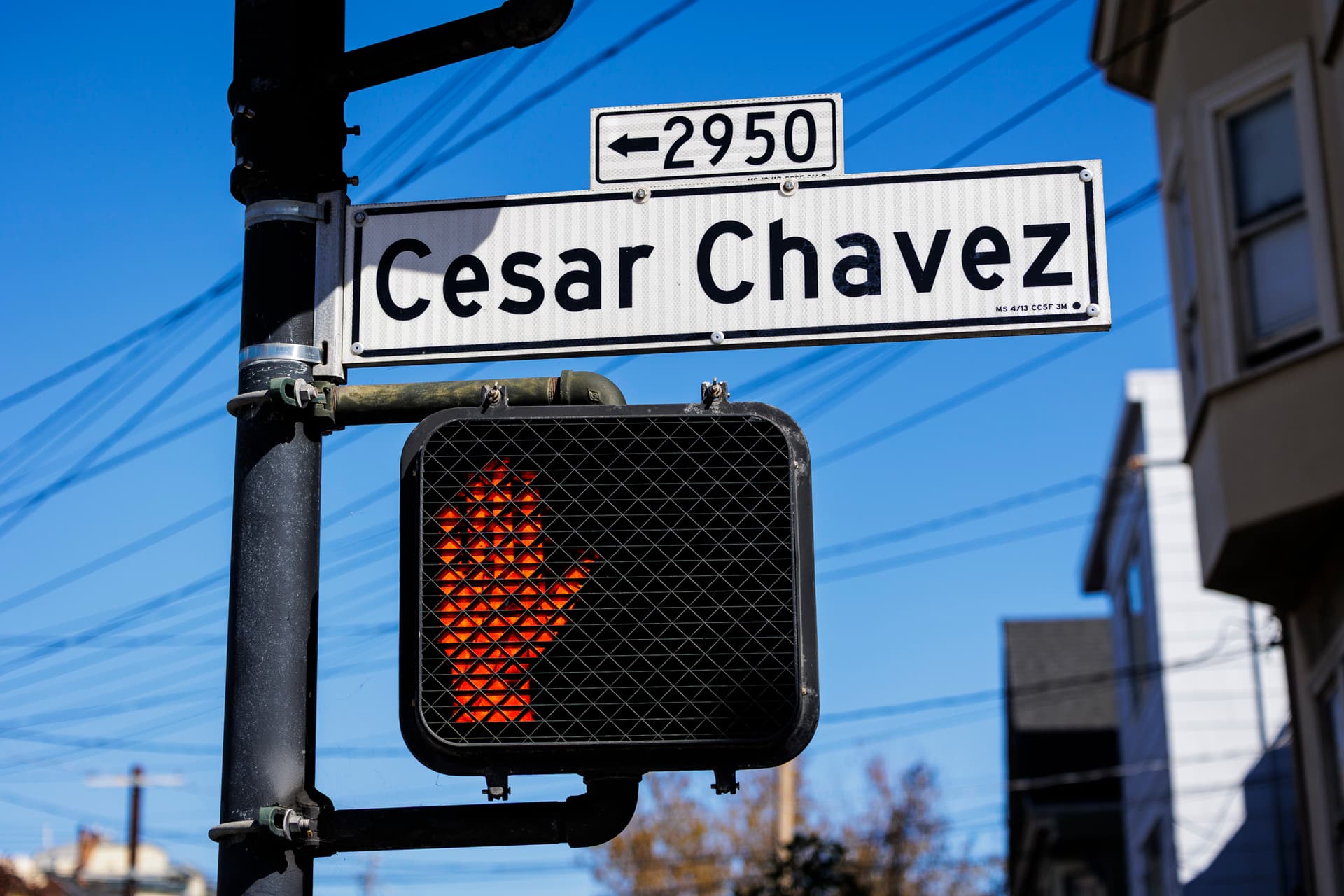
On Cesar Chavez's birthday in 1995, a crowd of hundreds packed San Francisco's Mission District to cheer the unveiling of new street signs along the 3-mile thoroughfare stretching from the Bayview waterfront to Noe Valley, after city supervisors voted unanimously to rename Army Street in the late labor leader's honor. Thirty years later, that name is in serious jeopardy.
A New York Times investigation published March 18 alleged that Chavez abused girls and raped Dolores Huerta, his longtime organizing partner. The newspaper spoke with two women who said they were children when Chavez began to groom and sexually abuse them. One said Chavez raped her in a motel room in 1975 when she was 15 years old and he was 47; the other said he began groping her in his office at the union's headquarters when she was 13. Both women, now in their 60s, were daughters of organizers within the farmworker movement.
Mayor Daniel Lurie and Supervisor Jackie Fielder have both said they support renaming the street. Fielder, who represents the Mission District, said: "My office will support community efforts to remove Cesar Chavez's name from any District 9 institutions." The district includes both the street and Cesar Chavez Elementary School on Shotwell Street. District 8 Supervisor Rafael Mandelman said he would defer to his Latina colleagues when it comes to stripping Chavez's name from the street, but added that "the current name's days are numbered." District 9 Supervisor Myrna Melgar, however, said talk of renaming would come later, posting that she wanted to "center those who are harmed FIRST."
Renaming the street involves multiple agencies: the San Francisco Municipal Transportation Agency controls the street signs, the Department of Public Works oversees the sidewalk engravings, and Caltrans would handle the freeways. Re-etching the sidewalk alone would cost about $1,800 per intersection; across Cesar Chavez's 37 blocks, that comes to roughly $66,600 just for the sidewalk engravings. The Board of Supervisors can rename a street with or without public support, so long as property owners and government agencies are notified, public notice is posted, and residents have a chance to object.
At the state level, California Assembly Speaker Robert Rivas and Senate President Pro Tempore Monique Limón announced legislation to rename the state holiday honoring Chavez at the end of March to Farmworkers Day. Assemblymember Catherine Stefani, who represents San Francisco's western half and has made public safety for women a legislative priority, said, "It is time to rename this holiday," adding that survivors "deserve to be heard, believed, and supported." Assemblymember Matt Haney, whose district covers the city's eastern half, said, "I would support renaming March 31 as Dolores Huerta Day." State Sen. Scott Wiener said he wants to gauge the Latino community's opinion but supports renaming the holiday after Huerta. At a press conference, Gov. Gavin Newsom said he too is open to changing the holiday, saying: "If we need to move, we'll do so together."
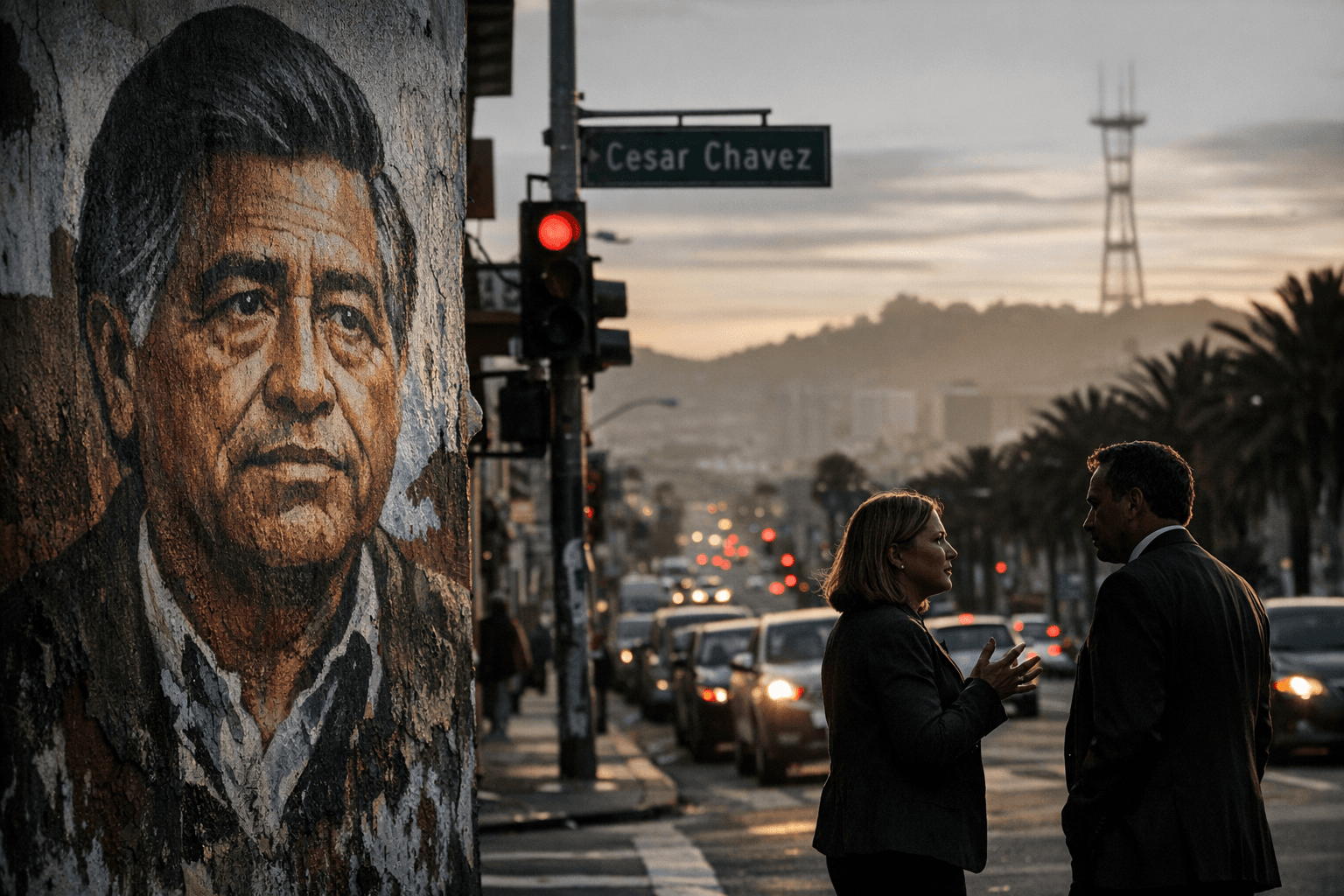
The city's annual César Chávez and Dolores Huerta festival, still scheduled for April 11, has already been renamed the Dolores Huerta Parade and Festival. San Francisco State University's Cesar Chavez Student Center is also under review. Student Luca Broggi Hendryx, who recalled idolizing Chavez as a child, said: "When I first started coming here it made total sense: He was seen as an icon for the Latino civil rights movement… But now it feels the opposite."
The San Francisco Unified School District said it "shares in the community's concerns" and is "closely monitoring the situation." The thoroughfare was called Army Street until 1995, and city law requires that roads getting renamed must continue to display the previous name for five years. Signs showing Army Street beneath Cesar Chavez Street are still in place along the route today.
Former Supervisor Susan Leal, who helped lead the original 1995 renaming effort, said she has no hesitation about changing it again. "The meaning of having Cesar Chavez Street is that it signifies we have a place here too," she said, recalling the community sentiment at the time. If the city launches a renaming effort, Leal said she hopes to see that sentiment remain. "It should be named for something connected to that movement. Probably Dolores Huerta," she told KQED.
This article was produced by Prism’s automated news system from verified source data, official records, and press releases, then run through automated quality and moderation checks before publishing. The system is built and supervised by the people who set the standards it runs under. Read our full AI policy.
Did this article answer your question?