SFMTA crossing guard program still underfilled, affecting student safety
SFMTA did not meet its goal to staff all crossing guard positions by 2025, leaving gaps at school crosswalks and relying on temporary coverage. This matters for student safety and local traffic patterns.

San Francisco's transit agency acknowledged on Jan. 6, 2026 that its school crossing guard program fell short of its target to fill all positions by the end of 2025. The agency had previously listed about 195 crossing guard slots but now reports 178 positions as active, a shortfall it says remains eight positions shy of full staffing.
The gap has been persistent despite ongoing hiring. The program continues to depend on temporary and part-time workers; an October job notice posted positions as temporary with pay listed at $26 to $29 per hour. The agency has also been using SFMTA "ambassadors" to plug holes in coverage while recruitment and training proceed, a stopgap that officials describe as temporary.
Coverage shortfalls have tangible effects at street level. Earlier this school year, 21 San Francisco schools lacked at least one crossing guard, creating unstaffed crosswalks at peak drop-off and pick-up times. Missing guards shift responsibility onto parents, school staff and students navigating busy intersections adjacent to Muni routes, increasing congestion and potential safety risks for pedestrians and for buses that must slow or stop unexpectedly.
The staffing pattern underscores institutional challenges within the agency. Reliance on temporary postings and part-time roles complicates retention amid routine turnover, while short-term staffing solutions strain operations that already balance transit service, street safety programs and budget constraints. Filling and retaining crossing guard positions requires not only recruitment but adjustments to pay, hiring classifications and scheduling to compete with other gig and part-time opportunities in the city.
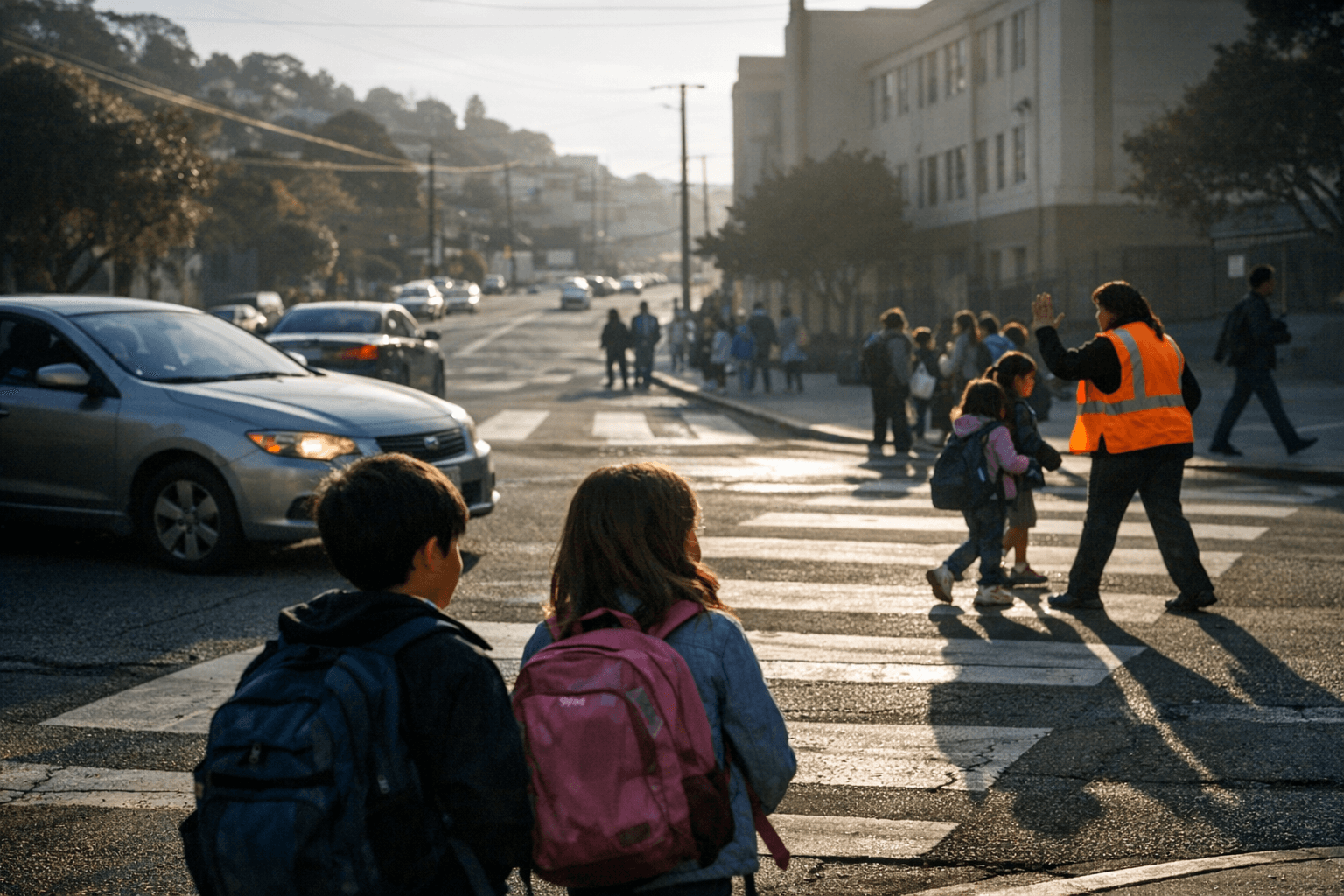
Policy implications extend beyond routine personnel management. Full coverage of school crosswalks is a municipal responsibility that intersects with public safety, transportation planning and equity. Schools in neighborhoods with heavy traffic, limited traffic-calming infrastructure, or fewer parent volunteers are more vulnerable when crossing guard shifts are unfilled. For policymakers and supervisors, the choice is between investing in a stable, career-path workforce or continuing to patch gaps with temporary measures that can leave students exposed during critical hours.
The staffing shortfall also has civic implications heading into future budget and oversight cycles. Voters and local officials can evaluate whether SFMTA's staffing and contracting decisions align with long-term safety goals for children walking and biking to school.
Our two cents? Track upcoming SFMTA board and budget meetings, ask whether crossing guard recruitment includes retention incentives and predictable schedules, and press for clear timelines to convert temporary roles into stable positions so community members know who will be on duty at the crosswalks by the school bell.
This article was produced by Prism’s automated news system from verified source data, official records, and press releases, then run through automated quality and moderation checks before publishing. The system is built and supervised by the people who set the standards it runs under. Read our full AI policy.
Did this article answer your question?