SOMA Residents File State Complaint Over Neighborhood's Concentration of Homeless Services
SOMA West Neighborhood Association filed a civil-rights complaint with state agencies, arguing San Francisco illegally concentrated homeless services in one neighborhood.
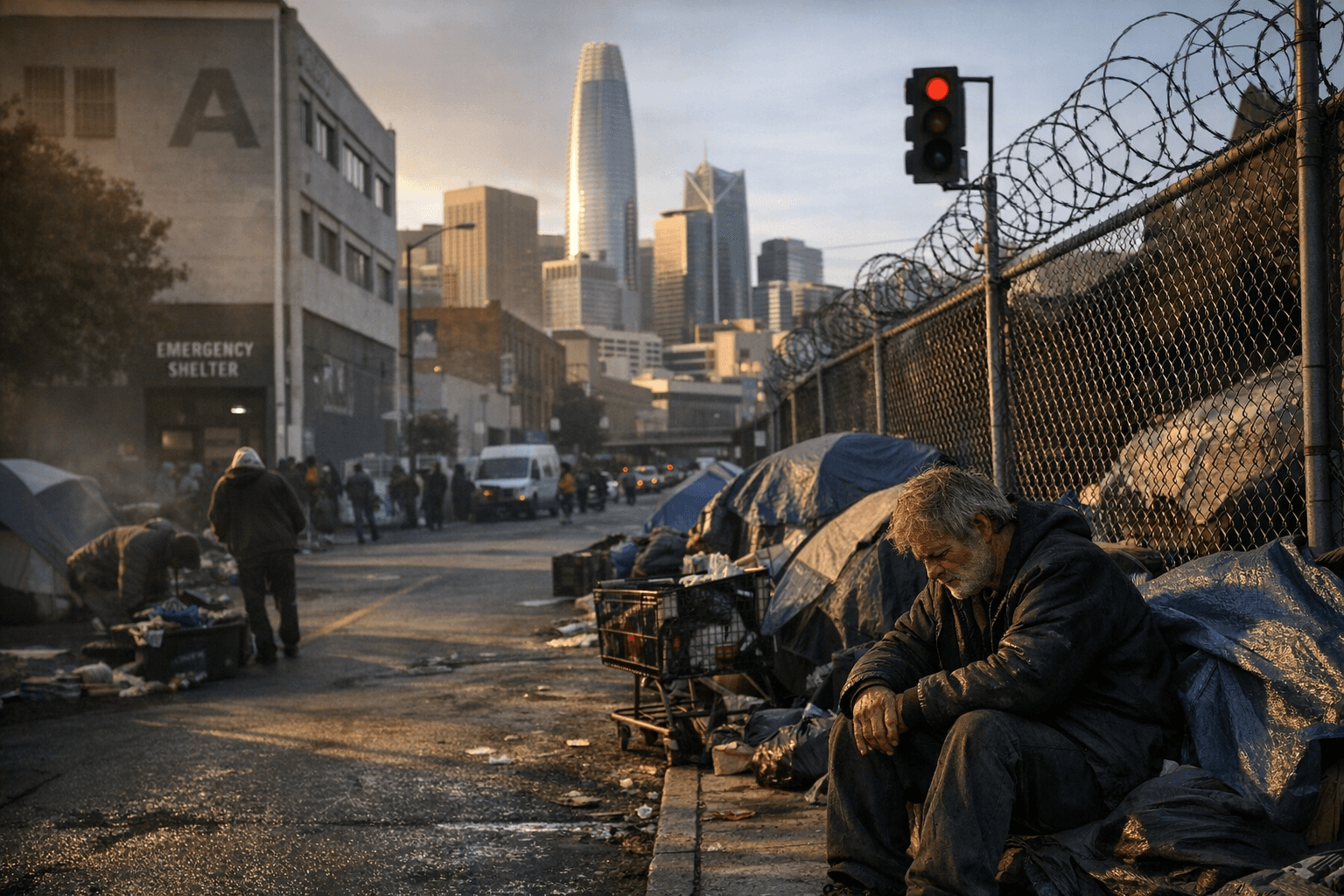
On the sidewalks and storefronts of South of Market, Fernando Senegal has watched his neighborhood absorb what he and his neighbors describe as the city's entire social-safety net. Property damage, break-ins, and open-air drug use have become routine enough that Senegal, along with the SOMA West Neighborhood Association, concluded that years of complaints to City Hall had produced nothing. So they went to Sacramento.
The association filed a formal complaint on April 3 with the California Attorney General's Office and the California Department of Housing and Community Development, arguing that San Francisco has created an unlawful "hyper-concentration of poverty" in SOMA by packing an outsized share of the city's homeless shelters, supportive housing, and behavioral-health services into a single neighborhood. The complaint frames that accumulation not as a policy inconvenience but as a civil-rights violation, arguing it constitutes a form of segregation prohibited under state housing law.
"I started off with the association just with a lot of frustrations most neighbors would have, just the cleanliness and how we operate as a neighborhood itself, as far as safety," Senegal said.
Association board member Alex Ludlum is among those pressing the legal argument that the geographic concentration of services for people experiencing homelessness, when it produces conditions disproportionately harmful to one community, crosses a legal line the state is obligated to address. The complainants are asking the state to require San Francisco to take affirmative steps to distribute those services more equitably across all neighborhoods, a process the filing explicitly calls "de-segregation."
The argument carries real stakes for city planning and permitting. If the Attorney General or the Department of Housing and Community Development accepts the complaint for a formal investigation, it could compel the city to demonstrate that services have been spread equitably, impose remedies, or reshape how and where future shelters and supportive housing are sited. That would affect not just SOMA but every district currently insulated from the infrastructure the association says has overwhelmed their streets.
Advocates for people experiencing homelessness and many service providers have long defended clustering services near existing supportive infrastructure and concentrated need. The SOMA West complaint challenges that logic directly, contending that operational convenience cannot justify the localized harms absorbed by one neighborhood while others go largely untouched.
The filing arrives as San Francisco continues to grapple with where to site new homeless facilities, a debate that has ignited opposition in neighborhoods from the Sunset to the Richmond whenever a new shelter or navigation center is proposed. By invoking state housing statutes and civil-rights frameworks, the SOMA West Association is attempting to pull that debate out of the realm of neighborhood grievance and into a legal arena where the city could face enforceable obligations.
The complaint is not the beginning of this fight. It is the escalation that comes after residents say the city left them with no other option. Whether the state agencies accept it for investigation, and on what timeline, will determine whether the legal strategy delivers what years of local advocacy could not: a binding answer to the question of who, across San Francisco, is responsible for bearing this weight.
This article was produced by Prism’s automated news system from verified source data, official records, and press releases, then run through automated quality and moderation checks before publishing. The system is built and supervised by the people who set the standards it runs under. Read our full AI policy.
Did this article answer your question?