SoMa's Folsom Streetscape Project Advances With Sewer, Water Main Upgrades
Folsom Street's 950-day reconstruction is past the halfway mark, with century-old sewers rebuilt and water mains now going in across SoMa's most-crashed corridor.
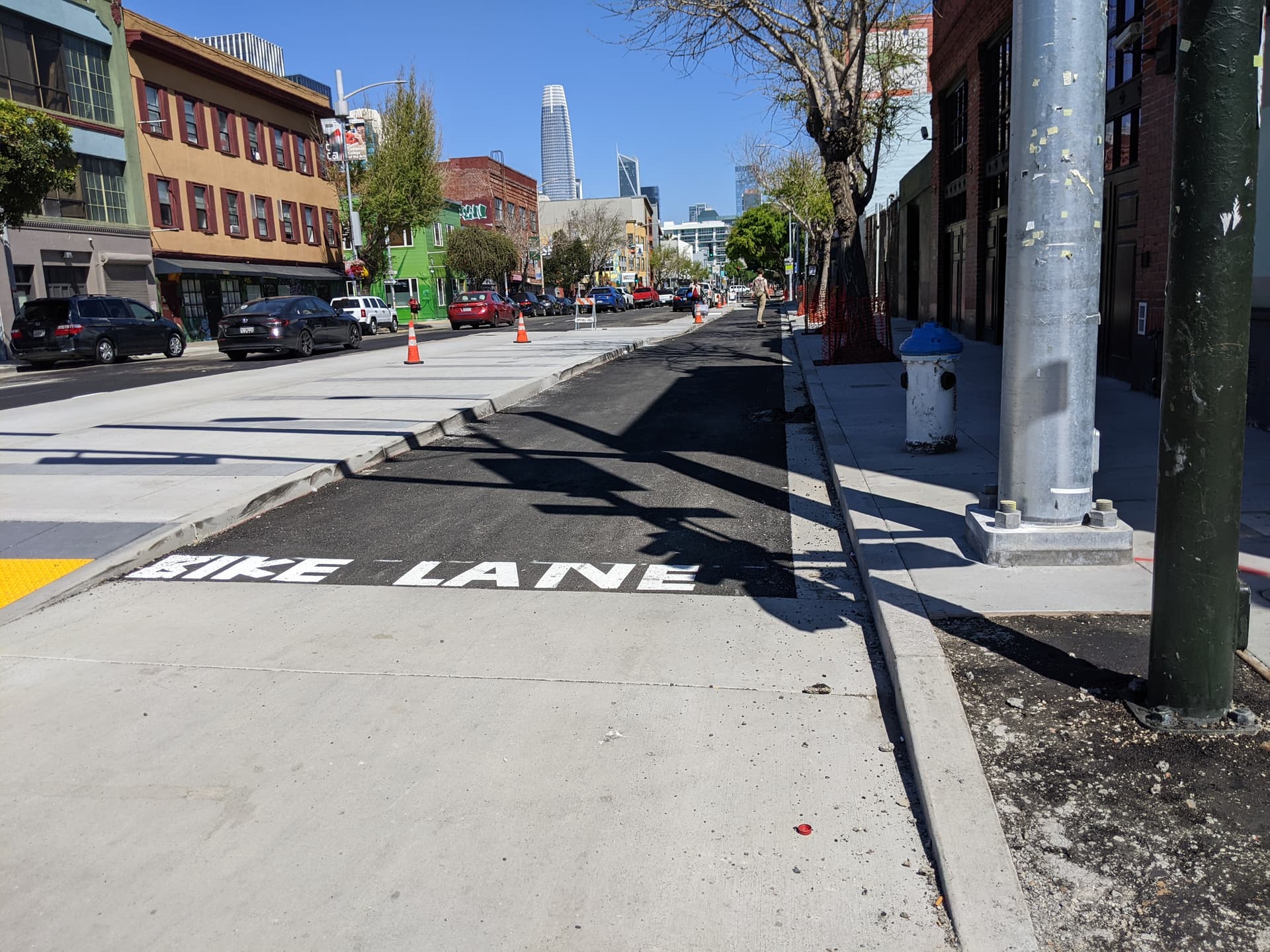
Between 7th and Rausch in SoMa, Folsom Street has been stripped to subgrade and rebuilt in concrete for nearly two years. For the cyclists and pedestrians threading daily detours across this nine-block corridor, a single number explains the upheaval: 31 collisions involving cyclists or pedestrians in a five-year span, a toll that placed Folsom on the city's Vision Zero high-injury network and set this overhaul in motion.
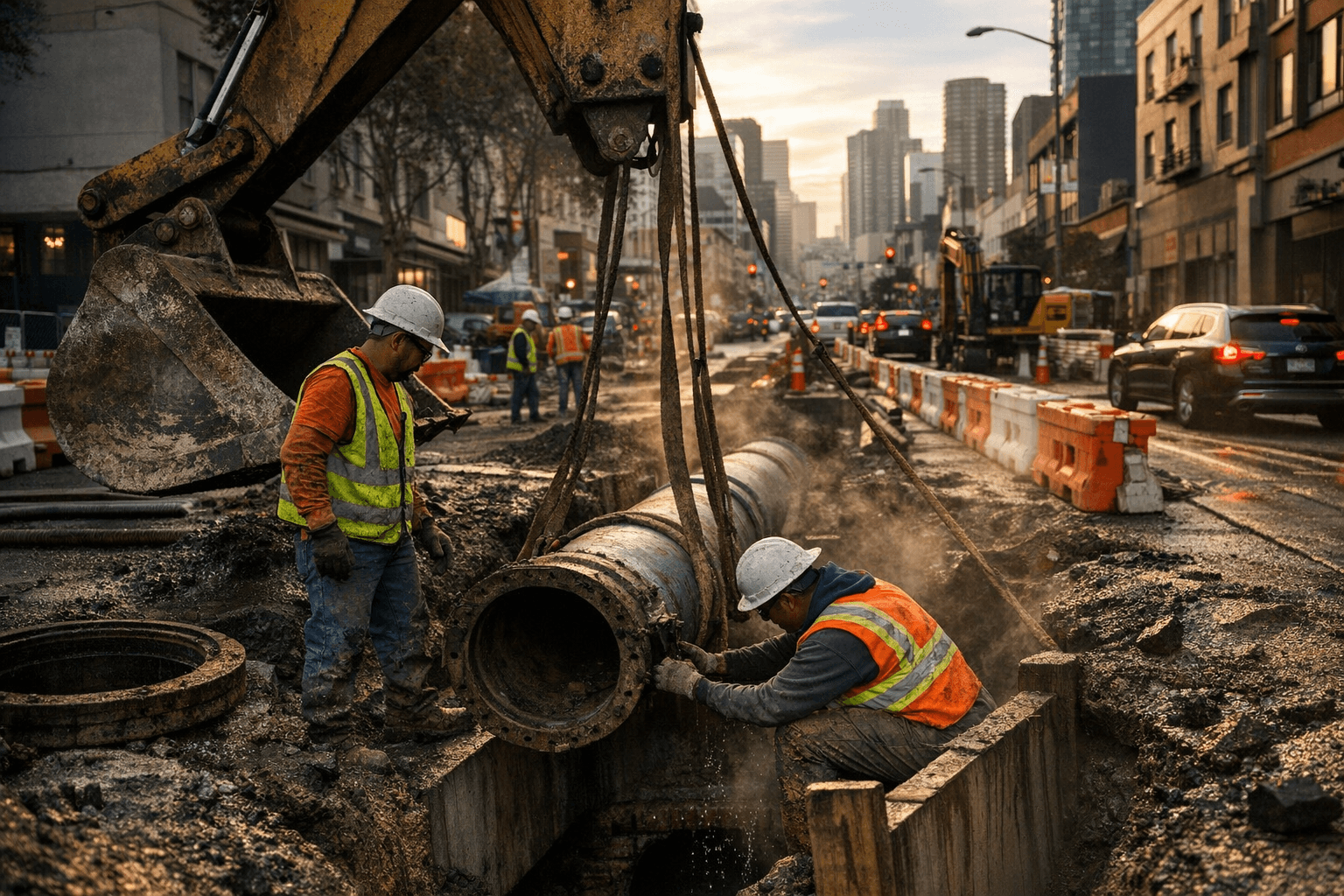
The San Francisco Department of Public Works reported this week that the project has crossed a critical underground threshold. Contractor Mitchell Engineering has completed major repairs to the corridor's 100-year-old sewer system, finishing televising, obstruction removal, and pipe reconstruction throughout the length of Folsom between 2nd and 11th streets. All electrical work for new traffic signals and street lighting is also done. Workers are now actively installing water mains and high-pressure lines that feed fire hydrants, upgrades the city describes as essential for both daily service and firefighting capacity along a dense urban corridor.
The sequencing is deliberate: fix buried infrastructure permanently before any finished surface goes down, avoiding future pavement cuts for utility repairs. Underground first, streetscape second.
Current demolition and concrete work is concentrated in Segment 2, the stretch between 8th and 5th streets. Crews have been pouring new concrete at the intersections of Rausch, Rodgers, Hallam, Langton, and Harriet. Street base for the permanent protected bike lane between 7th Street and Columbia Square was completed in January, alongside travel lane base between 7th and Russ. Irrigation line crossings at 5th, 7th, and Langton were nearing completion as of early March.
The disruption moves with the work. Parking bans and lane closures shift every few days as crews finish one block and advance to the next, with short pedestrian detours rerouting foot traffic around active corner pours. Businesses along the corridor have been kept accessible, the project team says, though the churn of daily lane changes has stretched across multiple blocks for the better part of two years. Segment 3, covering 5th Street down to 2nd, follows the current phase.
The safety payoff sits at the end of the construction timeline. A permanent two-way protected bikeway, shielded by a concrete median, will replace the painted, one-way quick-build lane installed in 2017. Bulb-outs will shrink pedestrian crossing distances at the intersections where analysis of Folsom and Howard collisions found 89 percent of pedestrian and bike crashes occur. A road diet reduces the corridor from three or four vehicle travel lanes down to two, new medians add street trees, and rebuilt transit boarding islands take riders off the live travel lane. Safety advocates have traced 59 percent of collisions on the Folsom and Howard corridors to speeding, red-light running, and other motorist behaviors the redesigned signal geometry is specifically meant to interrupt.
The project is on track for substantial completion in October 2026. Final sidewalk and curb reconstructions, cycle track installation, and finish paving remain before that deadline.
This article was produced by Prism’s automated news system from verified source data, official records, and press releases, then run through automated quality and moderation checks before publishing. The system is built and supervised by the people who set the standards it runs under. Read our full AI policy.
Did this article answer your question?