Tenderloin residents say chaos persists despite city crime declines
At Jones and Ellis, residents said open drug use and disorder still define daily life even as City Hall points to lower crime and fewer encampments.
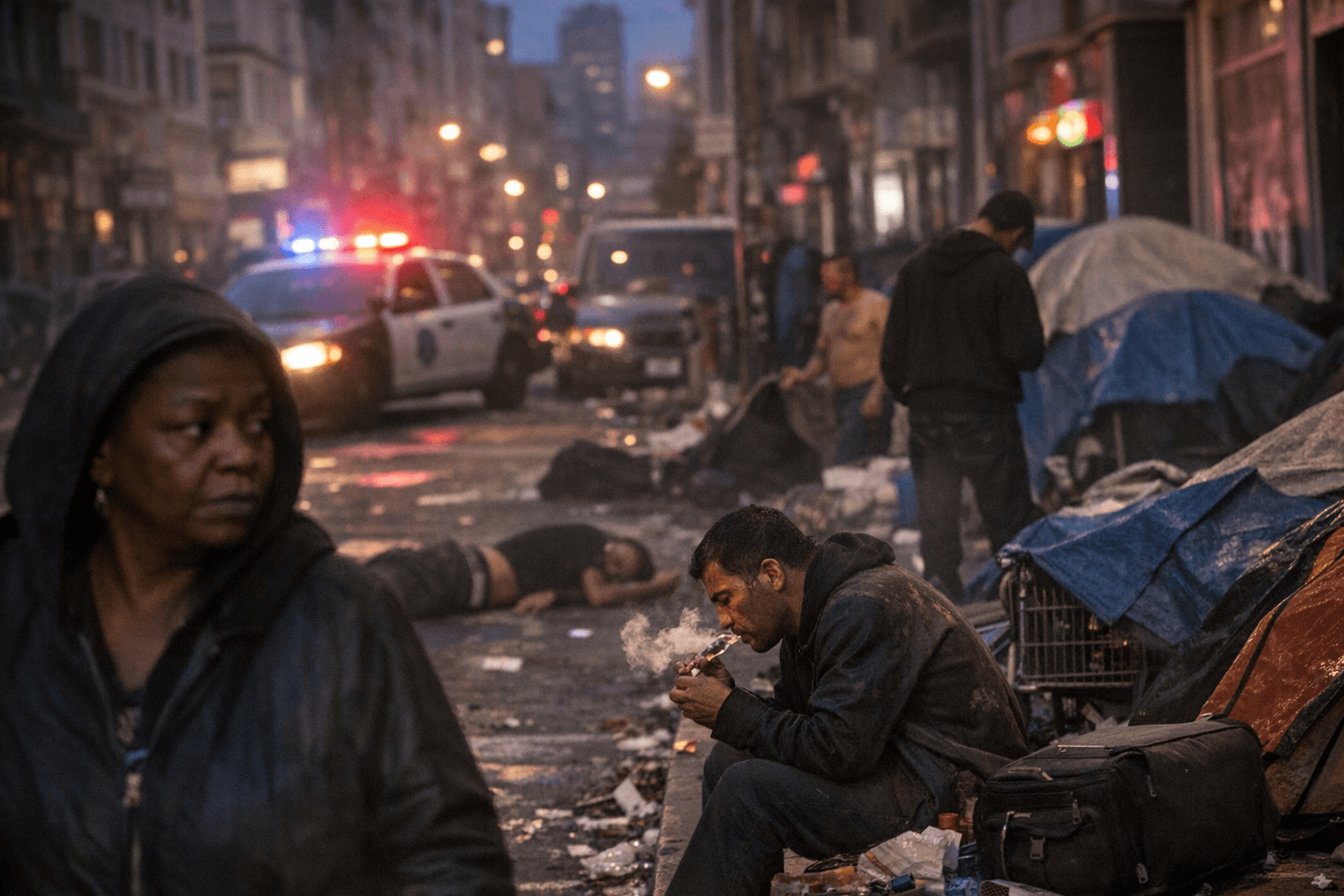
At Jones and Ellis in the Tenderloin, the city’s progress story sounded very different from what people saw on the sidewalk. While San Francisco officials have highlighted lower crime numbers and fewer encampments, residents and workers at the intersection described a corridor where open drug use, public disorder and fear still shape the day.
The gap between headline statistics and block-by-block reality has made the Tenderloin a test case for Mayor Daniel Lurie’s public safety push. The San Francisco Police Department’s year-end 2025 recap said overall crime fell 25%, violent crime dropped 18% and property crime declined 27%. City Hall has also leaned on Tenderloin-specific dashboards tracking 911 calls for violent crime, arrests in the Tenderloin police district and narcotics seizures, including fentanyl. But at Jones and Ellis, those numbers have not yet translated into a feeling of stability.
Randy Shaw of the Tenderloin Housing Clinic called the intersection emblematic of the neighborhood’s problems, arguing that conditions there would not be tolerated elsewhere in the city. ABC7’s reporting from April 15 showed that some people who live and work nearby still see the same basic problems on the street, even as officials say the neighborhood is changing.
The city has been trying to show that it is not standing still. In January 2024, San Francisco announced the Tenderloin Community Action Plan, a $4 million effort that increased law enforcement presence, expanded an ambassador program and coordinated department operations to move people off the street and into shelter. In July 2024, the Board of Supervisors passed a nighttime safety ordinance restricting certain retail shops in parts of the Tenderloin from operating between midnight and 5 a.m., a move officials said was aimed at disrupting open-air drug markets.
Mayor London N. Breed’s office later said a multi-agency crackdown in the Tenderloin and South of Market led to more than 3,000 arrests and roughly 200 kilos of narcotics seized over one year. On Feb. 29, 2024, the city said nearly half of the people cited for public drug use did not live in San Francisco. Even so, the city’s 2025 homelessness needs assessment said unsheltered homelessness in the Point-in-Time count was largely unchanged since 2022, despite more people in shelter.
That tension helps explain why the city is betting on a more structured public-health response with the planned RESET Center at 444 Sixth Street, next to the Hall of Justice. Expected to open in spring 2026, the center will handle public intoxication cases in South of Market, with people brought there by law enforcement after arrest and held in a monitored setting until they can care for themselves. In a neighborhood where residents still describe the street as chaotic, City Hall’s challenge is no longer proving it has a plan. It is proving that the plan can be felt at Jones and Ellis.
This article was produced by Prism’s automated news system from verified source data, official records, and press releases, then run through automated quality and moderation checks before publishing. The system is built and supervised by the people who set the standards it runs under. Read our full AI policy.
Did this article answer your question?