Chronicle urges yes on Prop A, funding earthquake safety upgrades
San Francisco is asking voters for up to $535 million to retrofit fire, police and transit facilities before the next major quake hits the city.
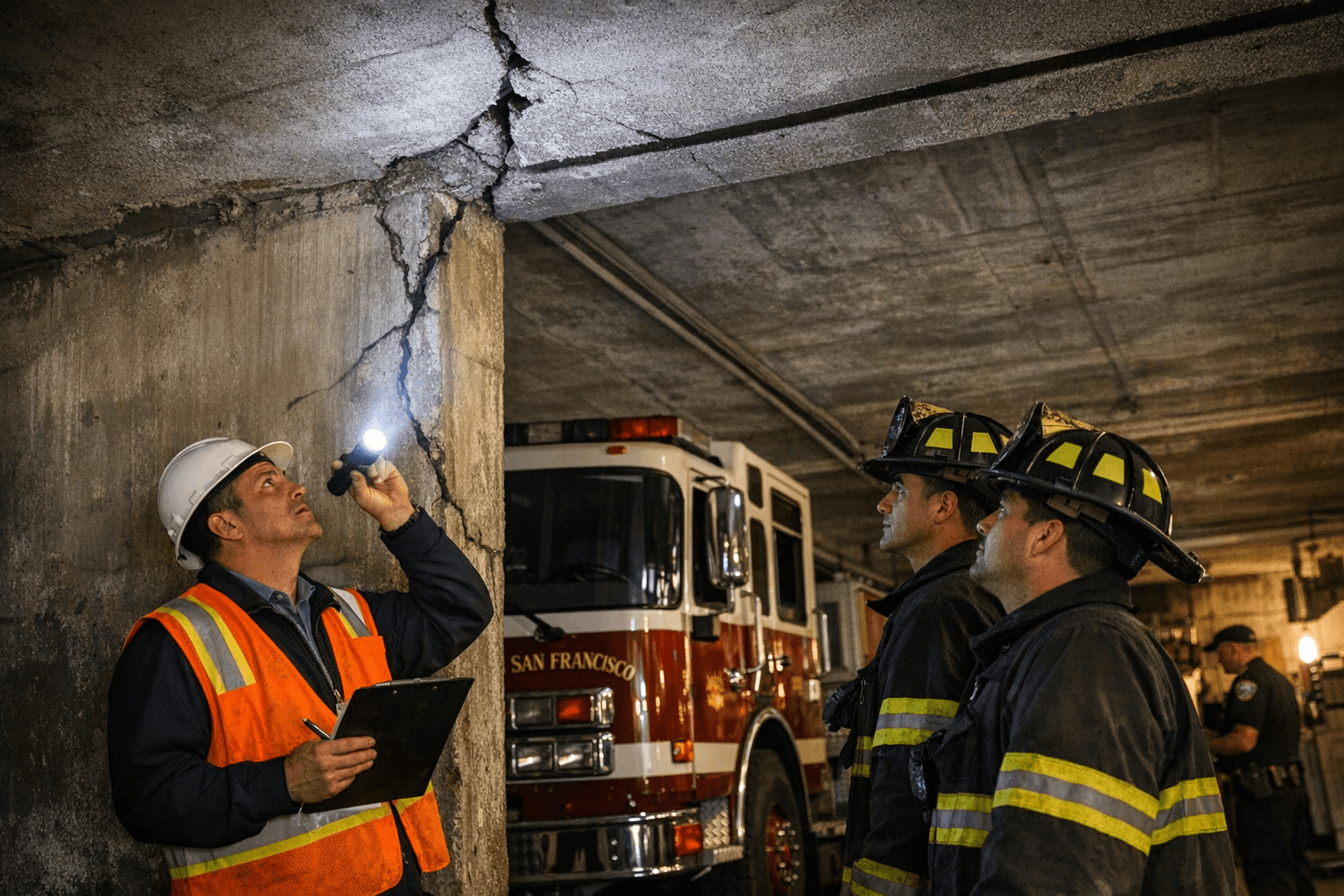
San Francisco voters will decide June 2 whether to authorize up to $535 million in bonds to harden the city’s earthquake-response backbone, from the Emergency Firefighting Water System to fire and police stations and the Muni bus storage and maintenance facility at Potrero Yard.
Measure A, the Earthquake Safety and Emergency Response bond, is being pitched as a practical safeguard against the kind of disaster seismologists say is inevitable on the Bay Area fault network. The city says the money would cover construction, acquisition, improvement, rehabilitation, renovation, expansion and seismic retrofitting of emergency-response facilities, with the goal of keeping basic services working after a major quake.
Mayor Daniel Lurie and Board of Supervisors President Rafael Mandelman announced the bond on January 14. The measure also includes a homeowner and renter cost provision: landlords would be allowed to pass through 50% of any resulting property-tax increase to residential tenants.
The list of projects is specific because the risk is specific. San Francisco’s Emergency Firefighting Water System is intended to keep water available when ordinary mains fail. Fire and police stations need to remain usable after shaking, and Potrero Yard has to keep buses moving if parts of the city are cut off or congested. In a city where steep streets, aging buildings and dense neighborhoods can magnify the effects of a disaster, those systems are part of daily life as much as emergency planning.
City officials have spent years trying to prepare for that moment. San Francisco’s Earthquake Safety Implementation Program began in late 2011 or early 2012 as a 30-year plan built on the Community Action Plan for Seismic Safety, completed in 2010. The city says it has invested more than $20 billion in seismic improvements since the 1989 Loma Prieta earthquake, including mandatory soft-story retrofit rules that were signed on the anniversary of the 1906 earthquake.
The bond would add to that long campaign. Voters approved a $628.5 million ESER bond in 2019, and a 2010 earthquake bond proposal was about $412.3 million. On April 15, the city also launched a screening program for at-risk concrete buildings, a reminder that the retrofit work is still unfinished.
The urgency is rooted in the kind of catastrophe the U.S. Geological Survey has modeled. In its HayWired scenario for a hypothetical magnitude-7 Hayward Fault earthquake, the broader Bay Area faced about 800 deaths and 16,000 nonfatal injuries. San Francisco’s argument is blunt: pay now for seismic upgrades, or face far higher human and financial costs when the next major quake arrives.
This article was produced by Prism’s automated news system from verified source data, official records, and press releases, then run through automated quality and moderation checks before publishing. The system is built and supervised by the people who set the standards it runs under. Read our full AI policy.
Did this article answer your question?