Tonga Room keeps old San Francisco charm with its house band
Inside the Fairmont’s lagoon, Island Groove keeps the Tonga Room sounding like San Francisco. The house band is a rare live signal that this city still protects its odd, theatrical places.
Why the house band still matters
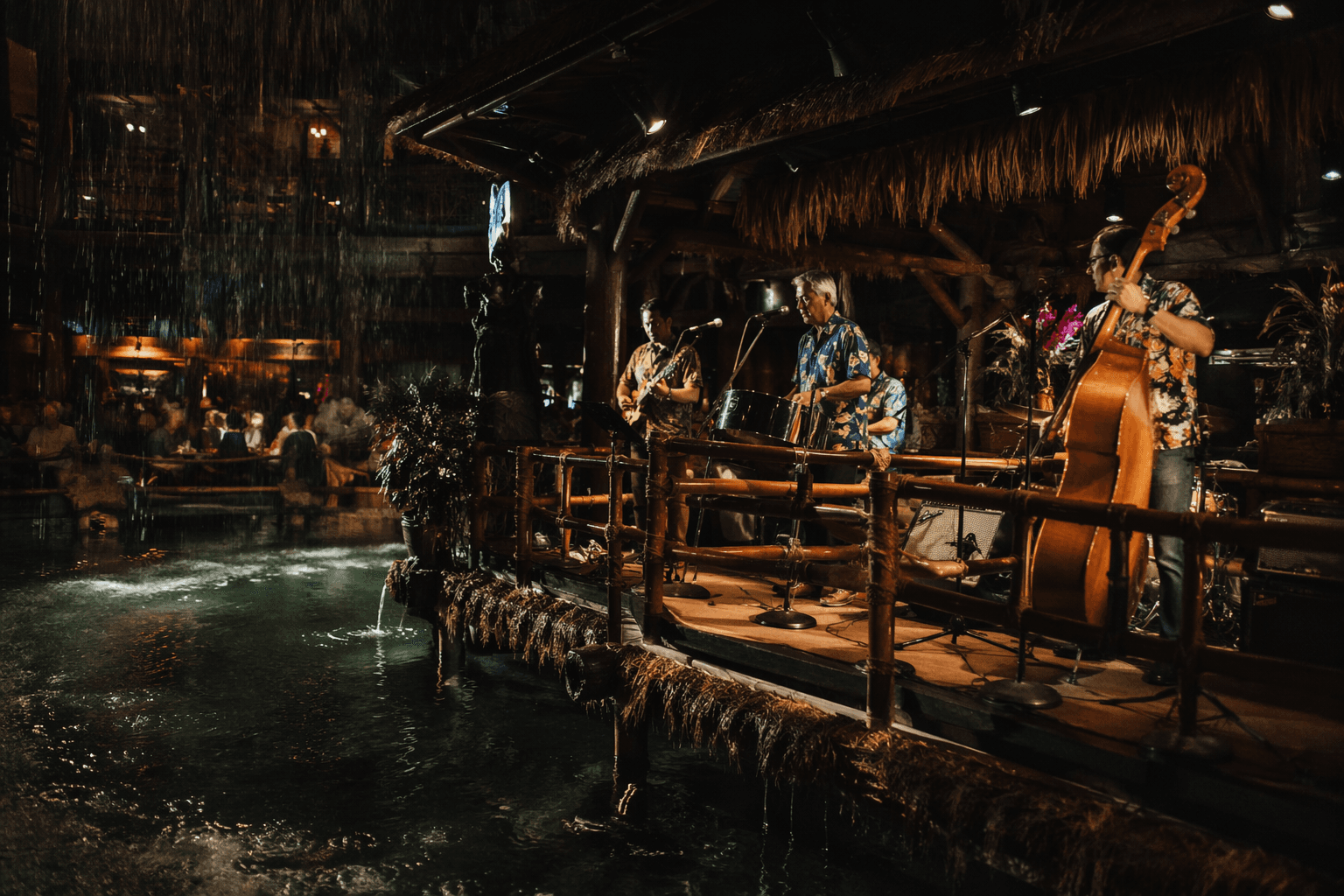
At 7:00 p.m. nightly, the Tonga Room & Hurricane Bar does something many San Francisco venues no longer bother to do: it turns the room over to a live house band. Fairmont San Francisco says Island Groove plays from a floating boat or barge in the lagoon, with a $20 entertainment cover charge for seated diners and bar guests, waived for registered hotel guests.
That detail is not decorative trivia. In a city that constantly rebrands itself through new concepts, short leases, and sleek remodels, the house band gives the Tonga Room a pulse that feels stubbornly intact. Guests are not just ordering drinks in a themed lounge; they are stepping into a working performance space where the music, the room, and the schedule all still follow a repeatable ritual.
A San Francisco institution built around spectacle
The Tonga Room opened in 1945 inside the Fairmont San Francisco on Nob Hill, and its origin story tells you almost everything about why it still resonates. The hotel’s 1929 indoor pool, the Fairmont Terrace Plunge, was transformed into a lagoon-like entertainment space, with MGM set designer Mel Melvin credited for shaping the conversion. The result was never meant to feel ordinary.
The room’s construction details reinforce that idea. Fairmont says parts of the dance floor and bar use salvaged wood from the S.S. Forester, a lumber schooner, which gives the space a physical connection to the city’s maritime imagination. Combined with the periodic tropical rainstorms, thunder, and lightning, the whole room leans into theatrical excess in a way that is both deeply engineered and deeply San Francisco.
Island Groove keeps the room alive night after night
The current house band, Island Groove, is the reason the Tonga Room still feels like a living venue rather than a preserved set. Fairmont describes the band as part of the room’s nightly experience, and SFGATE identified it as a four-piece group with guitar, drums, keyboard, and vocals. That lineup matters because it signals something increasingly rare in hotel nightlife: a real band, playing to the room rather than to a playlist.
Bandleader CJ Simbre said he has been with Island Groove for 19 years, a length of tenure that tells its own story about continuity. In a city where restaurant concepts and entertainment programs often change with the season, that kind of longevity helps explain why the Tonga Room’s identity has survived so many shifts in taste. The repetition is the point. Locals recognize the room not just by its décor, but by the dependable return of the same musical rhythm.
The room survived because San Francisco fought for it
The Tonga Room has been a preservation issue before, and that history explains why the band carries more weight than it might elsewhere. In 2009, Fairmont condo-conversion plans raised fears that the venue could be displaced, prompting a preservation fight that brought together a small ad hoc coalition determined to protect it. The effort ultimately helped secure special landmark protection from the City and County of San Francisco.
That landmark status gives the Tonga Room a civic significance that goes beyond nostalgia. It is one of the places where San Francisco’s identity economy is easiest to see in action: the city protects it because it is not just a business, but a recognizable piece of local mythology. When a place has survived a real threat to its existence, the details that remain, especially a live house band, start to function like proof of life.
What to expect when you go
The Tonga Room is still one of the last places in San Francisco where a house band is part of the nightly routine, and that alone makes it worth planning around. Fairmont says Island Groove starts at 7:00 p.m. nightly, so if you want the full effect of the lagoon, the music, and the room’s theatrical atmosphere, arriving at dinner time is the simplest way to experience it.
A few practical points stand out:
- Live music starts nightly at 7:00 p.m.
- The entertainment cover charge is $20 for seated diners and bar guests.
- Registered hotel guests do not pay the cover.
- The band performs from the lagoon on a floating boat or barge.
Those details matter because the Tonga Room is not a passive attraction. The experience depends on timing, presence, and the room’s performance schedule. If you arrive after the band starts, you are entering a scene already in motion, which is exactly how the place is supposed to feel.
Why the Tonga Room still reads as unmistakably local
The Tonga Room has long been praised as one of the great bars of the world, and Anthony Bourdain’s public admiration helped turn it into an icon that is equal parts kitsch and reverence. But the room’s real durability comes from how San Francisco continues to claim it as its own. It remains tied to Nob Hill, to the Fairmont, and to the city’s appetite for spaces that are strange enough to feel personal.
That is why the house band matters so much now. In many cities, the old detail would have been cut for efficiency, replaced by a speaker system or a DJ set. Here, the live band becomes part of the argument for preservation: some places are worth keeping precisely because they still ask for human performance, not just human traffic.
The Tonga Room endures because it does more than preserve a look. It preserves a rhythm, a ritual, and a specific kind of San Francisco absurdity that has become, over time, one of the city’s most valuable cultural assets.
This article was produced by Prism’s automated news system from verified source data, official records, and press releases, then run through automated quality and moderation checks before publishing. The system is built and supervised by the people who set the standards it runs under. Read our full AI policy.
Know something we missed? Have a correction or additional information?
Submit a Tip