UCSF doctor warns court ruling on abortion pills could curb telehealth access
A UCSF doctor says the abortion-pill ruling could push San Franciscans back into in-person visits, disrupting telehealth that now serves 27% of U.S. abortions.

At UCSF, Dr. Ushma Upadhya said the federal court ruling on abortion pills threatens patients who depend on telehealth for speed, privacy and convenience, including San Franciscans trying to avoid a long wait for care or a trip across the city. “Telehealth has really been a lifeline to so many people who need this care,” she said.
The Fifth Circuit Court of Appeals temporarily reinstated a nationwide requirement on May 1 that mifepristone be dispensed in person, siding with Louisiana in Louisiana v. FDA. Louisiana had asked the court on April 17 to bring back the in-person rule while the appeal continues. Because the case targets Food and Drug Administration regulations, the effect reaches patients in all 50 states, not just the states directly in the lawsuit.
That has immediate consequences in California, where telehealth medication abortion has become a practical option for people who need fast access, cannot easily travel, or want care that is private. Planned Parenthood materials describe telehealth medication abortion in California as safe, convenient and private, and the organization has said it will continue telehealth care where it is legally permitted. Patients have been told to contact health centers with questions as the ruling ripples through the system. Gov. Gavin Newsom also said California will fight attempts to restrict reproductive rights.
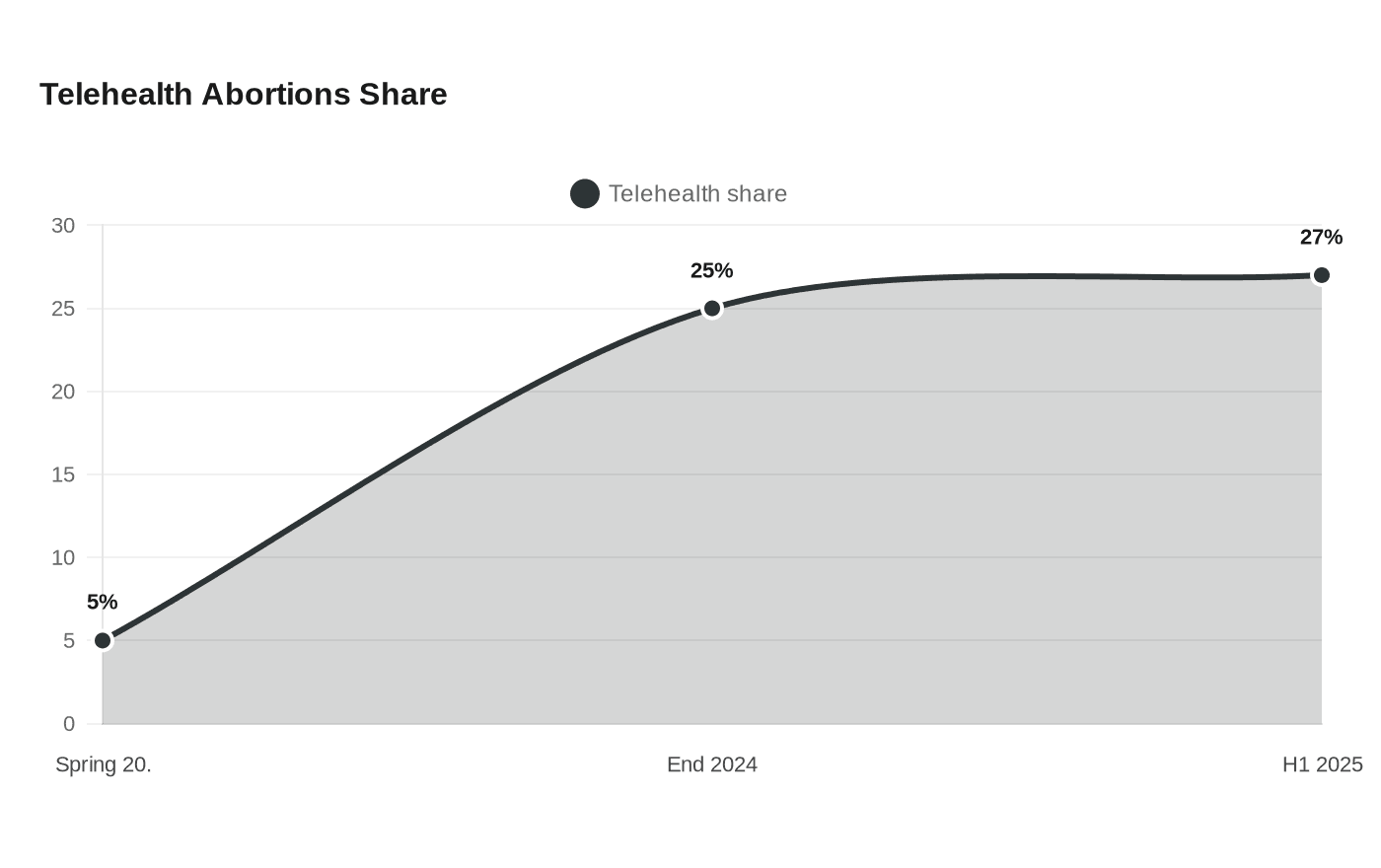
The scale of telehealth care shows why the ruling lands far beyond a courtroom. Society of Family Planning reported that telehealth accounted for 27% of abortions in the first half of 2025, up from 25% at the end of 2024 and about 5% in spring 2022. Guttmacher estimated there were 1,038,100 clinician-provided abortions in U.S. states without total bans in 2024. For many patients, that means a video visit, a prescription and mail delivery have become part of routine reproductive care, not a workaround.
The legal fight also sits atop years of federal changes. The FDA relaxed some mifepristone restrictions in 2016, approved a generic version in 2019 and said in 2021 that it would no longer enforce the initial in-person visit requirement. The U.S. Supreme Court left that regime in place on June 13, 2024, when it decided FDA v. Alliance for Hippocratic Medicine. Now mifepristone manufacturers have asked the Supreme Court to temporarily restore mail access while the case moves forward, leaving San Francisco patients in the middle of a national fight over how quickly, privately and safely they can get care.
This article was produced by Prism’s automated news system from verified source data, official records, and press releases, then run through automated quality and moderation checks before publishing. The system is built and supervised by the people who set the standards it runs under. Read our full AI policy.
Did this article answer your question?