Aztec commission advances BMX track plan amid paperwork concerns
Aztec advanced a Riverside Park BMX site, but Padilla pressed staff on unsigned agreements, trash-removal language and recusal rules.
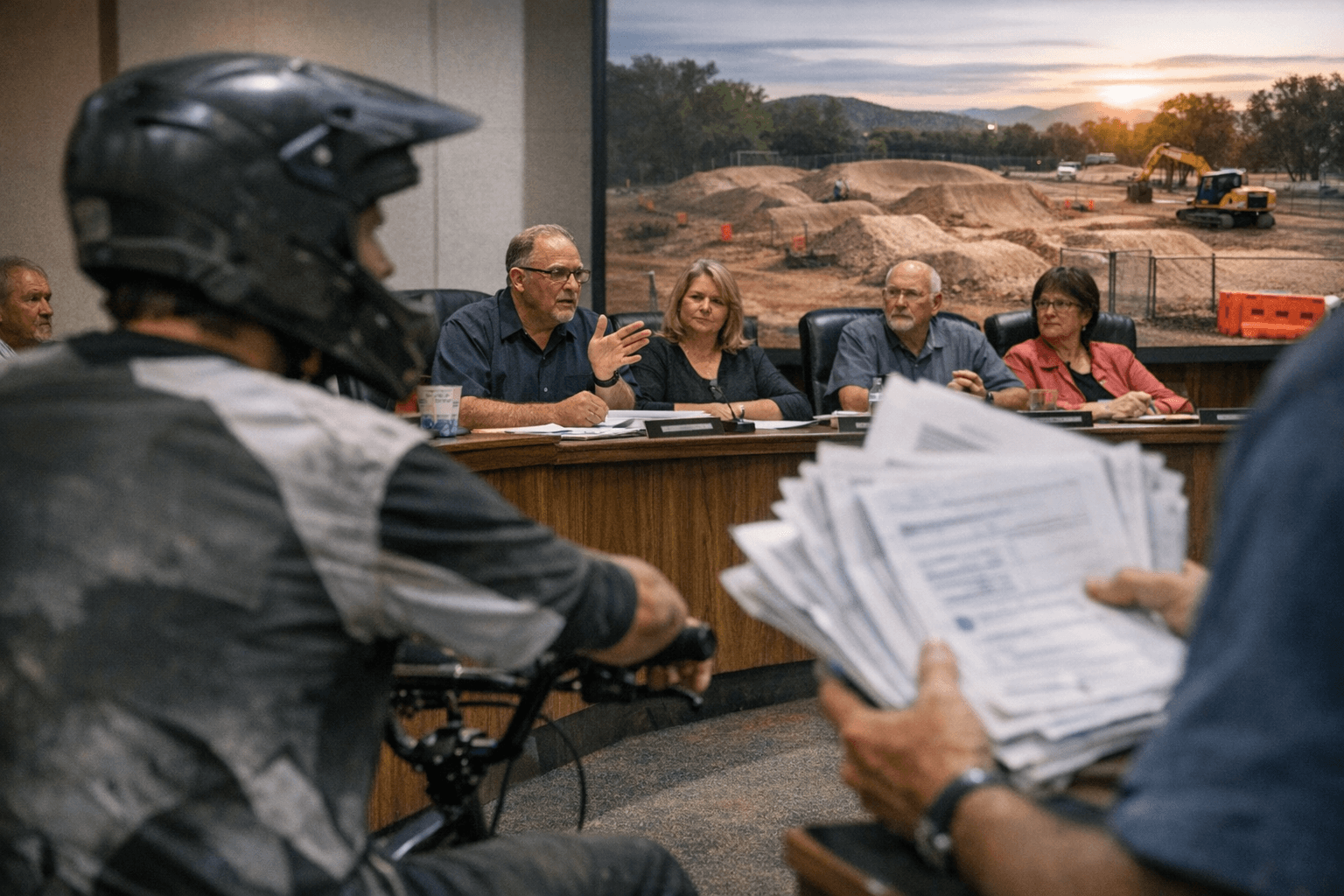
Aztec moved ahead with a new BMX track site at Riverside Park on April 14, but the bigger story inside City Hall was whether the paper trail was clean enough to hold up. Mayor Mike Padilla said agreements should be signed first by the requesting party, then by the city, reviewed by the attorney and placed in the file, and he flagged contradictory language about trash removal in Item D and a $500-per-year fee issue in Item E involving the Aztec Baseball Association. City staff also told commissioners the BMX facility would be a near-total private lift, with Aztec Riverside BMX expected to cover 99% of the construction cost.
The site choice was not sudden. City staff met with BMX board representatives in early November before a presentation to the Economic Development Advisory Board, and the group’s project materials described Riverside Park as the preferred location. The BMX organization says its goal is to create a safe, permanent track that serves riders of all ages and skill levels, hosts local races and clinics and brings the community together, which helps explain why the city kept returning to the same patch of parkland rather than starting from scratch elsewhere in Aztec.
Questions about process did not stop with the park item. Commissioner Katie Buchholz said she wanted to make sure there was no conflict of interest on any consent item, and Community Development Director Andrew DiCamillo said board appointments do not spell out conflicts because members are expected to recuse themselves when needed. He also noted that the Planning and Zoning board requires Aztec residents, while the Economic Development Advisory Board does not, a distinction that matters when city business moves through appointed boards and comes back to the commission for action.
The meeting also revisited Aztec’s delayed 2025 audit. Chris Garner of PB&H LLP said the delay came because the federal government had not released required information on time, with federal guidance arriving in December and Aztec’s audit released in late March. Garner said the audit went smoothly and found only one compliance issue, involving notification to the state about garnishment. For a city weighing a youth sports investment against public finance procedures, the BMX vote and the audit discussion landed in the same room for the same reason: Aztec wants the project, but it also wants the paperwork right.
This article was produced by Prism’s automated news system from verified source data, official records, and press releases, then run through automated quality and moderation checks before publishing. The system is built and supervised by the people who set the standards it runs under. Read our full AI policy.
Did this article answer your question?