Navajo Nation candidates face filing deadline at Window Rock auditorium
Candidates had until 5 p.m. Tuesday to file at Window Rock, a deadline that will shape who San Juan County voters can choose for Navajo Nation president, Council and local seats.
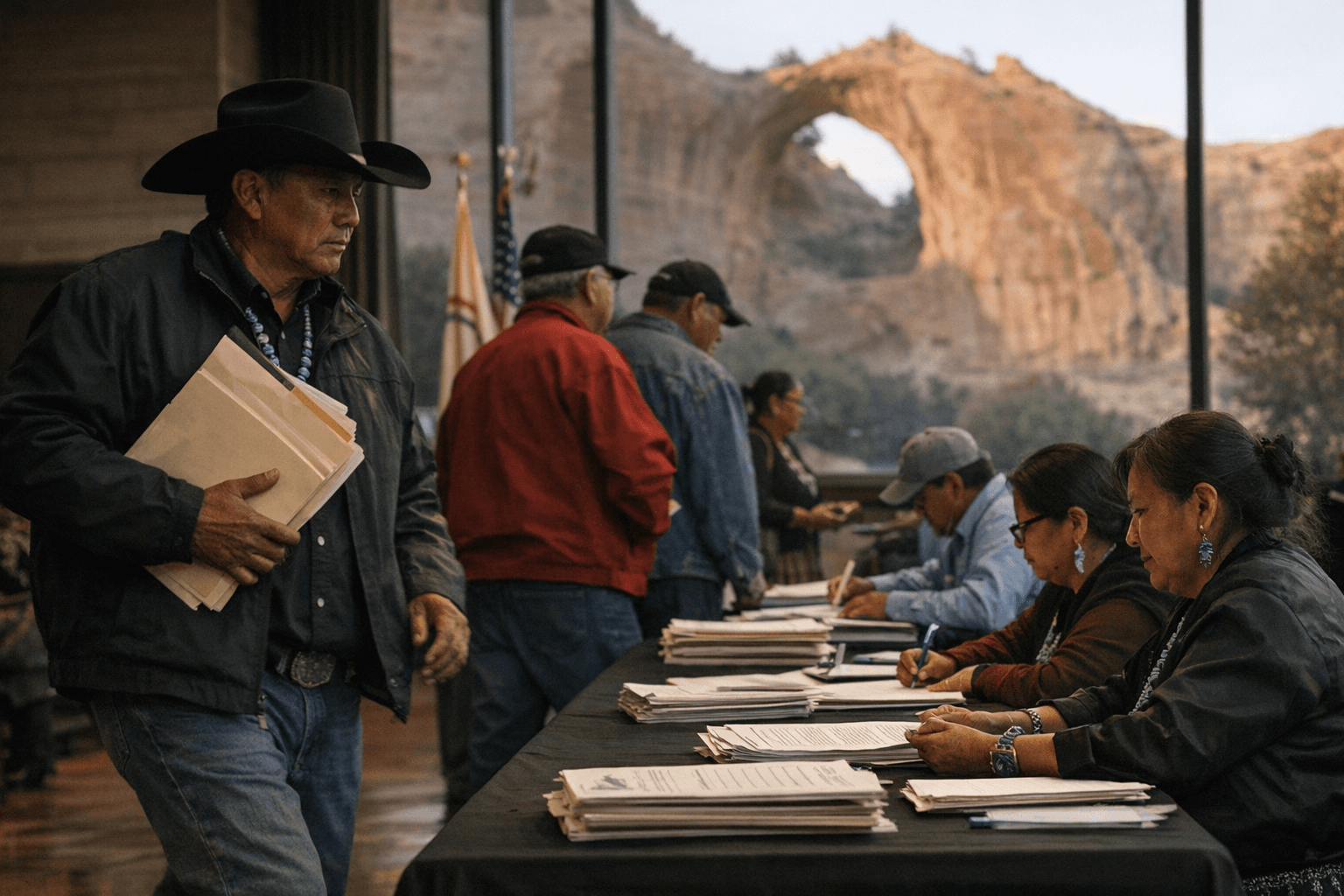
Candidates for Navajo Nation office faced a hard filing cutoff at 5 p.m. Tuesday, with last-day paperwork funneled to the Department of Diné Education auditorium in Window Rock, a final stop that will decide who actually reaches the ballot in a race with direct consequences for Shiprock, Farmington and other San Juan County communities tied to tribal government.
The filing window opened April 9 and closed April 22 at 5 p.m. DST, and the Navajo Nation moved its 2026 presidential primary to Tuesday, July 21. The shift puts the Nation on three separate election timelines for voters in Arizona, New Mexico and Utah, a complicated calendar that will run through the summer campaign season and into the post-election grievance period.
For many San Juan County residents, the most important contests are the presidency, the Navajo Nation Council and the local chapter and commissioner seats that shape day-to-day services. The 2026 ballot includes the president, Council delegate seats, two Kayenta Township commissioner seats, two Naschitti Chapter governance commissioner seats, Navajo Nation Board of Education positions and Navajo Board of Election Supervisors seats. Those races will determine who controls schools, local governance and the legislative agenda across the reservation, including communities that look to Shiprock and nearby agency offices for representation.
The qualification sheets set clear gatekeeping rules. Presidential candidates must be at least 30 years old by the general election, while Council delegate candidates must be at least 25. Both must be enrolled on the Bureau of Indian Affairs agency census roll, and active voter registration is required. Filing fees were set at $1,500 for president, $500 for Council and $200 for the other offices.
The early filing pace was slow compared with prior cycles, with only a handful of Council and presidential candidates having submitted paperwork through agency offices by the time of the report. Attorney Justin Jones, who filed for president on the first day in Shiprock, became one of the first high-profile names on the board as he framed his campaign around reform, corruption and bureaucracy. His entry gave the race an immediate focal point, even as much of the field remained unsettled.
The ballot-access scramble comes as election officials also weigh reapportionment, with five Council map plans under consideration and three preferred by election supervisors. That makes the 2026 cycle more than a routine filing period. It is a test of who gets on the ballot, how voters are represented and whether the summer election produces real competition or a set of races that are already tilted by who made the deadline and who did not.
Voting deadlines now follow fast behind the filing cutoff. Voter registration for the primary closes June 4, absentee voting runs June 15 through July 17, and campaign expense statements and grievances are due July 31.
This article was produced by Prism’s automated news system from verified source data, official records, and press releases, then run through automated quality and moderation checks before publishing. The system is built and supervised by the people who set the standards it runs under. Read our full AI policy.
Did this article answer your question?