Aztec shop’s handmade rafts aid NASA’s Artemis II recovery mission
A small Main Avenue shop in Aztec built the orange rafts NASA used to recover Artemis II astronauts, putting San Juan County craftwork on a national stage.
A Main Avenue shop on a moon mission
A small shop on Main Avenue in Aztec ended up inside one of NASA’s most watched space operations. Jack’s Plastic Welding built the handmade orange recovery rafts used for Artemis II, a startling link between San Juan County manufacturing and a mission that ended with four astronauts splashing down in the Pacific off San Diego.
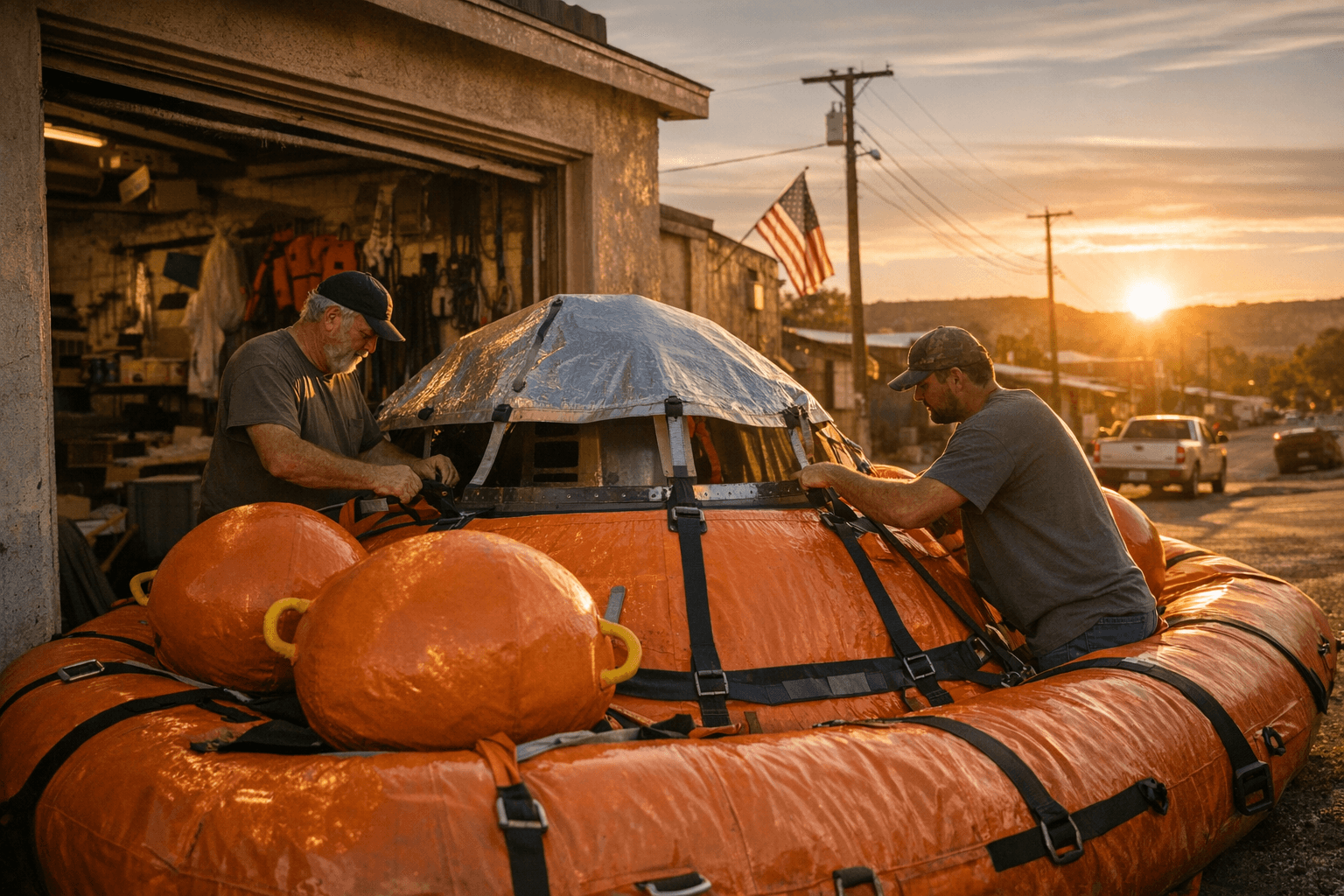
That connection is the story’s big surprise: the gear did not come from a giant defense contractor or a NASA laboratory. It came from a 12-employee shop in Aztec, where CEO-designer T.J. Garcia said the work reflected about two decades of hands-on experience. In a county where big national headlines rarely point to local fabrication shops, the Artemis II contract shows how specialized craft can matter far beyond the Four Corners.
What the raft does after Orion hits the water
The rafts are part of NASA’s recovery system, the final step after Orion returns from space. NASA says the capsule slows from nearly 25,000 mph to about 20 mph using 11 parachutes before splashdown, then recovery teams move in to keep the crew safe and help them exit.
That is where the Aztec-built gear comes in. NASA describes the system as including an inflatable collar and an inflatable raft, nicknamed the “front porch,” placed under Orion’s side hatch so astronauts can leave the spacecraft safely after landing. Artemis II’s recovery operation was a joint effort by NASA and the U.S. Department of Defense, led by NASA’s Exploration Ground Systems Program, with Navy divers, helicopters, and recovery teams all part of the response chain.
The mission itself brought the scale into focus. NASA says Artemis II splashed down in the Pacific Ocean off San Diego at 8:07 p.m. EDT on April 10, 2026, after a nearly 10-day journey. The crew was Reid Wiseman, Victor Glover, Christina Koch, and Canadian Space Agency astronaut Jeremy Hansen, four names now tied to a recovery operation that relied on a shop in Aztec.
How a small company got the chance
Garcia said NASA’s bid opportunity reached the company through a contact about nine years before the article, which helps explain how an obscure local supplier can suddenly end up on a national program. This was not a case of a small business stumbling into a lucky one-off. It was the result of being visible, prepared, and willing to take on technical work that demanded precision.
That timeline matters because aerospace and defense contracts often move slowly. A company has to stay ready long before the award comes through, and Jack’s Plastic Welding appears to have done exactly that. Garcia’s description of the project as the culmination of roughly 20 years of hands-on work suggests the shop did not simply win because it was inexpensive or nearby. It won because it could make a specialized piece of equipment that had to function flawlessly in real recovery conditions.
For a local manufacturer, that kind of contract is a strong credibility marker. It tells future buyers that a small operation in Aztec can meet demanding standards, communicate with major agencies, and deliver equipment tied to a mission where failure would not be acceptable.
Why NASA’s testing made the contract meaningful
The Artemis II recovery work was not improvised. NASA says Underway Recovery Test 11 in February 2024 was the first time the agency and its partners tested Artemis II recovery procedures with astronauts themselves, and Underway Recovery Test 12 in March 2025 certified NASA and Defense Department teams to recover Orion and the crew. By the time the actual splashdown happened, the process had already been rehearsed and checked repeatedly.
NASA also says a major player in capsule recovery and crew safety is its Search and Rescue office, which has aided the international Cospas-Sarsat program for more than 40 years. That broader safety net shows how much infrastructure sits behind a single splashdown: tracking, recovery, medical support, ship operations, and equipment all have to work together.
Seen that way, the Aztec-raised raft is not a novelty. It is part of a layered safety system built for a mission that required exact timing and disciplined execution. The fact that a San Juan County shop contributed to that system says as much about the shop’s capabilities as it does about NASA’s willingness to use specialized regional fabricators when they can do the job.
What it means for San Juan County business
This is the kind of story that can change how a community sees itself. San Juan County is often discussed through energy, agriculture, and local government, but this contract shows another side of the economy: small manufacturers with the skill to compete for work that reaches national and even international levels. A handmade raft from Aztec may sound like a niche product, but in aerospace, niche expertise is exactly what matters.
The local payoff goes beyond pride. A NASA-linked project can strengthen a company’s reputation with industrial buyers, public agencies, and other contractors looking for reliable suppliers. It also gives the rest of the county a concrete example of how a modest shop can build a national reputation without leaving Main Avenue.
That is why the Aztec connection resonates. Artemis II was a major federal mission, but one of its recovery tools came from a local shop with 12 employees, a long working history, and a contact made years before the award. In the end, the orange raft is more than recovery gear. It is proof that high-value manufacturing can grow in San Juan County and still reach all the way to a NASA mission.
This article was produced by Prism’s automated news system from verified source data, official records, and press releases, then run through automated quality and moderation checks before publishing. The system is built and supervised by the people who set the standards it runs under. Read our full AI policy.
Did this article answer your question?