Northern New Mexico shelters strained as state sends high-need foster youth there
A 16-bed Farmington crisis shelter is taking up to five CYFD referrals a day, including youth with psychosis, suicidal ideation and violent histories.
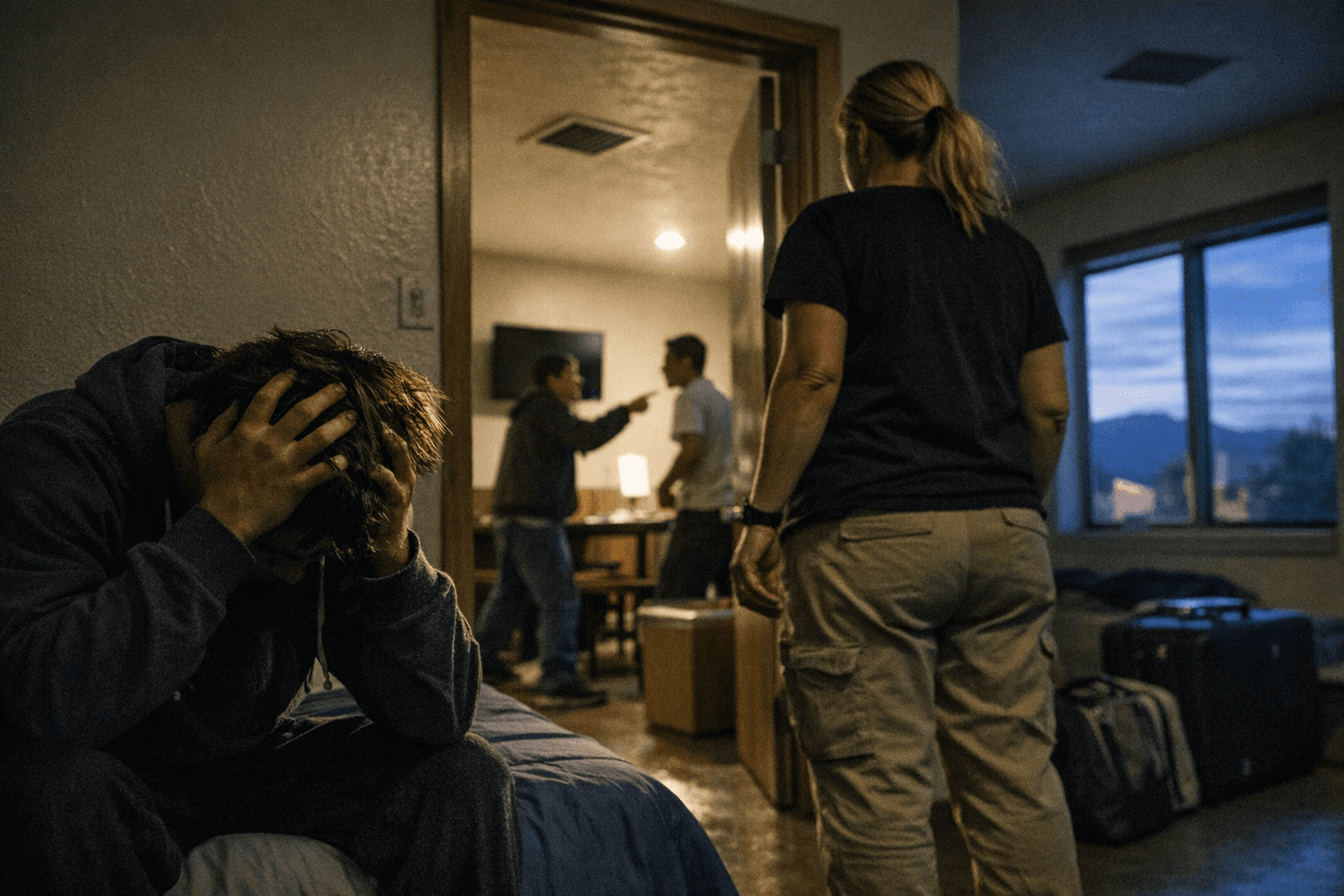
A 16-bed Farmington crisis shelter built for short-term emergencies has become a pressure valve for children the state cannot place elsewhere. San Juan County’s Juvenile Crisis Center, which serves youth ages 9 through 18, is now seeing some of the hardest-to-place foster children in northern New Mexico, even though it was designed as a non-secure safe haven, not a long-term substitute for psychiatric or residential care.
The strain follows Gov. Michelle Lujan Grisham’s Jan. 19 executive order banning overnight stays for children in CYFD custody in government offices. The order took effect March 1, and the governor said the final overnight stay in a CYFD office happened on Feb. 12. She also said as many as 30 children had been sleeping in CYFD offices during the winter holidays before placements were pushed into family-based settings, reunification plans with wraparound services, higher-level treatment programs and other settings meant for care and supervision.
In practice, some of that burden has shifted to shelters in San Juan County and across northern New Mexico. Shelter operators told local reporters they were getting four or five referrals a day, many involving children and teens with severe mental and behavioral health needs, repeated trauma and multiple failed placements. Bowen Belt, the county’s juvenile services administrator, said the children coming through the system have become far more acute. Some referrals involve youth described as actively homicidal, while others include violent criminal histories, suicidal ideation and psychosis.
The county’s Juvenile Crisis Center is intended for youth needing a safe haven, runaways or young people waiting for placement in a residential treatment setting. But the facility, which operates 24 hours a day, 365 days a year, is being asked to absorb risk that belongs in a stronger clinical system. That gap has grown alongside the state’s failure to build out the mental-health network promised under the Kevin S. settlement, a March 2020 federal agreement in case No. 1:18-cv-00896 that called for a trauma-responsive system of care, least restrictive and appropriate placements, Indian Child Welfare Act compliance and behavioral health services.
The New Mexico Department of Justice said in April 2026 that CYFD’s foster-home shortage has forced children into office buildings, hotels and group shelters, while repeated placement changes and reliance on congregate care have exposed youth to unsafe conditions and worsening mental-health outcomes. For San Juan County, that failure is now showing up at the shelter door, where a 16-bed facility is being pushed to cover a statewide crisis it was never built to carry.
This article was produced by Prism’s automated news system from verified source data, official records, and press releases, then run through automated quality and moderation checks before publishing. The system is built and supervised by the people who set the standards it runs under. Read our full AI policy.
Did this article answer your question?