San Juan National Forest Limits Navajo Lake Basin to Nine Designated Campsites
Nine campsites are replacing 50-plus scattered spots at Navajo Lake basin this summer; if they're full, visitors must hike out.
Campers who arrive at Navajo Lake's nine new designated sites only to find them full will face a firm directive from the San Juan National Forest: hike out of the basin entirely and find overnight options elsewhere.
The Forest Service announced the management change for the Navajo Lake basin following nearly 30 years of monitoring that identified more than 50 informal campsites scattered across the high-elevation terrain, some positioned directly in the sensitive riparian areas that buffer the lake and its tributary streams. Under the new system, signage and on-site markers will identify the nine approved spots. No permits are required and no reservations are accepted; sites are strictly first-come, first-served. Camping anywhere outside those nine marked locations will no longer be permitted in the basin.
Dolores District Ranger Nick Mustoe described the approach as a targeted compromise, replacing a looser policy that had allowed dispersed camping in "previously disturbed" areas. Seasonal recreation staff will handle installation of the markers and site preparation, with the full system expected in place by July, pending weather and access to the high terrain.
The site compression reflects documented damage to a uniquely fragile landscape. Navajo Lake is the only alpine lake in the 41,000-acre Lizard Head Wilderness, situated roughly 10 miles southwest of Telluride and 40 miles northeast of Cortez at the base of three fourteeners: Wilson Peak, Mount Wilson, and El Diente Peak. The basin drains directly into the Dolores River, which supplies downstream communities across the region. Forest officials said concentrating camp activity away from riparian zones allows streamside vegetation to function as a natural filter, reducing sediment and nutrient runoff into the watershed.
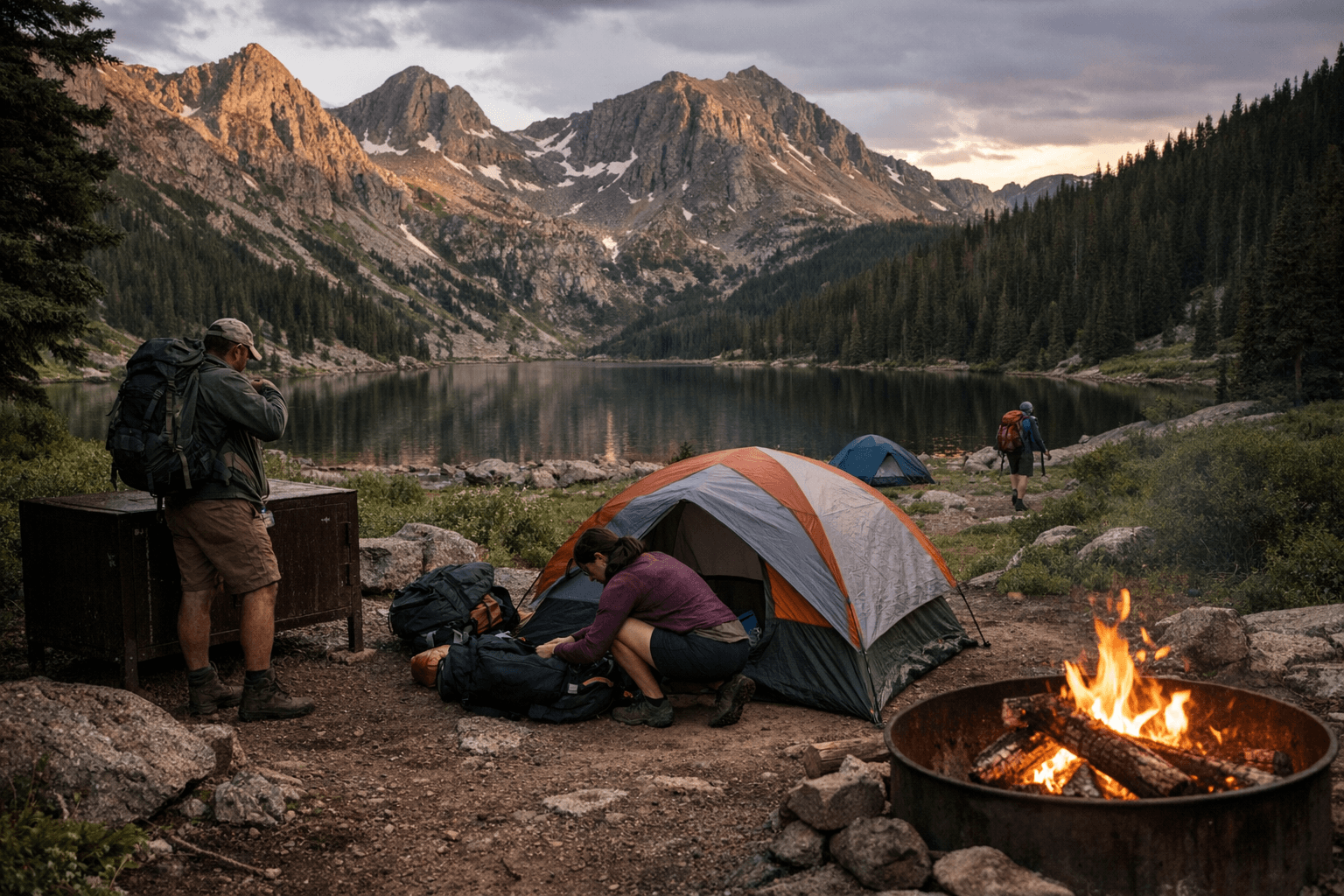
The plan walks back decades of accumulating pressure on shoreline and wetland habitat. Officials say that restoring vegetation near streams requires removing direct camping pressure from those areas entirely, and that nine sites positioned away from sensitive zones represent the floor of what the basin can absorb without continued degradation.
For backcountry users, the change shifts the calculation before the trailhead. Anyone planning an overnight stay should build contingency into their trip: if the nine sites are occupied on arrival, the Forest Service is not offering a wait list or overflow zone within the basin itself. Visitors are asked to practice Leave No Trace ethics regardless. The Forest Service's broader goal is to preserve what draws people to Navajo Lake in the first place: the solitude and intact wilderness character of an alpine environment ringed by 14,000-foot peaks, where the water running out of the basin still matters to the communities downstream.
Sources:
Know something we missed? Have a correction or additional information?
Submit a Tip