Casa San Ysidro showcases Corrales history and Hispanic New Mexico artifacts
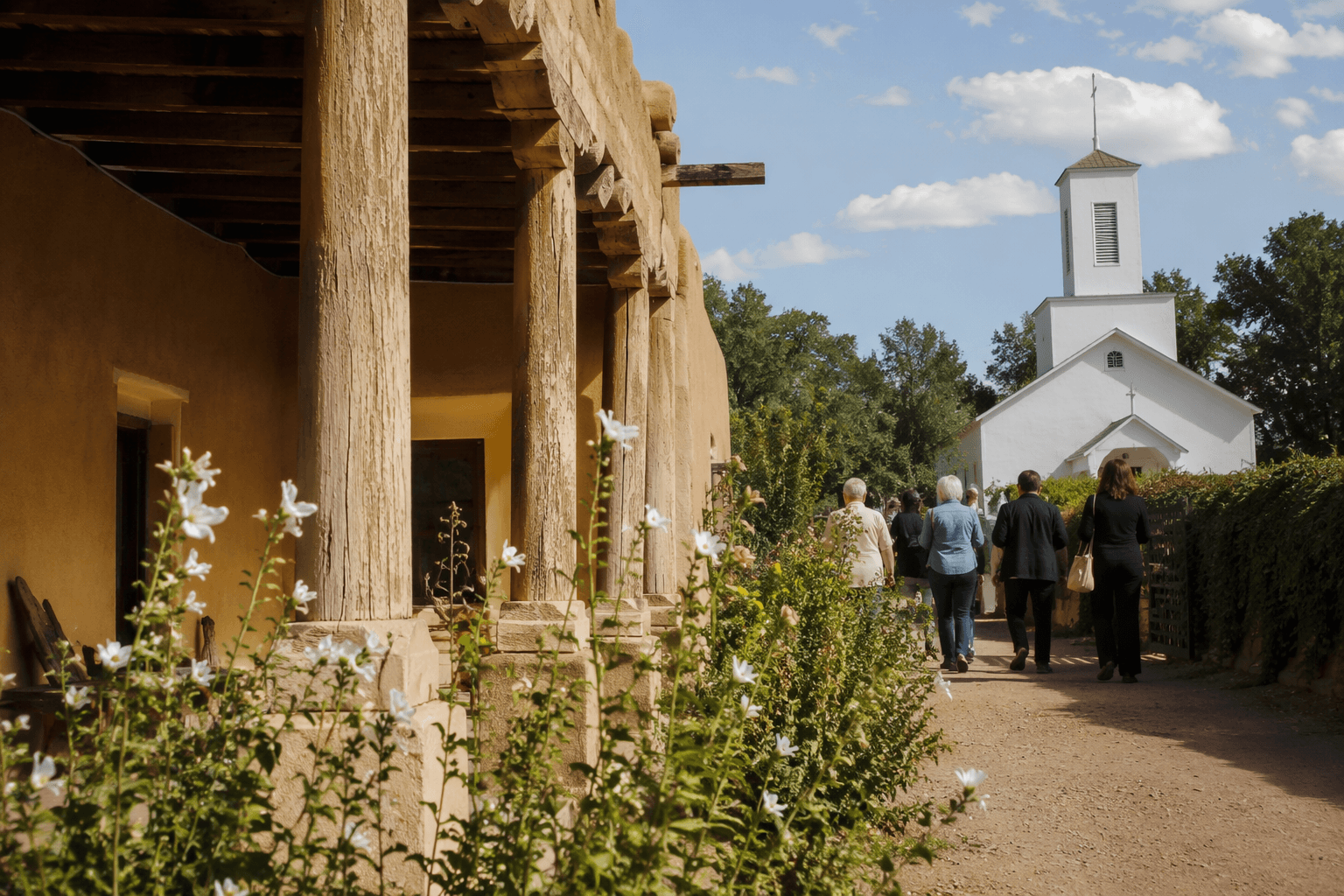
Casa San Ysidro pairs an 1875 Corrales rancho with one of New Mexico’s most comprehensive collections of art and furnishings. The 1868 San Ysidro Church across the street helps frame Corrales’s living history.
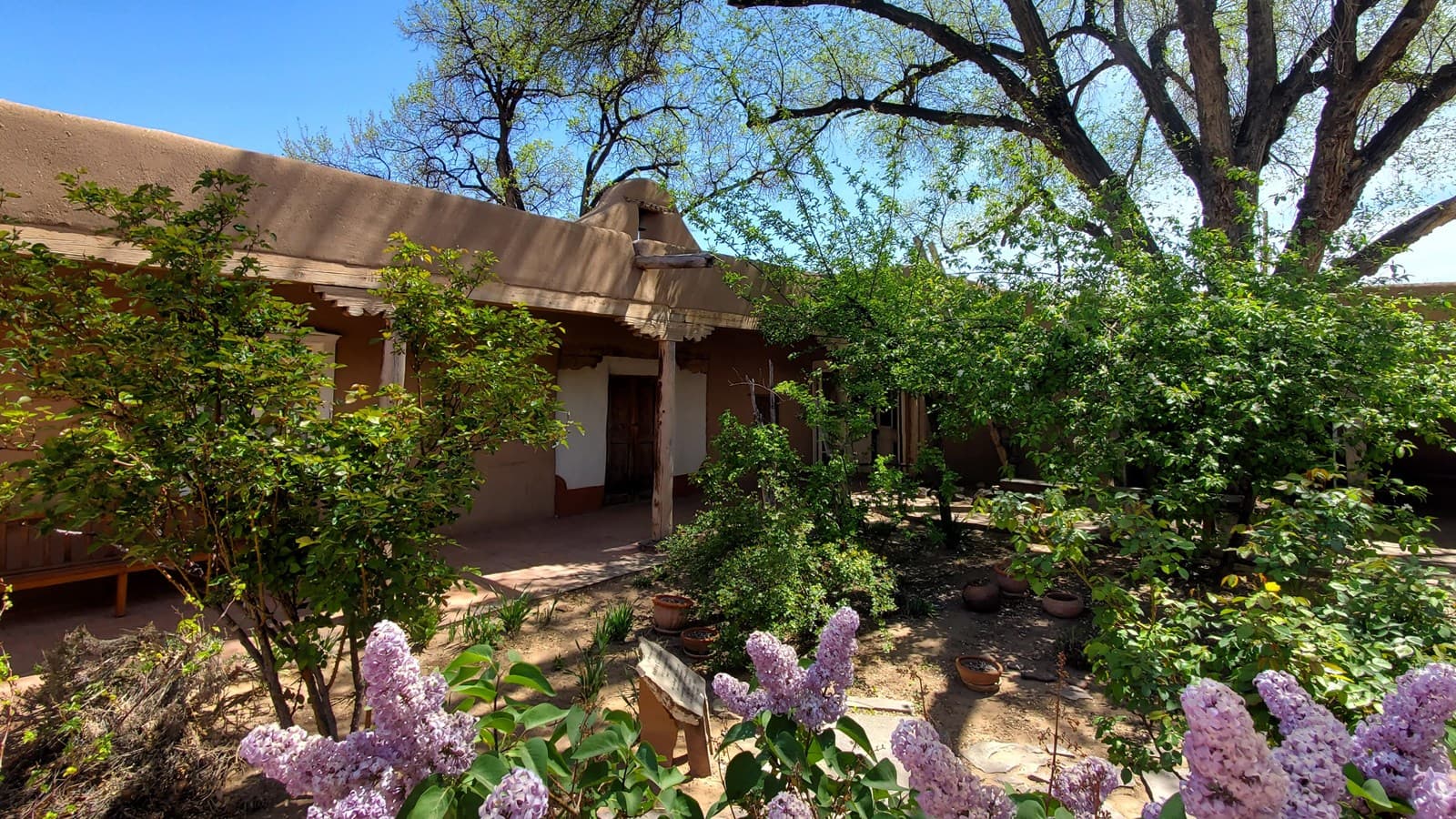
Casa San Ysidro sits in Corrales as more than a preserved adobe house. The City of Albuquerque identifies it as Albuquerque Museum’s history house and the Gutiérrez/Minge House, and the site holds one of the most comprehensive collections of New Mexican art and furnishings. Together with the 1868 San Ysidro Church across the street, it gives Sandoval County one of its clearest windows into Spanish and Hispano domestic life, village layout, and agricultural heritage.
Why Casa San Ysidro matters in Corrales
The Rio Rancho Convention and Visitors Bureau describes Casa San Ysidro as a beautifully restored Spanish Colonial rancho filled with rare Hispanic New Mexico artifacts. That description fits Corrales, where agricultural heritage and village character still shape the landscape in ways that feel distinctly different from nearby suburban development. Built in 1875, the house anchors that story in a specific place and time, while the church across the street adds another layer of continuity that still reads clearly on Old Church Rd in Corrales, New Mexico.
What makes the site especially useful for local readers is that it shows history in built form, not just in dates on a plaque. Casa San Ysidro helps explain why Corrales is still understood as a village with a rural identity, and why land use in this part of Sandoval County remains tied to open space, historic properties, and a long memory of agricultural life. The house is a reminder that the county’s present-day identity was shaped by homes, churches, fields, and family holdings that lasted long enough to become landmarks.
What the Minge Collection reveals
Inside the house, the Minge Collection turns ordinary domestic objects into historical evidence. The museum says the collection includes architectural elements, furniture, religious art, household tools and hardware, jewelry, Hispanic and Pueblo weavings and pottery, a transportation collection, and historic photographs. That range matters because it shows how people actually lived in the northern Rio Grande Valley, what they used every day, and how style, faith, labor, and trade all crossed paths inside a New Mexican home.
The collection also gives the museum value beyond architecture alone. Casa San Ysidro is not simply a restored structure to walk through and admire; it is a material-culture archive where household goods, furnishings, and art help reconstruct daily life in a Hispano New Mexican setting. For anyone interested in genealogy, preservation, art history, or the evolution of local domestic spaces, the house provides concrete evidence rather than broad generalities.
The historic landscape across the street
The 1868 adobe San Ysidro Church across the street makes Casa San Ysidro easier to read as part of a broader historic corridor rather than an isolated museum stop. The Old San Ysidro Church is managed separately by the Corrales Historical Society, which means the two landmarks share a landscape but not the same caretaker. That split is part of the local preservation story, with different institutions helping hold together the historic fabric of Corrales.
Seen together, the house and church form one of the most useful historic pairings in Sandoval County. The 1875 home, the 1868 church, and the preserved rancho setting tell you how the village was built around family, worship, and land, and why those patterns still matter when people talk about Corrales today. It is one of the few places where the county’s Hispanic heritage is visible in both the structure of a house and the community around it.
How to plan a visit
Casa San Ysidro operates as part of Albuquerque Museum rather than as a separate standalone attraction. The City of Albuquerque says tickets for Albuquerque Museum and Casa San Ysidro are sold together, which makes the history house an extension of the museum’s broader collections and visitor system. That connection is useful if you want to pair a Corrales stop with the museum’s other holdings in Albuquerque.
The Albuquerque Museum’s plan-your-visit page lists hours Tuesday through Sunday, 9 a.m. to 5 p.m. Those hours give visitors a straightforward window to see the house, the collection, and the surrounding historic setting without the pressure of a one-off event schedule. Because the site is tied to both the museum and Corrales history, it works equally well for a short cultural stop or a deeper look at local heritage.
The 150-year marker still matters
Casa San Ysidro reached its 150th anniversary in 2025, and that milestone helped focus fresh attention on the house’s place in New Mexico history. A Corrales Comment article published March 13, 2025 marked the anniversary, and Albuquerque Museum promoted an open house for Casa San Ysidro on February 8, 2025. The attention was fitting for a property that links a named family house, a rare artifact collection, and one of Corrales’s oldest surviving landmarks.
For Sandoval County, Casa San Ysidro is useful because it lets you see how architecture, religion, farming, and domestic objects fit together in one historic landscape. The house and the church across the street remain among the clearest places in Corrales to understand how the village’s past still shapes its present.
This article was produced by Prism’s automated news system from verified source data, official records, and press releases, then run through automated quality and moderation checks before publishing. The system is built and supervised by the people who set the standards it runs under. Read our full AI policy.
Did this article answer your question?