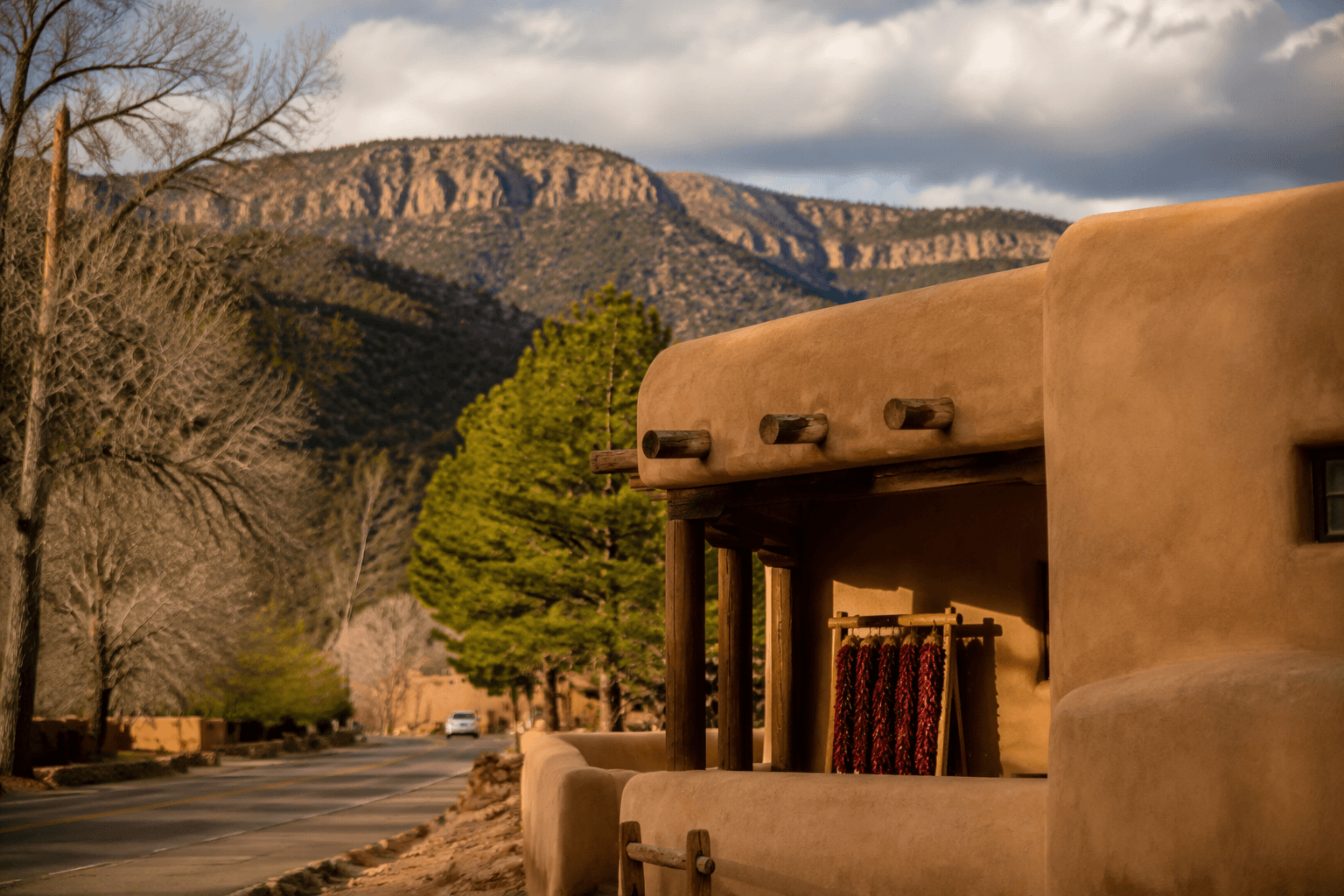
Rio Metro connects Sandoval County with Bernalillo, Rio Rancho and Jemez corridor
Rio Metro’s Sandoval County network reaches Bernalillo, Rio Rancho and the Jemez corridor, but the most useful trips depend on weekday schedules, rail transfers and eligibility rules.
The most useful way to read Rio Metro in Sandoval County is as a working map of real trips, not a general transit brochure. The system’s strongest points are the Sandoval County/U.S. 550 station in Bernalillo, a free-parking rail stop at the north end of town, and a small set of bus routes that tie together Bernalillo, Rio Rancho, Santa Ana Pueblo and the Jemez corridor. For residents trying to get to work, school, a clinic or a rail connection, the question is not whether transit exists. It is which trip is actually possible on the day they need it.
The county’s main transfer point sits in Bernalillo
The Sandoval County/U.S. 550 station is the anchor for much of the county’s transit network. Rio Metro describes it as the gateway to Sandoval County, and the free parking there makes it the natural place to combine a car trip with rail or bus service. That matters in a county where many riders start with a driveway, not a sidewalk, and need one reliable place to leave a car before boarding.
The station also gives the county a practical connection to the broader Rail Runner network. For Sandoval County riders, that means Bernalillo is more than a stop on the map. It is the point where local service, regional rail and north-south travel begin to meet.
Weekday buses carry the local load
Rio Metro says its buses travel throughout Sandoval, Bernalillo and Valencia counties, and that wider reach is what turns transit into infrastructure instead of a commuter convenience. In Sandoval County, the route pattern is built around weekday travel, which means the service is designed for routine trips that happen on workdays rather than for all-day flexibility. That structure helps some riders a great deal and leaves others with a much narrower window.
The clearest trips are the ones with named endpoints and predictable travel patterns. Route 201 serves Bernalillo and northern Rio Rancho, while Route 202 and Route 204 widen the county’s reach into pueblos and the Jemez corridor. Together, those routes show how Rio Metro connects the county’s growth areas with its more remote communities, but only on the schedule the system provides.
Route 201: Bernalillo and northern Rio Rancho
Route 201 is the county’s direct weekday commute line. It runs in the morning and evening peak periods between Bernalillo, northern Rio Rancho and the U.S. 550 Rail Runner Station, with access to job and retail centers along the way. That makes it the route most clearly built for people who need to get from home to a shift, a storefront or a station before and after the standard workday.
For riders, the strength of Route 201 is its simplicity. It links a major rail stop with the parts of Rio Rancho where employment and shopping are concentrated, which can cut down on the number of separate trips a household has to manage. Its limitation is also clear: peak-service design leaves little room for midday errands or later-day flexibility.
Route 202: the pueblo and lake corridor
Route 202 is the county’s broadest east-west and north-south connector on weekdays. It runs to Bernalillo, northern Rio Rancho, Santa Ana Pueblo, Algodones, Santo Domingo Pueblo, the Kewa Rail Runner Station, Peña Blanca, Cochiti Pueblo and Cochiti Lake. That gives residents in multiple communities a single route that can reach both rail access and destinations spread across the central and southern edge of the county’s service area.
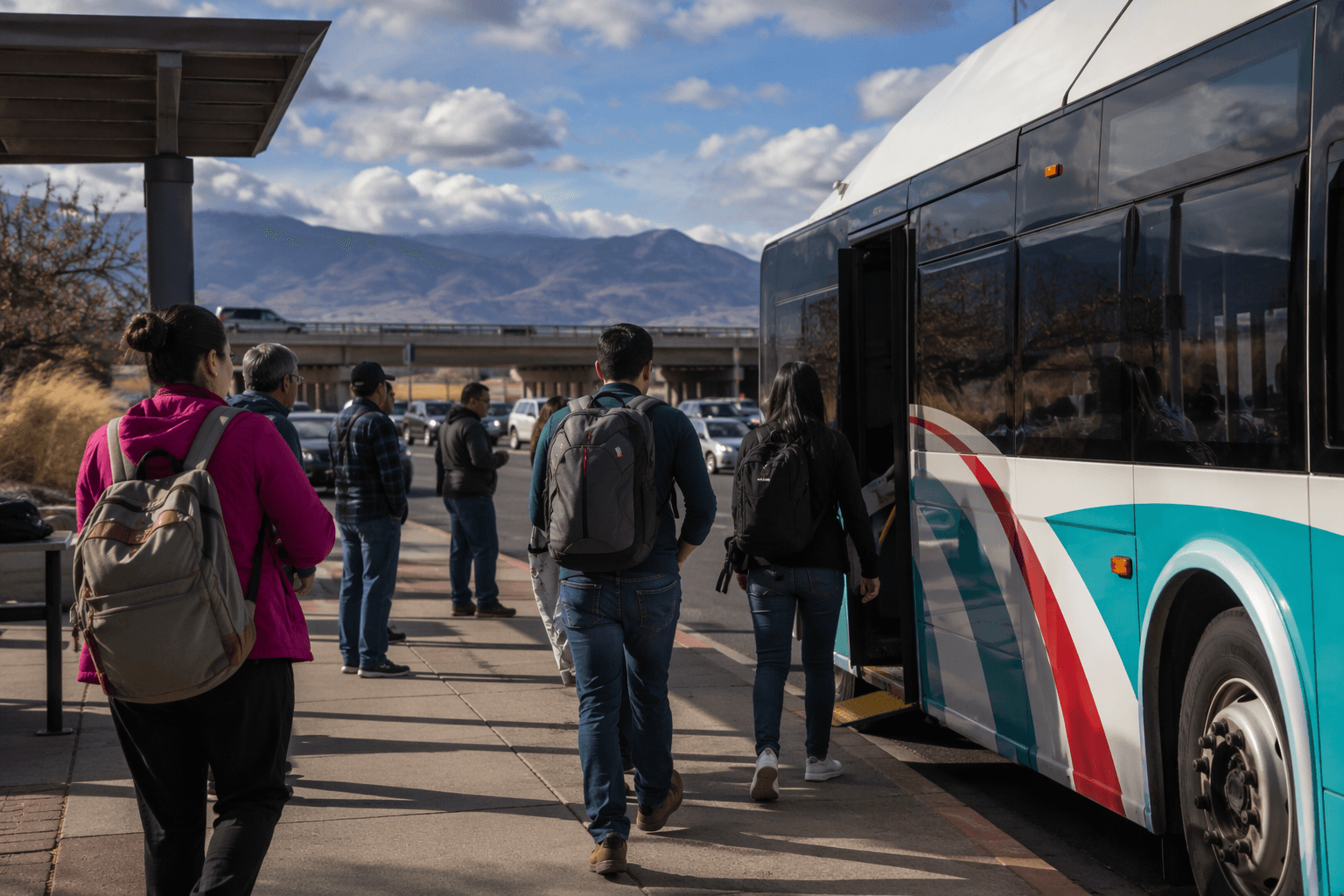
The practical value of Route 202 is that it links places that are otherwise separated by long stretches of road and infrequent alternatives. A rider heading from Santa Ana Pueblo toward Bernalillo, or from the Cochiti area toward the Kewa station, has a fixed-route option that can make a trip without driving the whole distance. The tradeoff is the weekday-only structure, which means the route is useful mainly for scheduled business and appointment travel, not spontaneous after-hours movement.
Route 204: the Jemez corridor and Cuba connection
Route 204 is the line that gives Sandoval County its most obvious Jemez corridor link. It reaches Bernalillo, northern Rio Rancho, Zia Pueblo, San Ysidro, Jemez Pueblo and Jemez Springs, and it connects to Cuba once daily Monday through Friday. That single daily connection is important because it extends the route beyond the more populated western edge of the county and into the communities where service gaps are usually widest.
The limits here are just as important as the reach. Once-daily service to Cuba leaves little room for missed departures, return-trip flexibility or same-day changes, and the corridor’s remote geography makes those constraints more severe than they look on paper. For riders in Jemez Pueblo or Jemez Springs, the route is a real link, but it is a narrow one.
Dial-a-Ride gives some residents a door-to-door option
Rio Rancho/Corrales Dial-a-Ride is the system’s most personal service. It is a weekday door-to-door program for Rio Rancho and Village of Corrales residents who are 60 or older and for disabled adults 18 or older. For those riders, the service matters because it can reduce the need for a transfer, a long walk or a connection to a fixed bus stop.
The local contact point is Rio Metro’s Sandoval County office in Rio Rancho, which makes the service easier to locate for people who need help arranging a ride. That is especially important for older adults and riders with disabilities, where the key barrier is often not the route map but the process of matching eligibility, timing and pickup location to an actual appointment.
What the system reaches, and what it still misses
Rio Metro does connect Sandoval County, but it does so unevenly. Bernalillo has the clearest rail and bus hinge through the U.S. 550 station. Northern Rio Rancho has the most direct local bus link. Santa Ana Pueblo, Algodones, Santo Domingo Pueblo, Peña Blanca, Cochiti Pueblo, Cochiti Lake, Zia Pueblo, San Ysidro, Jemez Pueblo, Jemez Springs and Cuba all appear on the network, but mostly through weekday service that narrows the practical choices.
That leaves the hardest trips at the edges of the county’s geography and schedule. If you need a connection outside peak hours, outside weekdays or outside the fixed-route corridors, the system becomes much harder to use. In Sandoval County, Rio Metro is real connectivity, but it is concentrated connectivity, strongest where rail, bus and door-to-door service overlap and weakest where distance, eligibility rules and limited frequency still decide who can move easily and who cannot.
This article was produced by Prism’s automated news system from verified source data, official records, and press releases, then run through automated quality and moderation checks before publishing. The system is built and supervised by the people who set the standards it runs under. Read our full AI policy.
Did this article answer your question?