Rio Rancho Lego Shop Tightens Policies After Organized Retail Theft Spree
Jonathan Sillette's Rio Rancho Lego shop now holds trade-ins 90 days and opens sealed boxes after thieves stole $10K+ in rare sets.

Jonathan Sillette had a precise problem: how do you stop buying fraudulent Lego sets you don't know are fraudulent?
After two men were charged with stealing more than $10,000 worth of rare Lego sets across the Albuquerque area, Sillette, owner of Big Brother's Bricks in Rio Rancho, rewrote how his specialty shop accepts and trades used inventory.
Matthew Marquez, 33, and Alfonso Yribe, 30, face multiple counts of shoplifting and organized retail crime tied to a multi-jurisdictional theft spree. At least one additional suspect remained at large at the time charges were filed, according to court documents.
The scheme went beyond simple shoplifting. Thieves were removing sealed collectible sets from retail boxes, replacing the contents with dry pasta or similar-weight filler, resealing the packaging, and reselling the boxes on secondary markets — a fraud designed to fool a casual buyer or a small shop accepting trade-ins by weight and appearance alone.
"Some of the sets are pushing … $650," Sillette told the Rio Rancho Observer, and rare pieces such as original Star Wars Millennium Falcon sets can command thousands of dollars. That price ceiling makes Lego a particularly attractive target for organized theft rings, which typically move stolen goods through online marketplaces and fencing networks, complicating recovery for both stores and law enforcement.
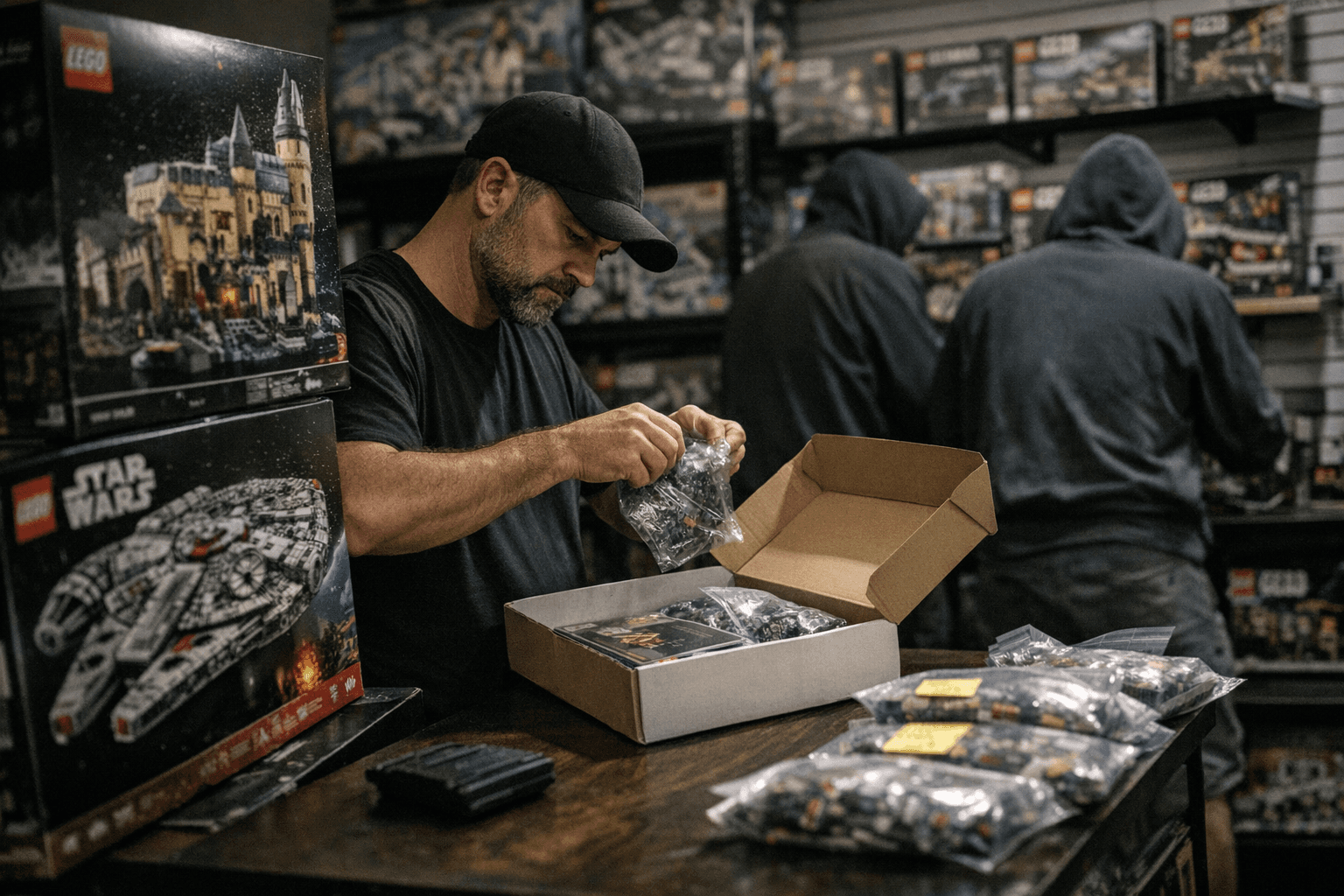
Big Brother's Bricks responded by extending its hold period on trade-ins to 90 days, requiring sellers to provide proof of purchase or documentation that a boxed set was a legitimate gift, and in many cases opening sealed boxes before accepting them for resale. The shop is also limiting how many retail-style sets it buys unless provenance can be confirmed.
The practical consequence for local collectors and parents who buy and sell through BBB: longer waits before trade-in credit is issued and a higher documentation bar for bringing in sealed sets. New inventory sourced through trade-ins may take longer to appear on shelves.
The charges against Marquez and Yribe reflect a broader legal push against organized retail crime, a category that goes beyond opportunistic theft to encompass coordination, fencing operations, and systematic resale. For small specialty retailers like Big Brother's Bricks, which depend on collector trust and inventory authenticity, the fraud carries compounding damage: a single pasta-filled Millennium Falcon box accepted in good faith can erase the margin on a dozen legitimate sales.
With at least one suspect still at large, Sillette's policy overhaul is less a final resolution than an ongoing adjustment to a theft landscape that has grown considerably more sophisticated.
This article was produced by Prism’s automated news system from verified source data, official records, and press releases, then run through automated quality and moderation checks before publishing. The system is built and supervised by the people who set the standards it runs under. Read our full AI policy.
Did this article answer your question?