Rio Rancho observatory offers monthly public stargazing and learning
Rio Rancho’s Rainbow Park Observatory gives residents a monthly chance to use a city-run astronomy site with a planetarium and sundial. Its public nights and annual skywatching events make it a rare hands-on science space in Sandoval County.
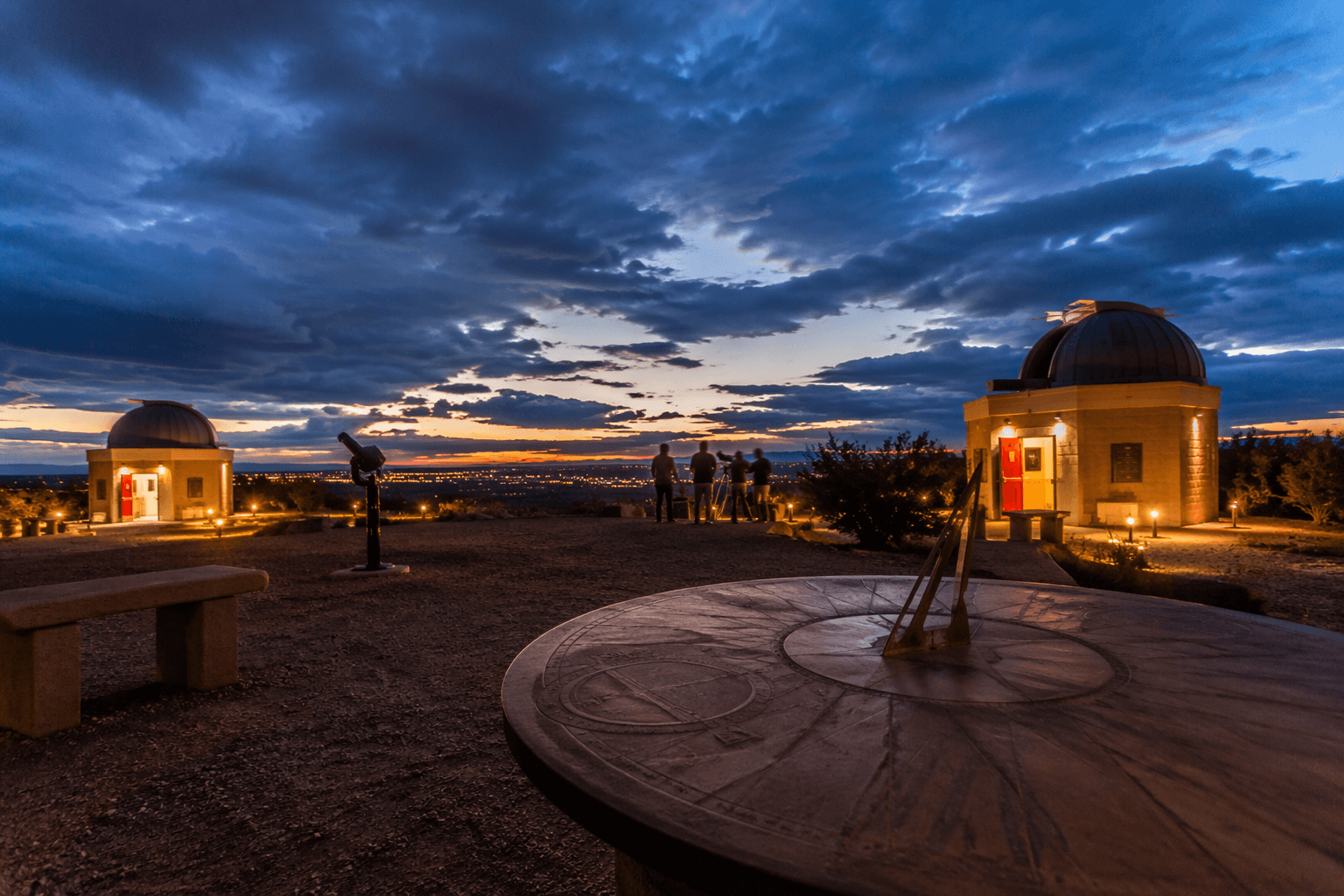
The Rio Rancho Rainbow Park Observatory is one of the city’s most distinctive public learning spaces: a place where a telescope site, an open-air planetarium, and an interactive sundial all sit together at 301 Southern Blvd. The city keeps it open to the public each month during the Rio Rancho Astronomical Society’s regularly scheduled meeting, giving families, students, and skywatchers a reliable way to plan a visit around the moon and the season.
What is at Rainbow Park Observatory
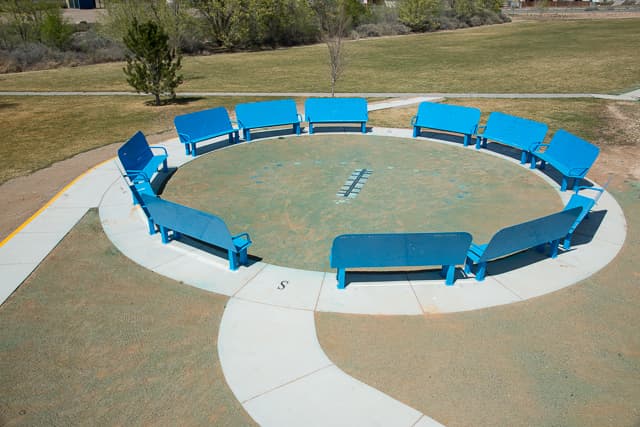
Three named features define the site. The Rio Rancho Rainbow Park Observatory anchors the property, the Dr. Harrison Hagen Schmitt Open-Air Planetarium adds a public teaching space, and the Mark D. Leonard Interactive Sundial gives visitors a hands-on way to follow the sun. Those names signal more than decoration: they show that the city has built a place where astronomy and public education overlap inside a municipal park setting.
The observatory sits at 301 Southern Blvd. in Rio Rancho, and the site is also identified in event listings as being behind Rainbow Pool. That location matters because it places astronomy activity inside an everyday city park landscape, not in a remote observatory complex. For Sandoval County residents, it is one of the few places where science learning can happen outdoors, on site, and in public.
When the public can go
The City of Rio Rancho says the observatory and planetarium are open to the public each month during the Rio Rancho Astronomical Society’s regularly scheduled meeting. The city also says the meeting is traditionally held on the Friday closest to the first quarter moon, which gives the schedule a built-in rhythm tied to the lunar cycle.
Start times are fixed as well. Meetings begin at 7 p.m., or at 8 p.m. during daylight saving time. That regularity makes the site easier to use than a one-off special event, since visitors can plan around a standing monthly date instead of waiting for a rare festival or school trip.
For a community asset like this, predictability is part of the public value. A resident who wants to bring children, meet other amateur astronomers, or simply look through a telescope does not have to guess when the doors will be open. The calendar is already built into the moon.
The society behind the public nights
The Rio Rancho Astronomical Society identifies itself as a member club of the Astronomical League, placing the local group inside a larger national astronomy network. The society also presents itself as a long-running public outreach organization. Its Facebook page says it has been “bringing astronomy and space science to the public since 1998,” and it describes its public programming as free and open to the public.
That outreach role is important because it explains why the observatory is more than a fixed landmark. The site is not set aside for private club use only. It functions as a recurring venue for public astronomy nights, organized learning, and community participation, with the society acting as the bridge between the equipment on site and the people who can use it.
The connection to the Astronomical League and to broader public outreach networks also gives the observatory an institutional reach beyond Rio Rancho. It places the site inside a larger culture of amateur astronomy, where local events can connect with national education efforts and shared observing traditions.
Recurring events beyond the monthly meeting
The observatory’s calendar includes annual public events that expand its role well beyond the regular monthly meeting. The Rio Rancho Astronomical Society uses Rainbow Park Observatory for its National Astronomy Day celebration and its Night Under the Stars celebration, both held at 301 Southern Blvd. in Rio Rancho.
NASA’s Night Sky Network lists a National Astronomy Day Celebration at Rainbow Park Observatory on Saturday, April 25th, and gives the site as 301 Southern Blvd. in Rio Rancho, behind Rainbow Pool. The same network lists an Annual Night Under the Stars Celebration for September 27th at Rainbow Park Observatory at the same address. Those listings show that the site is not only a local meeting point but also a recognized venue within a broader astronomy outreach calendar.
The annual events matter because they broaden access. A monthly society meeting may draw the core astronomy community, but a named celebration can bring in residents who are newer to stargazing or who have never used a telescope before. That is where a city-supported science space becomes a public gateway rather than a specialty venue.
Why this site matters in Rio Rancho
Rio Rancho has a limited number of places where science learning is both hands-on and open to the public. The observatory, the open-air planetarium, and the interactive sundial give the city a visible way to teach astronomy outside the classroom, using the sky itself as part of the lesson. Families can arrive for an evening program, students can connect classroom science to a live setting, and amateur skywatchers can gather around a shared public resource.
The site also says something about how the city uses public space. Parks usually offer recreation, but Rainbow Park Observatory adds a civic learning function to that mix. In a growing city, a place that supports curiosity, public programming, and recurring use has value that goes beyond the novelty of looking through a telescope.
That is why Rainbow Park Observatory stands out in Sandoval County. It is a municipal landmark, a science education site, and a public gathering place all at once, with a monthly schedule and annual events that keep it active in the community rather than ornamental on the map.
This article was produced by Prism’s automated news system from verified source data, official records, and press releases, then run through automated quality and moderation checks before publishing. The system is built and supervised by the people who set the standards it runs under. Read our full AI policy.
Did this article answer your question?