Sandoval County highlights Cuba fairgrounds as year-round travel hub
Cuba’s fairgrounds are Sandoval County’s low-key base camp, with RV hookups, tent sites and quick access to Jemez, Ghost Ranch and San Pedro Parks.
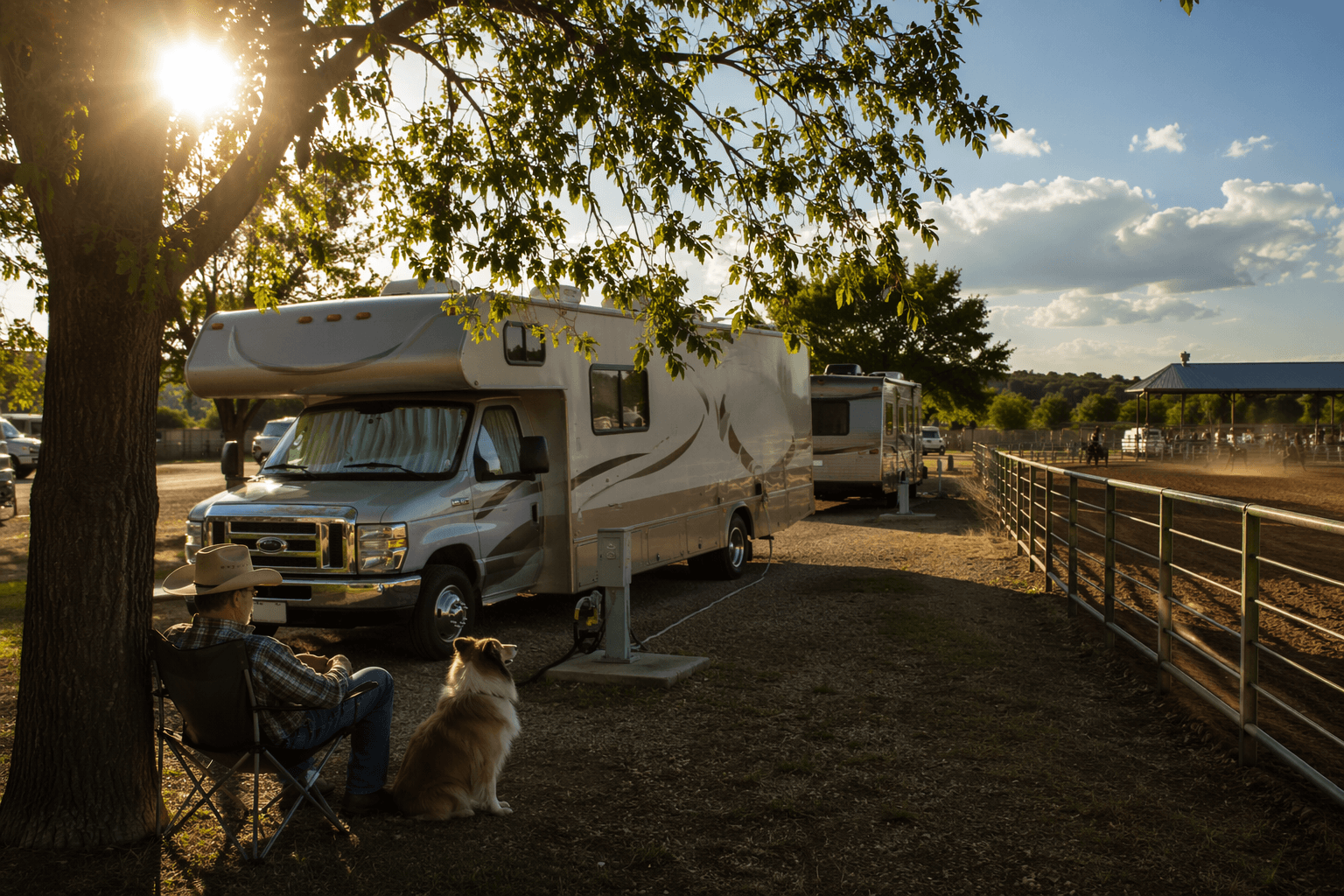
Rio Rancho’s metro edge gives way fast to a quieter travel hub in Cuba, where Sandoval County has turned a 67-acre fairgrounds into a practical base for road trippers, campers and fairgoers. The site sits about 70 miles northwest of Rio Rancho and pairs overnight stays with event space, which makes it one of the county’s most useful small-town stopping points for anyone heading toward the Jemez country, Ghost Ranch or the wider northern forest.
Sandoval County’s own geography explains why the Cuba stop matters. The county says it is one of the fastest-growing in New Mexico, spans 3,714 square miles and had a 2020 Census population of 148,834, with incorporated communities that include Bernalillo, Cuba, Corrales, Jemez Springs, Rio Rancho, San Ysidro and the Town of Cochiti Lake. In a county that stretches from suburban growth at the Rio Rancho edge to sparsely populated mountain and mesa country, Cuba functions as a handy pivot point rather than a detour.
What the Cuba fairgrounds offer
The county’s fairgrounds page describes the Cuba property as an award-winning facility with 25 RV campsites, tent camping, a community center, a rodeo arena, animal paddocks, a barn, commercial kitchen space and concession areas. The RV campground page adds the details that matter on arrival: electrical and water hookups, 50-, 30- and 20-amp service options, pull-through and back-in sites, gravel pads, fire rings or grills, free Wi-Fi and a dump station. Dogs are allowed on leash, while horses and other animals are not permitted in the RV campground area.
The pricing is straightforward enough for a county-managed stop and makes Cuba especially useful for longer stays. RV sites with electric and water service are listed at $20 a day, $110 a week or $400 a month. Tent sites without utilities are $10 a day, $50 a week or $200 a month, the dump station is $10 per use, and a pavilion with an RV space is $40 a day. Reservation requests go through Sandoval County Fairgrounds Manager Nathan Crespin at 505-404-5903 or 505-659-9515.
For travelers, that mix of services turns the grounds into a practical staging area. RV visitors get hookups and Wi-Fi, tent campers get a low-cost base, and groups can rent fairground facilities for meetings, rodeos and other events. That rental model matters to the local economy because it brings people onto county property for more than one night at a time, then sends them back into Cuba for fuel, food and supplies.
When the traffic peaks
The busiest stretch is tied to the Sandoval County Fair, which the Village of Cuba says takes place every first weekend in August. The village also describes the fair as a showcase for traditional craftsmanship, agricultural products, rodeo and powwow programming, giving the event both a civic and a cultural role in a town that is already accustomed to serving visitors. The fairgrounds page says the county fair and 4-H events return there each year, so August is the clearest spike, but the RV campground is set up for all seasons.
That seasonality is part of Cuba’s appeal. Summer travelers use the fairgrounds to get out of the heat, while fall brings the Forest Service’s classic signals of a northern New Mexico trip: bull elk bugling and quaking aspens turning gold. The site’s year-round utility is what makes it work for local visitors, not just out-of-town tourists. Families coming for the fair, hikers chasing cooler elevations and road travelers splitting up longer drives all use the same infrastructure.
What is close by once you leave camp
The Cuba Ranger District of the Santa Fe National Forest anchors the outdoor side of the trip. The Forest Service says the district sits in the western part of the forest, shares the San Pedro Parks Wilderness with the Coyote Ranger District, and provides access to the San Gregorio Lake Trailhead and the Continental Divide Scenic Trail. It also points to the Rio De Las Vacas and Clear Creek campgrounds as scenic high-country escapes that offer a break from New Mexico summer heat.
San Pedro Parks carries real historical weight, too. The Forest Service says it was first protected as a primitive area in 1931, an early conservation designation that helps explain why the landscape remains a special destination for hiking, backpacking and wildlife viewing. For anyone using Cuba as a launch point, that history is more than a footnote: it is part of why the trail network around the district still feels like a true wilderness gateway.
The village’s travel page adds the rest of the itinerary. Cuba calls itself a full-service stop for travelers heading to or from the Northern Rio Grande National Heritage Area, says Ghost Ranch and Abiquiu Lake are a short drive away, and notes that the county fair grounds it in a much broader visitor circuit. That is the economic logic behind the place: a traveler can sleep in Cuba, eat in Cuba, and use Cuba as the place where a wilderness trip starts or ends.
Why Cuba keeps showing up on the map
Cuba’s role as a travel hub also fits the village’s own history. Local records trace the community back to 1736, when it was first settled on the Rio Puerco under the name Nacimiento by Pedro Barela, Jacinto Barela, Jose Sanchez and Juan Garcia. That long timeline makes the modern fairgrounds look less like a new tourism invention and more like the latest version of an old pattern: Cuba has always been the place where people pause, stock up and move on toward the next stretch of country.
Today that pattern benefits Sandoval County in a very practical way. The fairgrounds bring in fair traffic, RV travelers and event rentals; the surrounding town absorbs the spending; and the nearby forest district gives those visitors a reason to stay another night. For a county that stretches from Rio Rancho’s growth to the backcountry around San Pedro Parks, Cuba is not a side note. It is the hinge that makes the county’s outdoor economy easier to reach.
This article was produced by Prism’s automated news system from verified source data, official records, and press releases, then run through automated quality and moderation checks before publishing. The system is built and supervised by the people who set the standards it runs under. Read our full AI policy.
Did this article answer your question?