A. Duda and Sons marks 100 years in Seminole County
A. Duda and Sons reached 100 years on April 29, a rare Seminole County legacy built from a celery farm into a global produce company still run by the family.
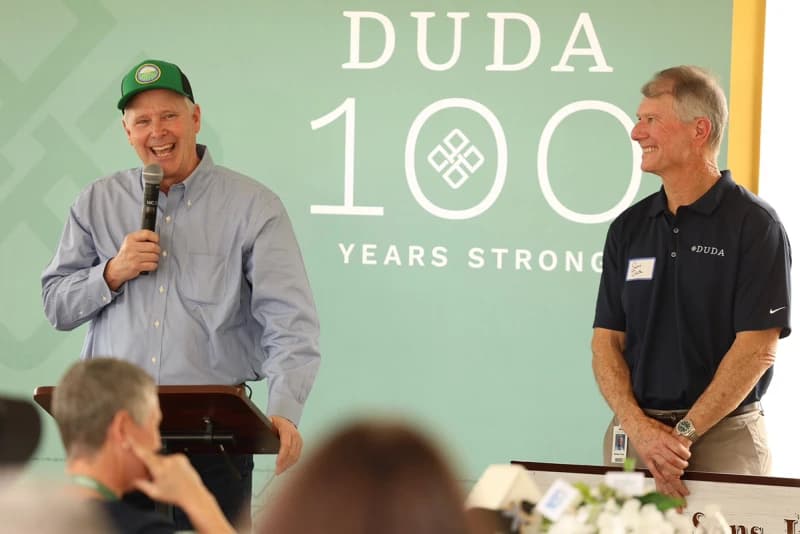
Oviedo-based A. Duda and Sons reached a century in business on April 29, a milestone that says as much about Seminole County’s history as it does about the company itself. What began as a small celery farm grew into an international produce business supplying fruits and vegetables around the world, while keeping its headquarters at 1200 Duda Trail in Oviedo.
The centennial underscored how unusual that continuity has become. WFTV said the company is now run by the fourth and fifth generations of the Duda family, and Tracy Duda Chapman thanked Seminole County for being an important part of the company’s history. In a county defined by constant change along corridors such as SR-417 and SR-436, DUDA stands out as a legacy employer that has stayed rooted in place while the region around it kept building outward.
DUDA says the company was founded in 1926 by Andrew Duda and his sons, after Andrew Duda emigrated from Slovakia to the United States in 1909 seeking land ownership and religious freedom. The company says he was among the Slovak families who founded Slavia, one of the early Central Florida communities that helped shape the area’s agricultural identity long before suburban growth became the dominant story.
The company’s own history places other landmarks in that longer arc. DUDA says the business was formally incorporated in 1953, and that founder Andrew Duda Sr. died in 1956 at age 84. By then, the family operation had already moved beyond its original farm base. DUDA says third-generation family members later expanded exports of fresh produce, including citrus, to Europe, Asia and other markets, turning a local grower and shipper into a diversified company with global reach.
The Duda family also left a mark beyond agriculture. DUDA says Andrew Duda Sr. donated 40 acres and $90,000 in 1937 to help establish Lutheran Haven next to St. Luke’s Lutheran Church, linking the family’s name to one of the county’s religious and charitable institutions. The company says it later expanded farmland into Zellwood and Belle Glade and added pastureland in Cocoa, showing how its footprint spread across Florida as Seminole County itself changed.
A century on, the company’s survival points to a larger economic truth in Seminole County: land use, jobs, agriculture and growth have never been separate stories. DUDA’s history shows how a family business can help define a place, then endure long enough to see that place transform around it.
This article was produced by Prism’s automated news system from verified source data, official records, and press releases, then run through automated quality and moderation checks before publishing. The system is built and supervised by the people who set the standards it runs under. Read our full AI policy.
Did this article answer your question?


