Explore Historic Downtown Sanford: Riverwalk, Museums, Shops, and More
Sanford's historic downtown packs nearly five miles of riverwalk, a National Register commercial district, craft breweries, and living museums into one walkable core.
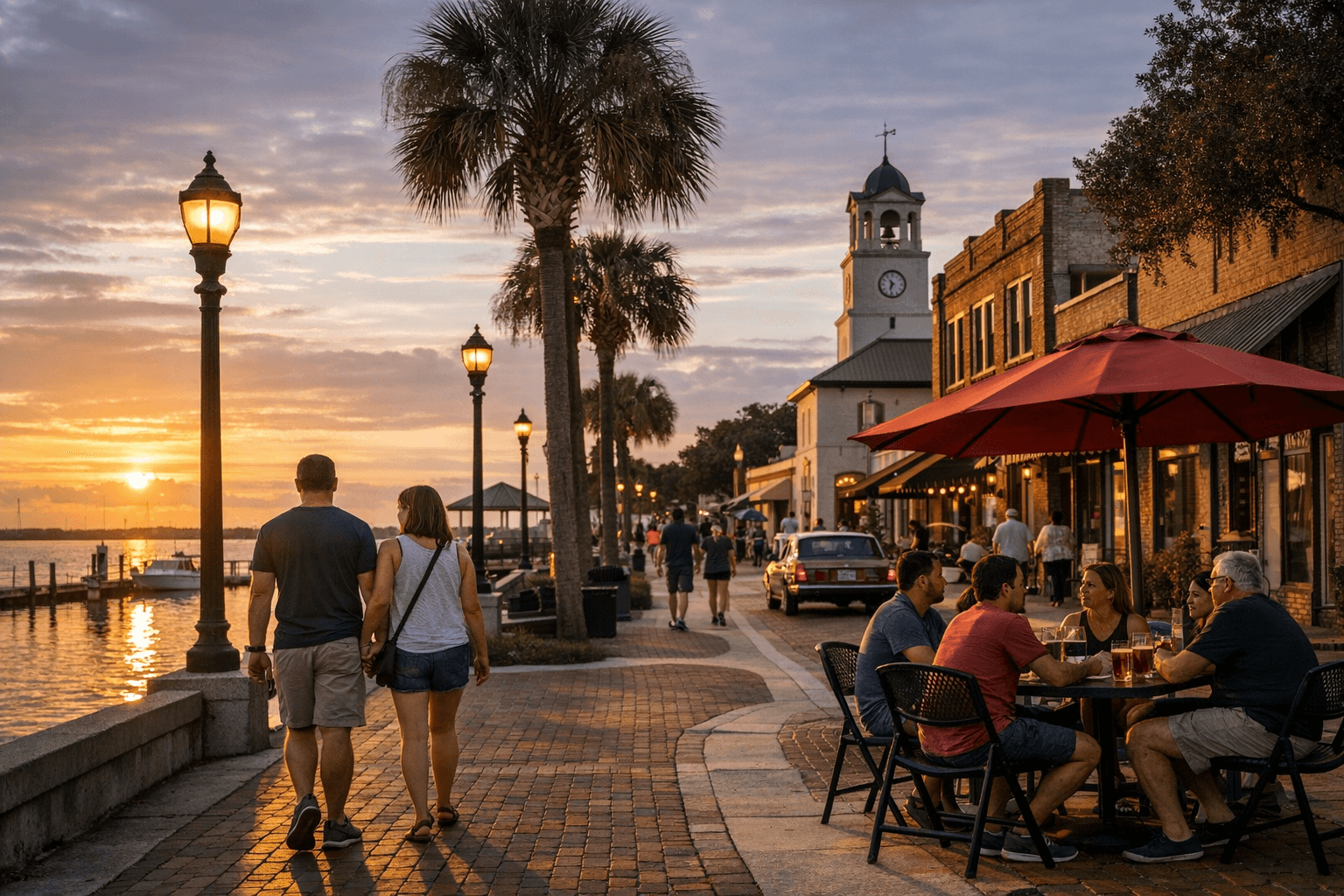
Few Florida cities compress this much history, water, and weekend energy into such a compact, walkable grid. Picturesque First Street is the center of downtown Sanford, a vibrant, enticing destination whose brick storefronts survived a devastating 1887 fire and have been drawing visitors ever since. Whether you have a few hours or a full day, the historic core rewards exploration on foot, from the lakefront all the way to the preserved civic and religious architecture inland.
The Sanford RiverWalk and Fort Mellon Park
The Sanford RiverWalk is an impressive project that transformed the city's lakeside into a scenic and accessible destination for residents and visitors alike. Originally conceived as a simple sidewalk along Lake Monroe in 1995, it evolved into a multi-use trail spanning nearly five miles. Phase I, completed in 2004, covered 1.2 miles from Mellonville Avenue to French Avenue, while Phase II extended the trail to Mangoustine Avenue in 2018. The final phase connects Sanford to the broader 210-mile Florida Coast to Coast trail network, making the RiverWalk far more than a local amenity.
Along the RiverWalk, with its gazebos and swinging benches, you can visit Veterans Memorial Park, Marina Island, and Fort Mellon Park, or dock a boat at the free marina day slips before heading into downtown. Fort Mellon Park, located along the RiverWalk, features a playground and splash pad, along with basketball courts, tennis courts, a fitness trail, covered seating, and BBQ grills. On event weekends, the riverfront hosts boat tours aboard the Rivership Barbara-Lee, departing from the Downtown Sanford Marina just blocks from First Street.
Veterans Memorial Park is a focal point along the waterfront, a tree-lined peninsula that honors those who fought in war and offers views for miles. Cyclists regularly use this stretch, and the open green spaces invite a slower pace between museum visits.
The Sanford Welcome Center and Historical Museum
In April 2006, the Sanford Welcome Center was opened in the heart of the historic downtown, located in the old post office building, offering visitors information about the city's attractions including heritage trails. The Sanford Museum is among the oldest municipal museums in Florida.
The deeper history the museum preserves is essential context for everything you see on the streets outside. Sanford became the region's leading steamboat and railroad hub for citrus shipments, and by 1884 was a prosperous town with wharves, a railroad station, and a 200-room hotel. After a large fire in 1887 destroyed much of the downtown commercial district, the buildings were rebuilt using brick, and many of these buildings survive and comprise the city's commercial National Register Historic District.
The Museum of Seminole County History's exhibits, artifacts, maps, documents, photographs, and special events tell the stories of Seminole County's inhabitants, their lives, lineages, and local legends. Highlights include Native American Indian artifacts, early forts and settlements, the development of railroads and steamship transportation, agriculture and industries of the region, and 19th and 20th century decorative arts. Researchers can access reference materials by appointment, including microfilm runs of the Sanford Herald dating back to August 1908.
First Street: Shops, Galleries, Breweries, and Live Music
Downtown Sanford's historic core showcases unique shops, restaurants, art galleries, a historic theater, and a burgeoning micro-brewery and craft cocktail scene. What was once a district of feed stores and dry goods sellers has reinvented itself without abandoning its bones: the 19th-century brick facades remain, now fronting antique dealers, independent boutiques, and creative restaurants that lean on local produce and seasonal menus.
The anchor of the entertainment calendar is the Wayne Densch Performing Arts Center, a restored venue that hosts theatrical productions throughout the year. Events such as the Saturday morning Farmers Market and jazz concerts in Magnolia Square, theatrical productions at the Wayne Densch Performing Arts Center, and the monthly Alive After 5 street parties attract visitors from all over Central Florida. The Alive After 5 gatherings, held monthly along First Street, effectively transform the corridor into an outdoor venue, with live music, vendors, and extended restaurant hours drawing steady foot traffic well into the evening.
For those focused on Sanford's craft beverage scene, the concentration of micro-breweries in and around the downtown grid makes it easy to sample local pours within a few blocks' walk. Many restaurants in the district pair seasonal Central Florida ingredients with craft options sourced nearby.
Preserved Civic and Religious Architecture
Downtown Sanford's architectural character goes beyond the commercial strip. Several preserved church buildings and civic structures contribute to the streetscape that walking-tour brochures and local heritage maps have documented for decades. The brick construction mandated after the 1887 fire gives the district a cohesion rarely seen in Central Florida, where demolition and rapid development have erased comparable 19th-century commercial fabric in many neighboring communities.
Walking north and south of First Street reveals residential blocks that shade into Sanford's Historic Residential District, where Centennial Park sits as a quieter counterpart to Fort Mellon. This district broadens what a walking tour can encompass beyond the commercial core, offering a fuller picture of how the city was laid out at the height of the citrus and steamboat era.
Practical Tips for Visiting
Downtown Sanford operates several named public parking lots scattered through the grid:
- The Leopard Public Parking Lot at 308 W. First Street places you directly on the main commercial corridor.
- The Black Bear Public Parking Lot at 401 E. Seminole Blvd. is convenient for RiverWalk access.
- Free waterfront parking is also available along the lakefront for those starting their visit at the water's edge.
The City of Sanford operates a free downtown trolley service and a limited free shuttle service, and Central Florida's regional LYNX bus network also serves the area. If you are driving in from elsewhere in Seminole County, checking the city's event calendar before major weekends is worthwhile: festivals and Alive After 5 nights can result in street closures across several blocks of the core grid.
Timing shapes the experience significantly. Weekend mornings deliver the Saturday Farmers Market in Magnolia Square alongside early-opening cafes and a lively sidewalk energy. Weekday mornings, by contrast, are the right call for architecture-focused walks: fewer crowds, better light for photography, and unhurried access to the museum. Smaller independent restaurants in the district sometimes close between lunch and dinner service, so confirming hours before a mid-afternoon visit avoids disappointment.
A District Worth Protecting
The built environment of downtown Sanford is not a museum piece held in amber. Ongoing conversations about waterfront redevelopment, affordable housing, transportation improvements tied to the nearby Orlando Sanford International Airport, and the vitality of small businesses on First Street are all live debates that play out in city commission chambers and community meetings. The foot traffic that a guided walk generates feeds directly into the economic survival of the independent shops, galleries, and restaurants that give the district its character. Every visit is, in a small but real way, a vote for preservation. The brickwork that survived 1887 has outlasted a great deal; the question is whether the businesses behind those facades can say the same in the decades ahead.
This article was produced by Prism’s automated news system from verified source data, official records, and press releases, then run through automated quality and moderation checks before publishing. The system is built and supervised by the people who set the standards it runs under. Read our full AI policy.
Did this article answer your question?