Oviedo museum project preserves Black history, challenges erased local narratives
A vandalized Oviedo school site is being turned into a museum, and its backers say the fight is really over who Seminole County chooses to remember.
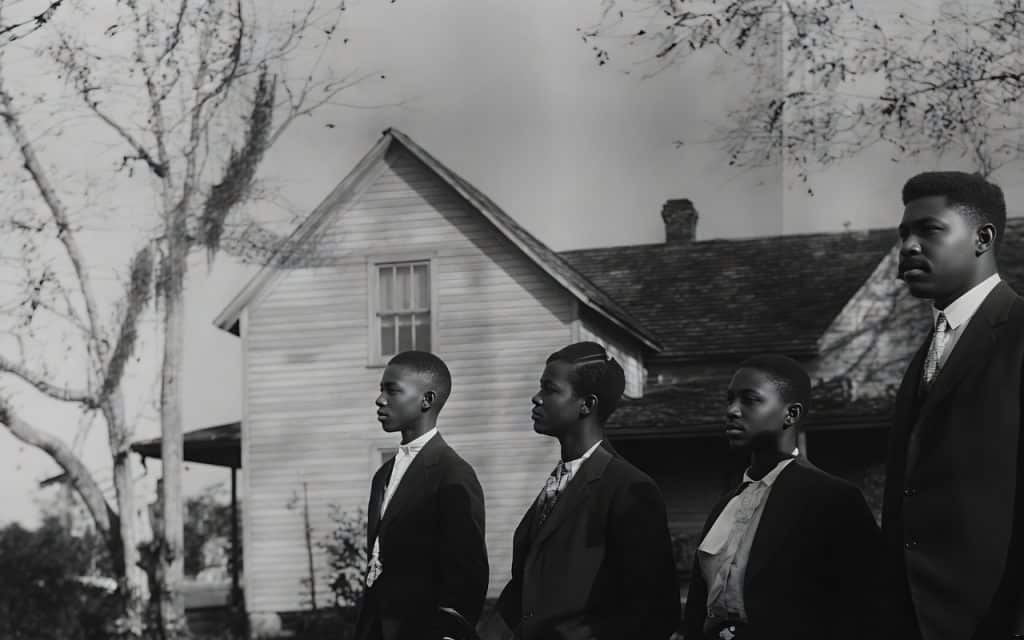
A fight over memory in Oviedo
The Historic Oviedo Colored Schools Museum is about more than preserving a building in the Jamestown neighborhood. It is a direct challenge to the way Oviedo and Seminole County have often told their own story, with development and pioneer myths taking center stage while Black families, Black schools, and Black labor fade from public view.
That tension became impossible to ignore after racist graffiti appeared at the site in January 2025. For preservation advocates, the vandalism was not just an attack on a property at 2170 James Drive. It exposed how fragile local memory can be when the people who lived it are no longer here to defend it, and why the record has to be secured now, before more firsthand history is lost.
What the museum is trying to preserve
Judith Dolores Smith, who leads the nonprofit behind the project, is building the museum around a simple but consequential idea: Oviedo’s Black history is not a footnote. The museum is expected to interpret six Oviedo-area colored schools from 1913 to 1967, tying the site in Jamestown to a wider countywide story of segregation, resilience, and community self-determination.
The building itself carries that weight. Local reporting identified it as the former Gabriela Colored School, built in 1931 and described as the last of Seminole County’s historic colored schools. That matters because once the structure is gone, or once its history is reduced to a plaque, the lived texture of Black education in Oviedo can disappear from everyday civic memory.
The preservation effort also reframes what counts as local heritage. In a county where growth has reshaped nearly every landscape, the museum insists that Black families were not peripheral to Oviedo’s rise. They were part of the land, the labor, the schools, and the kinship networks that made the area what it became.
The stories that have been left out
One reason this project resonates is that it reaches beyond the schoolhouse itself and into family memory. Organizers point back to Prince Butler Boston, a carpenter who lived on a 300-acre orange-tree property and built a 17-room home divided into two wings that later housed his 10 children. That one life tells a larger story: Black history in Seminole County is rooted in landownership, skilled work, household building, and generational continuity.
Those details are the opposite of the flattened version of history that often survives in suburban places. If the public record remembers only roads, subdivisions, and a narrow set of “founding” families, then the county’s Black residents become visible only when someone actively gathers their names, homes, schools, and descendants into the public story. That is exactly what the museum project is trying to do.
The point is civic as much as historical. Which families get memorialized, which children see their ancestors represented in local history, and which stories are left off the plaque all shape how a community understands itself. The museum’s backers are arguing that inclusion is not an abstract value here. It is the difference between a history that belongs to everyone and one that quietly erases the people who built it.
A project years in the making
The path to the museum has been long, and the calendar now matters. Seminole County commissioners unanimously approved rezoning for the property on March 5, 2025, clearing a key obstacle for the project. Reporting in April 2025 said construction was expected to begin in summer 2025 and the museum was projected to open in summer 2026.
The financial picture shows how serious the effort has become. A local report put renovation costs at nearly $400,000, with the project receiving a $228,000 state grant. That kind of funding does more than stabilize a building. It signals that the museum is being treated as public history infrastructure, the sort of investment that can keep a local story from disappearing into private memory.
The vision, according to the museum’s founders, is a living museum with tours that help visitors understand Black life under Jim Crow in Oviedo. That approach matters because it turns the site from a static display into a place where context can be taught: how the school functioned, who attended it, and what education meant in a segregated county.
What the museum will teach about Seminole County
The museum’s interpretation will connect the Jamestown site to a wider network of schools documented by RICHES at the University of Central Florida. Those schools were Oviedo Colored School, Jackson Heights Elementary, Geneva Colored School, Wagner Colored School, Kolokee Colored School, and Gabriella Colored School.
That record shows the museum is not only about one building, but about a system. The RICHES exhibit says the original one-room Red School House was expanded in 1913, and that by 1923 the building had deteriorated enough that $2,000 was appropriated for renovations. It also notes that the Seminole County School Board officially approved the name Jackson Heights on December 8, 1961.
Those dates matter because they mark the evolution of Black schooling in the county across decades of segregation and consolidation. They also show how the school’s identity changed over time while the need to preserve its story only became more urgent.
A 2001 booklet assembled from former students’ materials and published by Judith Smith Publishing adds another layer of evidence. It reflects a long-running effort by former students and their families to keep these schools from vanishing into silence. The broader historical record attached to the Oviedo-area colored schools also shows that graduates went on to military service and professional careers, proof that the school’s impact reached far beyond its walls.
Why the vandalism sharpened the stakes
The January 2025 graffiti attack made the museum’s mission harder to dismiss as symbolic work. It underlined how preservation can become a form of resistance when a place tied to Black history is still vulnerable to racial hostility. In that sense, the project is not only about reconstructing the past. It is about deciding whether the county will protect that past in the present.
For Seminole County, the issue is not just whether a historic building survives on James Drive. It is whether the names, schools, and families tied to Oviedo will be remembered in public, or whether they will remain buried in archives, family albums, and the memories of elders. The museum answers that question with a claim that is both local and moral: Black history in Oviedo is not optional, and the county’s story is incomplete without it.
This article was produced by Prism’s automated news system from verified source data, official records, and press releases, then run through automated quality and moderation checks before publishing. The system is built and supervised by the people who set the standards it runs under. Read our full AI policy.
Did this article answer your question?


