Sanford urges caution after storms, treat dark intersections as stops
Sanford warned that the most dangerous storm damage can come after the rain stops, when dark intersections, floodwater and downed lines become fresh hazards.
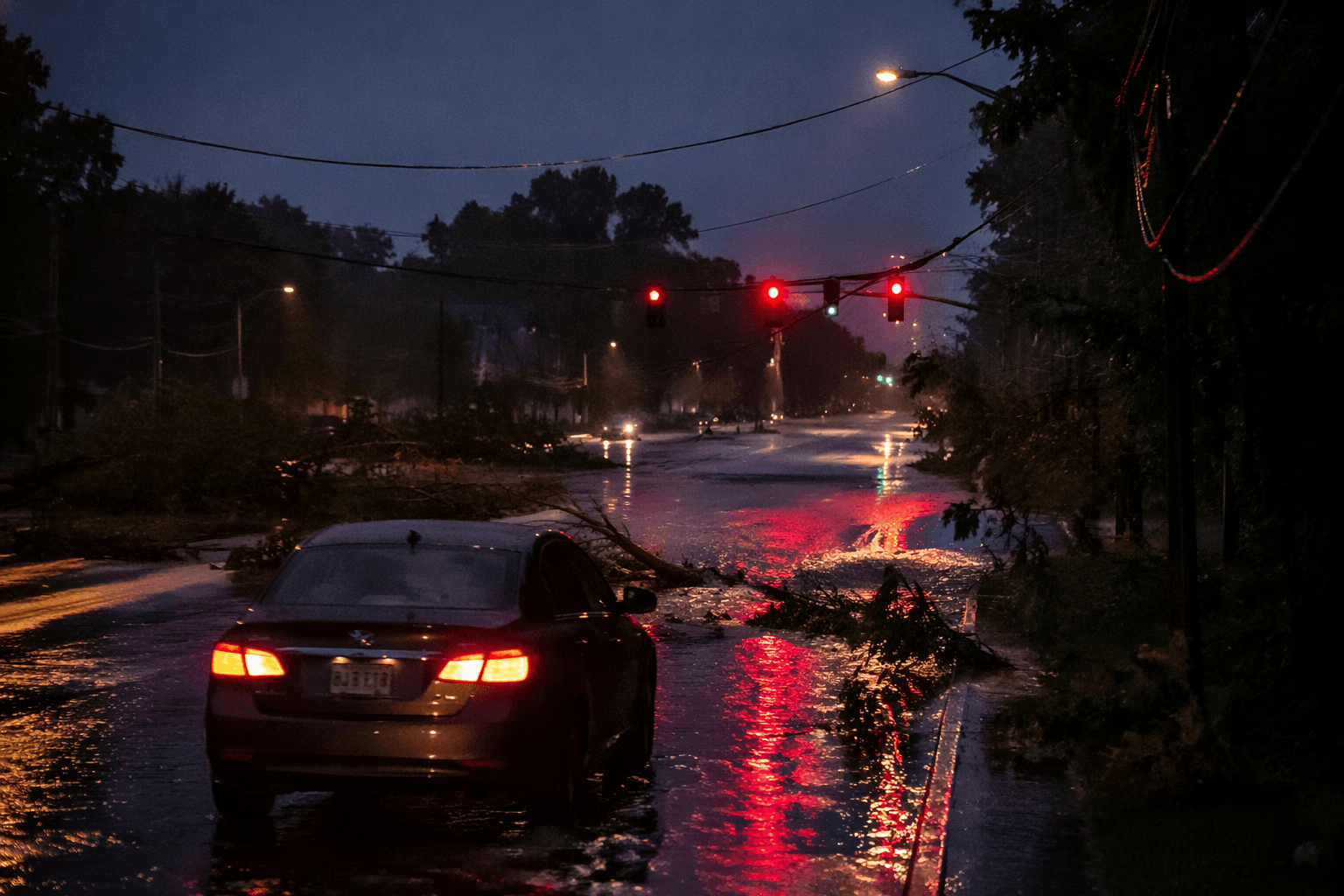
The storm may have moved on, but Sanford said the danger often does not. In a May 27 post, the city warned residents not to jump in a car to survey damage, drag debris to the curb or treat the first clear road as a signal to speed up recovery.
One of Sanford’s two central rules was for drivers facing dark intersections. When traffic signals are out, Florida law requires motorists to treat the crossing as a four-way stop under Section 316.1235. That means coming to a complete stop, yielding in the proper order and moving only when it is completely safe. In the hours after a storm, that small rule can keep Seminole County intersections from turning chaotic as neighbors, utility crews and emergency vehicles all try to move at once.
The city’s other rule was even more urgent: treat every downed power line as live and highly dangerous. Sanford said residents should stay at least 30 feet away and report fallen lines immediately to 911 or to Duke Energy at 800.769.3766. Florida Power & Light and other utilities offer the same warning, because a line on the ground can still carry deadly current even when it looks inactive. Sanford also told residents not to drive through floodwater, another common mistake when streets begin to clear but water still hides damage.

Seminole County Emergency Management has made the same point in its guidance for residents returning home after a storm. The county tells people to watch for standing water, downed power lines and damaged buildings. Its flood guidance says injuries often happen immediately after a storm because of unsafe buildings, downed lines, contaminated water and other hazards that are easy to miss in the rush to inspect a neighborhood or help a neighbor.
The county’s Office of Emergency Management coordinates with state, federal and local responders, and Seminole County keeps authority to decide whether disaster debris threatens community health and safety and whether emergency county debris removal should begin. In practice, that means cleanup after a storm is not just a household chore. It is a public-safety operation, and the first hours after the weather clears can decide whether recovery stays orderly or adds new injuries to the original damage.
This article was produced by Prism’s automated news system from verified source data, official records, and press releases, then run through automated quality and moderation checks before publishing. The system is built and supervised by the people who set the standards it runs under. Read our full AI policy.
Did this article answer your question?