Seminole County questions rising LYNX costs after bus cuts
Seminole County’s LYNX bill is still climbing even after bus cuts, as commissioners challenge why paratransit spending is surging. The county now faces a sharper question: who pays more when fixed routes shrink?
Seminole County commissioners are pressing LYNX over a transit budget they say no longer matches the service residents receive. At a June 10 budget work session, LYNX CEO Tiffany Hawkins presented a preliminary fiscal year 2027 request for $11,745,652 in Seminole County operating and capital contributions, even as the county’s fixed-route bus network has been scaled back and replaced in large part by Scout, the county’s on-demand microtransit system.
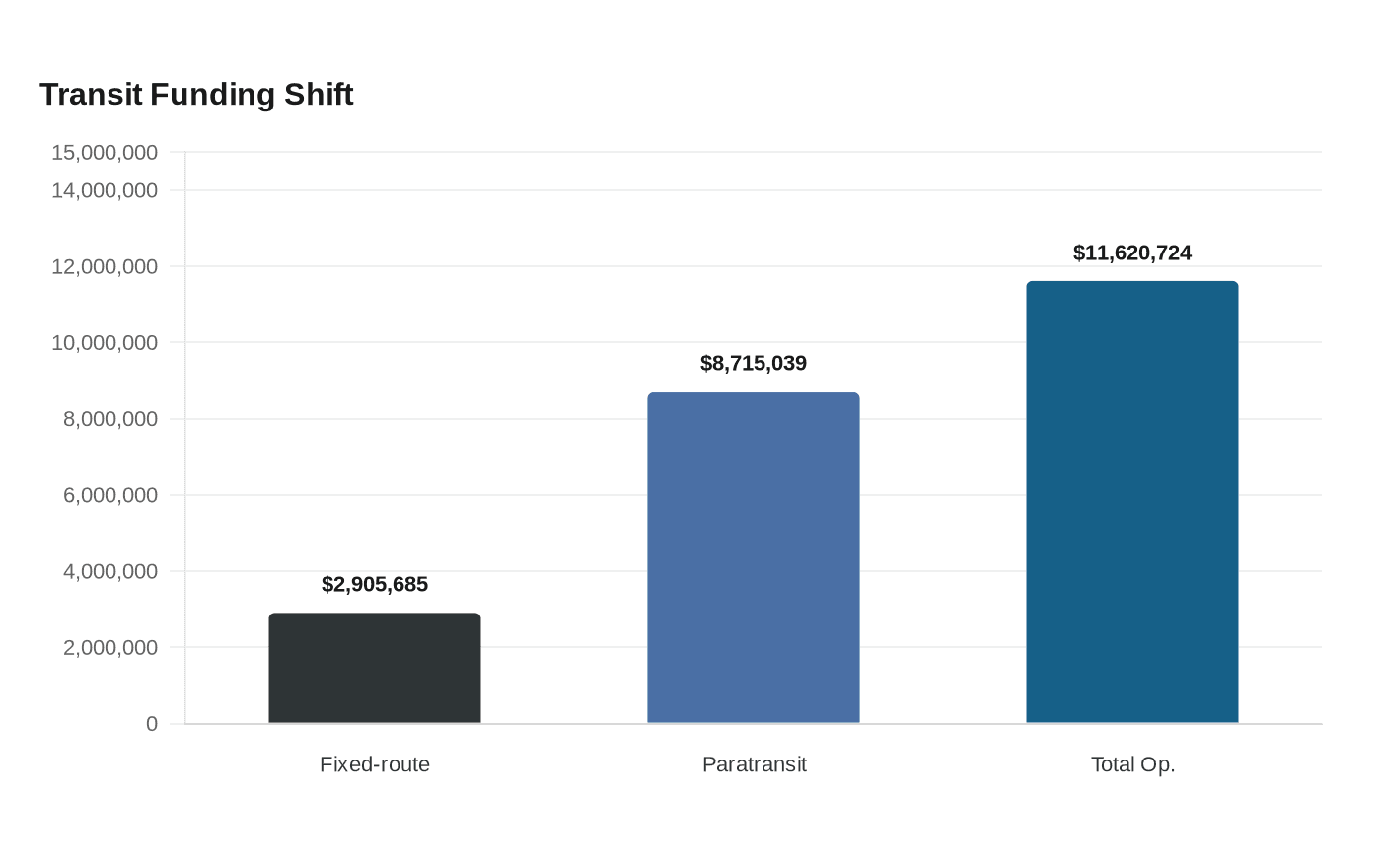
The split inside the numbers is what drew the sharpest pushback. Seminole County’s total operating contribution is projected to rise from $11,428,577 to $11,620,724, an increase of about $192,000. But the fixed-route and NeighborLink share is set to fall from $5,233,918 to $2,905,685, a drop of more than $2.3 million, while paratransit funding climbs from $6,194,659 to $8,715,039, an increase of more than $2.5 million, or about 40.7 percent.
That shift lands at the center of the county’s broader transit transition. Seminole County moved away from most LYNX fixed routes in 2025 and launched Scout in October 2025, a low-fare, door-to-door service that county leaders say serves Altamonte Springs, Sanford, Oviedo, Winter Springs, Lake Mary, Longwood and Casselberry. County materials say Scout offers discounts for seniors, students, income-eligible riders and Access Plus cardholders, and riders can book trips through the Ride Freebee app or by phone.
The county has framed the change as a way to save money while giving riders more flexible service. Seminole County’s 2025 annual report says the switch was driven by rising transit costs, moderating revenues and increasing service demands, and was intended to cut annual operating costs by about $10 million. Local reports said eight LYNX routes ended in Seminole County in January 2026, and county leaders said in 2025 that the LYNX budget would fall from about $10 million to $5 million during the transition.
Hawkins said the LYNX budget assumes the agency will maintain service levels, avoid fare increases for now and continue replacing its fleet. But commissioners, including Bob Dallari, Jay Zembower, Lee Constantine, Andria Herr and Amy Lockhart, are confronting a different reality: Seminole County is paying more overall for a system with fewer fixed routes and a heavier reliance on paratransit.
The stakes are practical for riders who still depend on public transit for work, medical visits and everyday errands. Seminole County says Scout has already drawn demand, topping 900 passenger trips in a single day in January 2026, but the county is still left to justify why the bill rises even as the old bus network shrinks. With local funding partners supplying about 75 percent of LYNX’s broader preliminary $226,842,258 operating budget, and 92 percent of local funding coming from property taxes, the burden still falls heavily on Seminole County taxpayers.
This article was produced by Prism’s automated news system from verified source data, official records, and press releases, then run through automated quality and moderation checks before publishing. The system is built and supervised by the people who set the standards it runs under. Read our full AI policy.
Know something we missed? Have a correction or additional information?
Submit a Tip