Seminole County Reminds Residents to Follow Fertilizer Rules, Protect Local Waterways
Nitrogen and phosphorus from lawn fertilizer are fueling algae blooms in Seminole County's lakes and rivers. The June 1 blackout period is less than two months away.
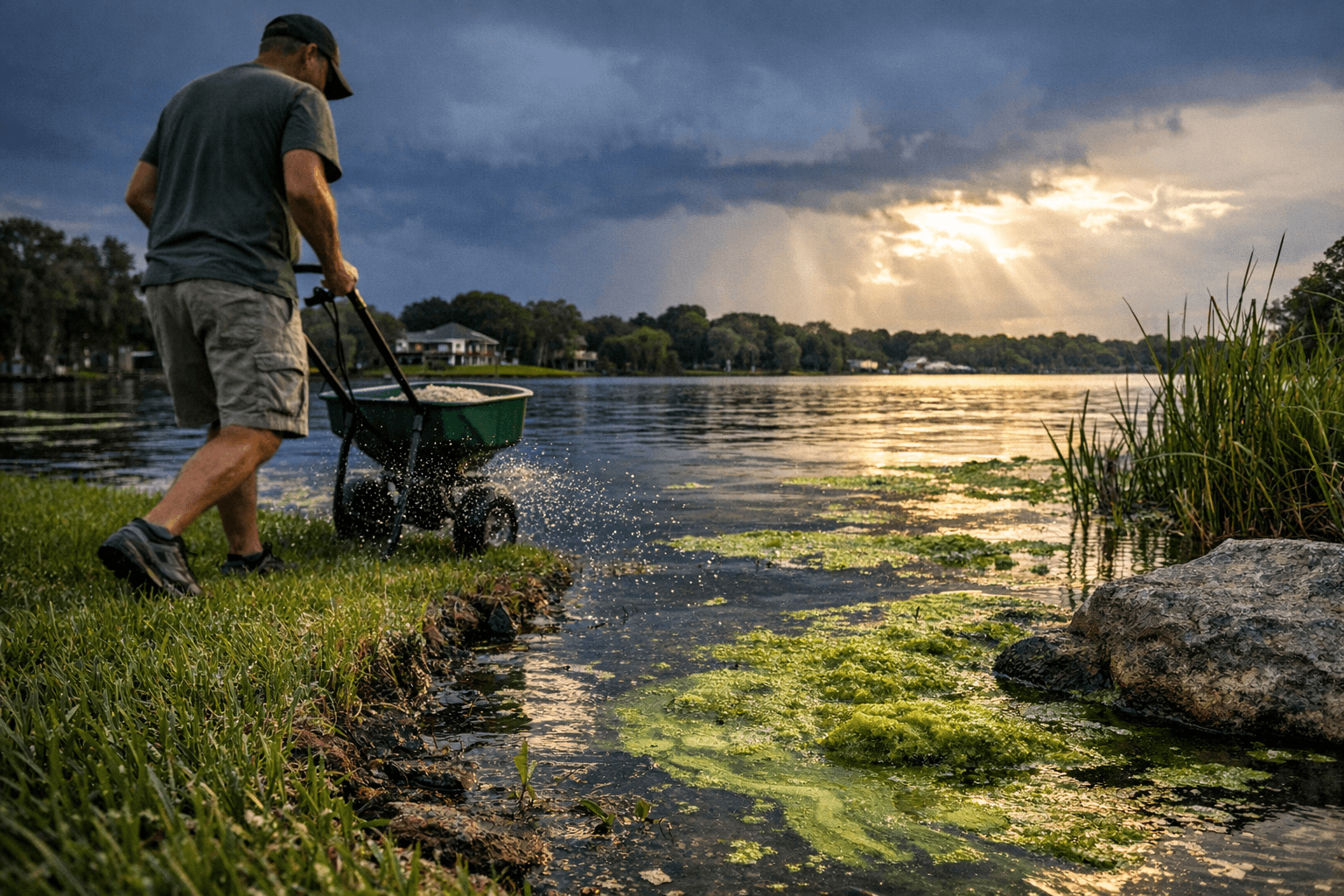
With the rainy season less than two months out, Seminole County is pushing residents to get their lawn care habits in order before the June 1 fertilizer blackout takes effect and nutrient-laden runoff begins washing into local waterways.
The county's Fertilizer Ordinance, enacted in 2017, prohibits the application of any fertilizer containing nitrogen or phosphorus on turf from June 1 through September 30. Those four months coincide with Central Florida's wet season, when rainfall occurs nearly every day on average and saturated soil gives plants almost no time to absorb nutrients before stormwater flushes them into the nearest lake, river, or canal. Once nitrogen and phosphorus reach those waterways, algae blooms follow, and the blooms eventually kill fish and other organisms.
Until June 1 arrives, residents are in the non-restricted window, but the rules still apply. During this October-through-May period, only fertilizers containing at least 65% slow-release nitrogen are permitted on lawns. Phosphorus is effectively off the table entirely: the ordinance bars its use on turf unless a state-certified soil or tissue test confirms a deficiency. A standard fertilizer bag displays three numbers representing nitrogen, phosphorus, and potassium, in that order. Residents looking for a compliant product should check that the middle number is zero.
A 15-foot no-application buffer is required year-round along any pond, lake, stream, canal, or wetland shoreline. Any fertilizer that lands on a driveway, sidewalk, or other hard surface must be swept back onto the lawn or collected in a container rather than left to wash into storm drains.
When summer arrives and nitrogen-based fertilizers go off the shelf for the season, residents who want to feed their lawns can turn to what are commonly called summer blends, which contain potassium, iron, magnesium, manganese, and other micronutrients but none of the restricted compounds. The county notes that slow-release nitrogen products, while sometimes priced slightly higher, require less frequent application and can offset their cost over time.
The ordinance covers unincorporated Seminole County, but all seven cities within the county have adopted their own aligned versions. Altamonte Springs, Casselberry, Lake Mary, Longwood, Oviedo, and Sanford each passed ordinances between 2017 and 2020; Winter Springs adopted the state model ordinance. Residents unsure of their local rules can look up application rates using the calculator at fertilizeflorida.com.
Seminole County's Public Works department, which oversees watershed management, has identified stormwater runoff as a primary pollution source for the county's natural waterbodies, including the Wekiva River. The Wekiva, which cuts through the county's northwestern reaches, has faced documented nitrate contamination from residential runoff, making pre-season compliance reminders more than a routine public service announcement.
This article was produced by Prism’s automated news system from verified source data, official records, and press releases, then run through automated quality and moderation checks before publishing. The system is built and supervised by the people who set the standards it runs under. Read our full AI policy.
Did this article answer your question?