Chicago fentanyl trafficking leader gets 174 months in prison
A Chicago-led fentanyl ring fed Duluth for more than two years, and its alleged leader was sentenced to 174 months in federal prison. Investigators seized enough drugs to show how deeply the network had cut into the Twin Ports.

A Chicago man prosecutors said ran a fentanyl pipeline into Duluth was sentenced to 174 months in federal prison, a term that comes after investigators tied the case to more than 890 grams of fentanyl, 262 grams of methamphetamine and a seizure connected to an overdose death.
Ezell Cordero Lucas, also known as Cash, 34, was identified by federal prosecutors as the leader of a Chicago-based drug trafficking organization that moved fentanyl to Duluth for sale across the Twin Ports region. Prosecutors said the conspiracy ran from December 2021 through February 2024, with Lucas arranging sales in Duluth and directing associates to carry out street-level transactions and meet customers at predetermined locations.
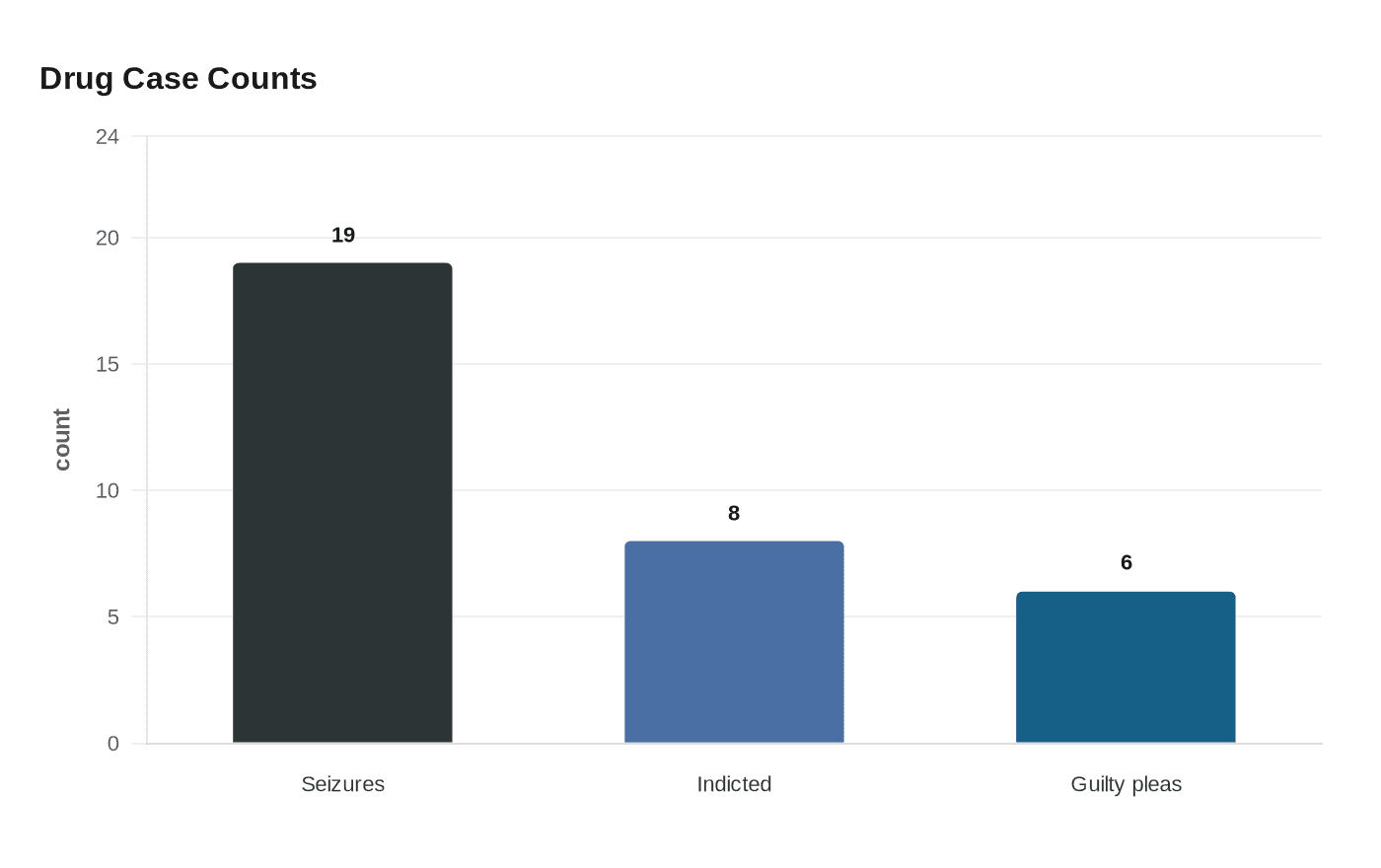
The case was built through 19 seizure events that included controlled buys, traffic stops, residence search warrants and the seizure tied to an overdose death. Investigators from the Duluth Police Department, the St. Louis County Sheriff's Office, the Lake Superior Violent Offender Task Force and the Bureau of Alcohol, Tobacco, Firearms and Explosives worked the case with help from other local and federal agencies.
The sentencing lands against a wider fentanyl crisis that has strained public health and law enforcement in St. Louis County and across Minnesota. Minnesota Department of Health dashboards track county-level overdose deaths, and the Minnesota Department of Public Safety maintains a drug crimes and overdose dashboard for public health practitioners, researchers, policy makers and the public. St. Louis County Public Health and Human Services says overdose data are used to guide local prevention and response efforts.
Federal prosecutors said eight people were indicted in the case in April 2024. Six other defendants later pleaded guilty, and Carl Maurice Brown was convicted after trial and faces sentencing later. Taken together, those outcomes suggest the case reached beyond one defendant and exposed a broader network that prosecutors say operated inside Duluth for more than two years.
For Duluth, the prison term is a reminder of what fentanyl trafficking can do before a single arrest is made: drive overdose risk, seed neighborhood drug markets and force local agencies to chase a supply chain that began hundreds of miles away in Chicago.
This article was produced by Prism’s automated news system from verified source data, official records, and press releases, then run through automated quality and moderation checks before publishing. The system is built and supervised by the people who set the standards it runs under. Read our full AI policy.
Did this article answer your question?