Don Ness reflects on civic leadership after mayoral years
Don Ness left City Hall, but his biggest sway in Duluth now runs through nonprofit funding and coalitions that still shape neighborhood priorities.

From City Hall to the nonprofit sector
Don Ness is no longer deciding Duluth’s agenda from the mayor’s office, but he still sits close to the center of civic power. The former mayor now leads the Ordean Foundation, a role that places him in the stream of local funding, nonprofit partnerships, and neighborhood projects that often determine which ideas become real in Duluth and St. Louis County.
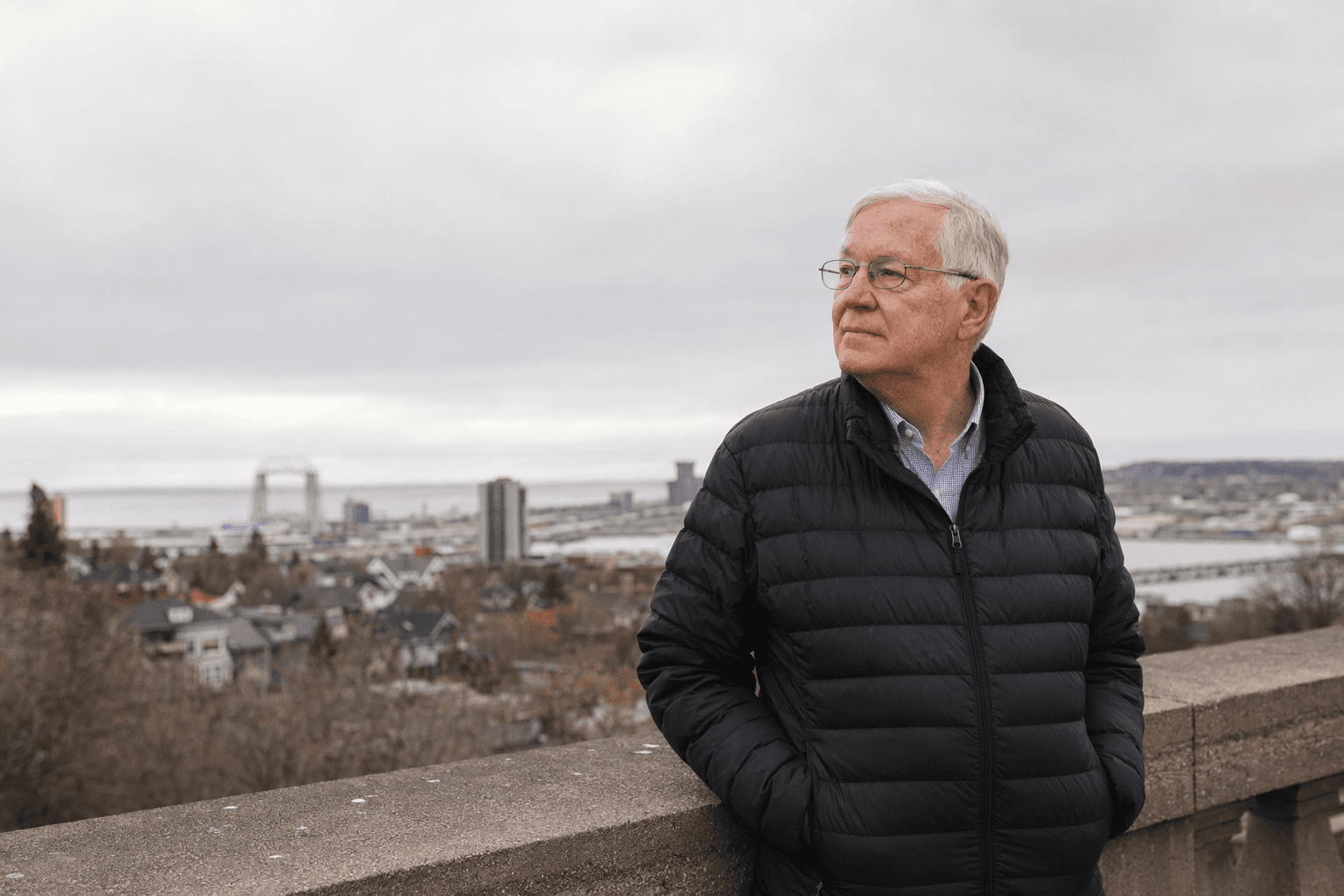
That shift matters because Ness’s public life has never been separated from the city’s institutions. He was 33 in 2007, when he was first included among the Duluth News Tribune’s 20 Under 40 honorees, and he was already known locally as more than a politician. Before entering the mayor’s race, he had been festival director for the Homegrown Music Festival, a sign that his civic identity was built as much in arts and volunteer networks as in campaign politics. His path from festival work to City Hall and then into nonprofit leadership shows how Duluth often circulates influence through a small, connected set of people who move between government, philanthropy, and community organizing.
Ness announced on October 13, 2014, that he would not seek a third term, and he left office in January 2016 after serving as mayor from January 7, 2008, to January 4, 2016. City records later identified him as executive director of the Ordean Foundation, and a 2024 city press release again listed him in that role, confirming that his post-mayoral influence has remained rooted in Duluth rather than drifting away from it. The foundation is based in Duluth and remains tied to civic and nonprofit work in the city, which makes Ness less a retired officeholder than a continuing broker of local priorities.
How his influence now works
The strongest part of Ness’s current power is not formal authority. It is leverage: the ability to connect money, people, and institutions in ways that can move projects forward. That kind of influence is especially important in Duluth, where park improvements, neighborhood recovery, arts programming, and youth initiatives often depend on the alignment of city government, nonprofit partners, and private foundations.
One clear example is Hartley Park. In 2015, the city announced a $600,000 Legacy grant for park improvements, with Hartley Nature Center as a nonprofit partner. Hartley Nature Center staff joined Ness and other city officials when the grant was announced, a public moment that showed how he was still operating inside the civic ecosystem even as he was preparing to leave the mayor’s office. For residents, that kind of project is one of the most concrete ways to judge a former mayor’s ongoing influence: does he help turn good intentions into funded work that actually changes daily life in places like Hartley Park?
His role has also extended into broader civic advocacy. During his mayoralty, Ness was publicly associated with the city’s Mayors’ Campaign to End Bullying, launched during National Bullying Prevention Month. That effort placed him in a coalition-driven model of leadership, one that reaches beyond city hall and into schools, youth organizations, and public-health style messaging. It also fits a larger pattern in Duluth, where influence often flows through partnerships involving groups such as Duluth Public Schools, The BULLY Project, and the U.S. Conference of Mayors.
The arts and culture sector is another arena where Ness’s background has mattered. City materials have described the economic impact of Duluth’s nonprofit arts and culture sector as hugely significant, and Ness’s earlier work with Homegrown helps explain why arts organizations have long been part of his civic lane. In a city that depends on nonprofit institutions to strengthen neighborhood identity and economic life, a former mayor with his history can still shape what gets attention, what gets funded, and which organizations are heard first.
The record that built his standing
Ness’s post-office influence rests on a political record that was unusually strong by local standards. In 2011, the city said he became the first mayor in Duluth history to run unopposed. A 2013 National Citizen Survey cited by the city gave him a 90% job approval rating, a level of support that helps explain why his name still carries weight in local civic circles. He did not leave office as a defeated figure or a divisive one; he left from a position of broad public confidence.
That standing was reinforced by the context of his years in office. Ness was mayor during the city’s 2013-14 community recovery efforts after the 2012 floods, a period that required coordination among municipal agencies, neighborhood groups, and outside partners. He was also part of a generation of Duluth leaders who helped carry the city through a period of rebuilding after crisis. The result is that his influence today is not just personal, it is institutional. He knows how the city works, who convenes whom, and which nonprofits can actually move the ball.
The profile of Ness also belongs to a broader civic pattern in Duluth, where public leadership is rarely limited to one office. Former mayors, nonprofit directors, arts advocates, neighborhood leaders, and institutional heads often overlap in the same policy conversations. Ness’s path from city hall to the Ordean Foundation captures that rotation better than most. He did not disappear after leaving office; he moved into a different part of the same civic machine.
What residents should watch now
The question for Duluth residents is not whether Ness still matters. He plainly does. The better question is where his influence produces measurable results.
- Funding: Does his role help direct foundation support toward projects that have visible neighborhood payoff, especially in places such as Hartley Park, Chester Park, West Duluth, and the St. Louis River neighborhoods?
- Policy advocacy: Does he help push citywide priorities that survive beyond a single administration, including youth safety, arts investment, and community recovery?
- Coalition-building: Does he bring together city officials, nonprofits, schools, and cultural groups in ways that lead to actual implementation rather than symbolic partnership?
- Public benefit: Do residents see durable outcomes, such as completed park improvements, stronger nonprofit capacity, and civic initiatives that reach beyond press releases?
Those are the standards that matter now. Ness built his reputation in elected office, but his real test in this stage of life is whether the networks around him continue to deliver practical benefits for Duluth. In a city where civic power often moves quietly through nonprofits and partnerships, that may be the most consequential office of all.
Know something we missed? Have a correction or additional information?
Submit a Tip