Grand jury charges Hibbing man with premeditated murder in apartment shooting
A St. Louis County grand jury elevated the Hibbing apartment shooting to first-degree murder, putting Daniel James Dale in line for a possible life sentence.

A St. Louis County grand jury has indicted Daniel James Dale on premeditated first-degree murder in the killing of Parker Charles Johnson, turning a November Hibbing homicide into a case that could carry a mandatory life sentence under Minnesota law.
The indictment is a major escalation from the second-degree intentional murder charge filed Nov. 5, 2025. First-degree premeditated murder requires prosecutors to prove not just that Johnson was killed, but that the killing was planned ahead of time and carried out with the level of intent the statute reserves for the most serious homicides.
Johnson, 24, lived in Hibbing. Police were called to Meadowview Apartments in the early morning hours of Nov. 2, 2025, after reports of gunfire in the parking lot. Officers arrived around 2:15 to 2:16 a.m., found Johnson with gunshot wounds, and pronounced him dead at the scene. Dale, who was formerly of Hoyt Lakes, was arrested the same day by Hibbing police and the Minnesota Bureau of Criminal Apprehension.
The indictment does not decide guilt, but it changes the legal stakes dramatically. Under Minnesota Statutes section 609.185, a first-degree murder conviction can mean imprisonment for life. At trial, prosecutors will have to persuade a jury that Dale acted with premeditation, that he was responsible for the shooting, and that the evidence rises to the highest level of criminal liability in state law.
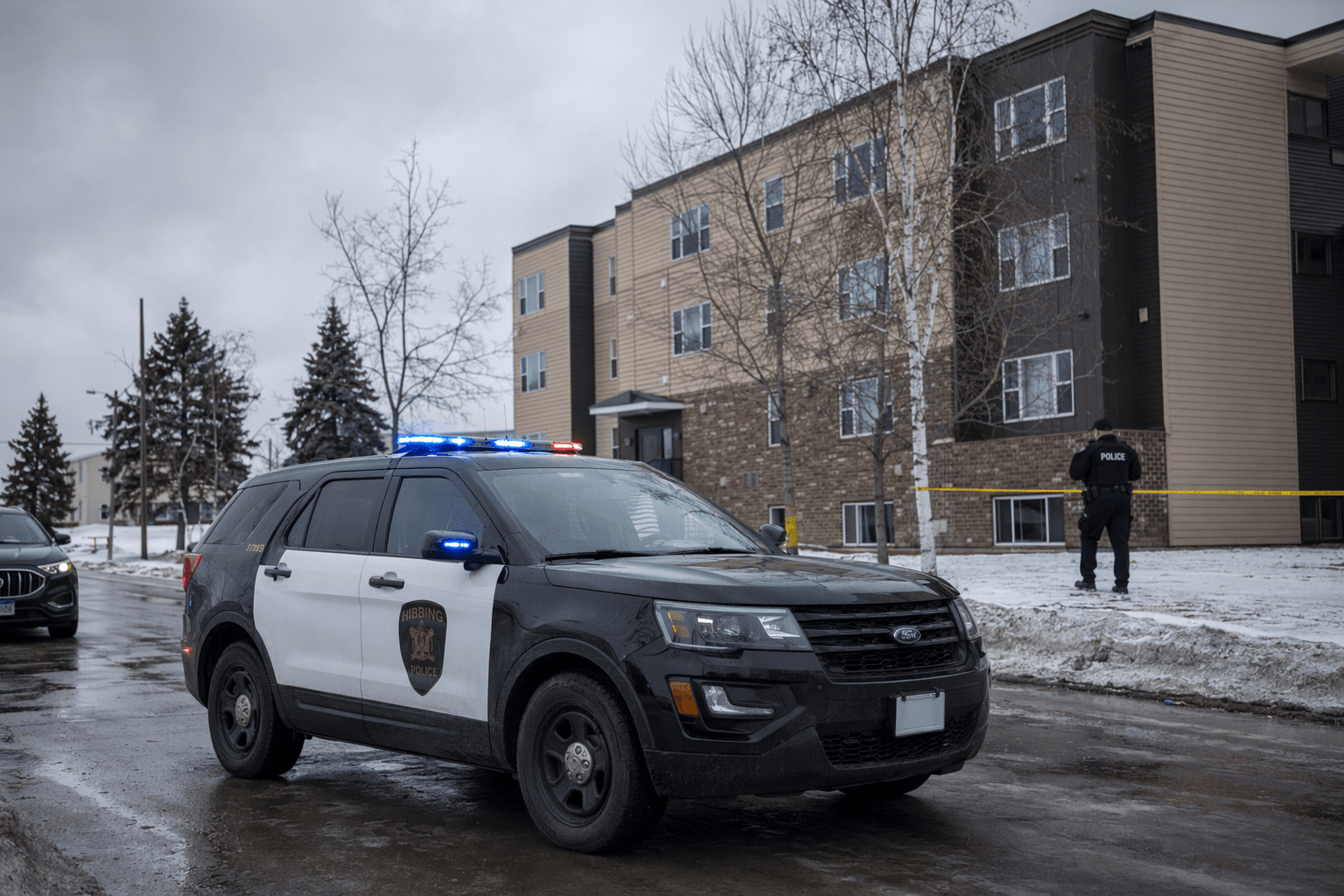
Earlier reporting said Dale and Johnson had been at a party or after-party before the shooting. KAXE reported that Dale initially denied involvement before later telling police he shot Johnson. That account places the case in the middle of the kind of factual dispute prosecutors often bring before a grand jury when they believe the evidence supports the most serious charge available.
For St. Louis County, the indictment also shows how a Hibbing-area homicide can move through the county system toward a more formal and consequential phase. Minnesota court rules allow grand jury proceedings in Hibbing-area cases within St. Louis County, and the decision to seek one here signals that prosecutors viewed the evidence as strong enough to pursue the maximum charge.
What comes next will likely be a series of court appearances, motions, and plea negotiations unless the case goes to trial. If it does, the outcome could set a stark benchmark for violent-crime prosecution on the Iron Range: whether the state can prove that the apartment-lot shooting in Hibbing was not only lethal, but premeditated.
Know something we missed? Have a correction or additional information?
Submit a Tip