Harm Reduction Sisters saves lives in Duluth, future uncertain
Harm Reduction Sisters is Duluth’s street-level overdose lifeline, but if it falters, St. Louis County will feel the loss in 911 calls, infections and untreated crisis.
A van parked at the bus terminal
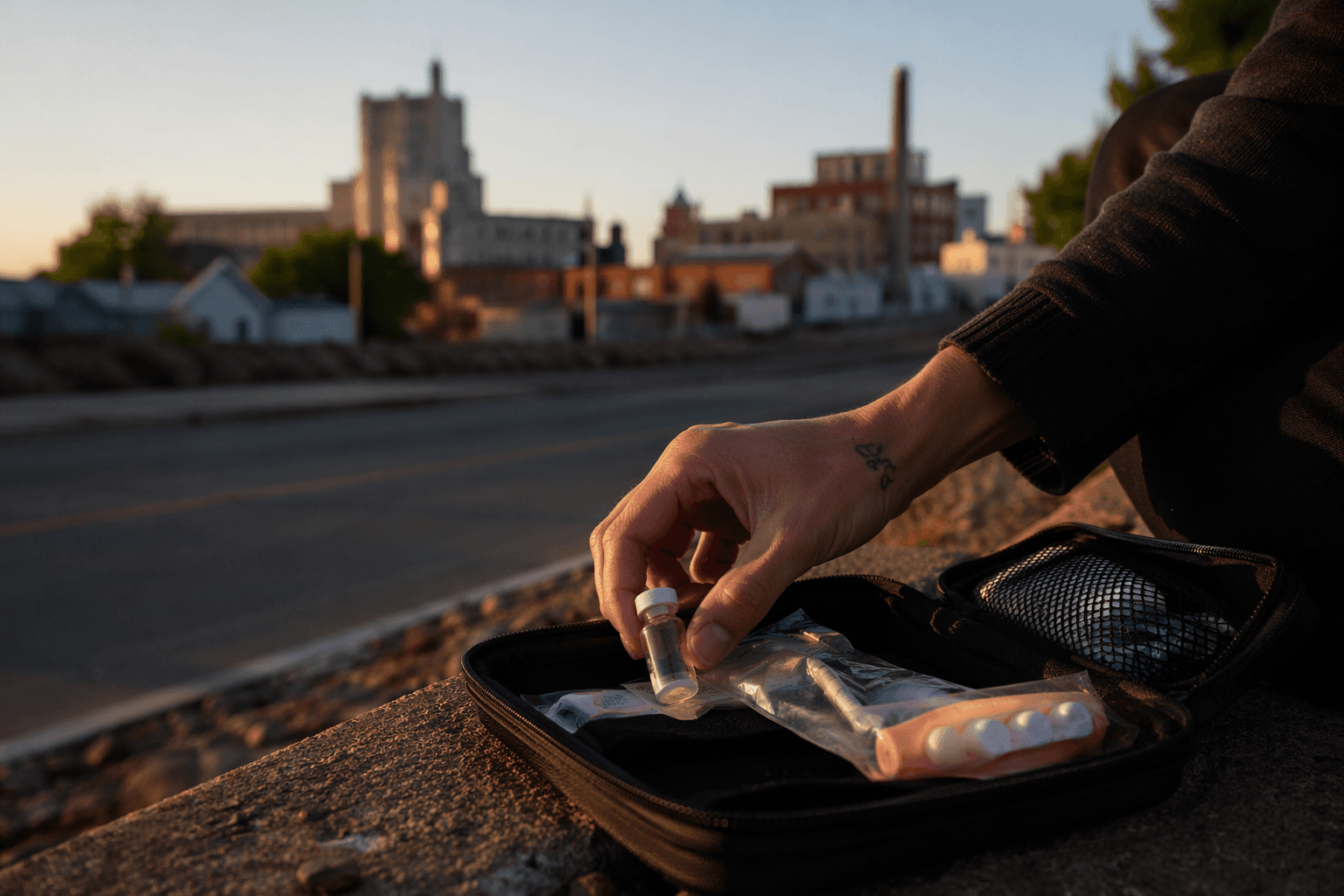
Downtown Duluth is where the stakes of harm reduction are easiest to see. Missy Jellison, a peer navigator and mobile delivery coordinator with Harm Reduction Sisters, rolls up in a large white van near the bus terminal, where people in crisis gather, and she arrives stocked with Narcan, safe-drug-use kits, hepatitis C tests, clean socks and snacks. “We’re there all day,” she said. “Stop by if you want.” If that van and the nonprofit behind it become unstable or disappear, the people who now get help on the sidewalk are more likely to end up in a police response, an ambulance ride, or a hospital hallway instead.
What Harm Reduction Sisters actually does
Harm Reduction Sisters is not a clinic that waits for people to walk through a door. It is a mobile, low-barrier network based in Duluth that provides sterile injection supplies, overdose education and naloxone across Northern Minnesota, with drop-in syringe services and testing at the Damiano Center on West 4th Street, plus service points in Hibbing, Grand Rapids and Cloquet. Its supply list is broad and practical: syringes, fentanyl and xylazine test strips, naloxone, wound care kits, hygiene kits, take-home syphilis and HIV tests, condoms, lube, sharps containers, and more. The organization also offers confidential HIV testing, linkage to care and non-medical case management, and its Virginia office is temporarily closed while it looks for a new space, a reminder that this network can shrink quickly when staffing or facilities get tight.
Jellison’s role shows why the work matters. She approaches people who may be sleeping outside, using drugs, or simply trying to get through the day, and she does it without demanding abstinence first. “My goal is to make people feel seen and heard,” she said. That street-level contact is how people get clean syringes, Narcan and other supplies before a crisis becomes an infection, an overdose or a call to 911.
What disappears when a group like this weakens
The public-safety consequences are not theoretical in Duluth. The city’s police department said it had responded to 37 opioid-related fatal overdoses by Nov. 7, 2023, already exceeding the previous year’s total, and it reported an 11-year high in opioid deaths and overdoses. Police also said Narcan had been administered 110 times that year, saving 105 people from fatal overdose. Duluth’s Substance Use Response Team, which uses civilian peer specialists because people who use drugs often distrust law enforcement, is built on the same idea as Harm Reduction Sisters: reach people through someone they will actually talk to, then connect them to treatment, harm reduction and other support. If HRS becomes unstable, more of that burden lands on police, first responders and, by extension, emergency rooms.
That is especially important because the county’s own public health framework recognizes that substance use touches housing, employment, criminal justice and medical care all at once. St. Louis County says it supports harm reduction through fentanyl testing supplies, medication disposal, infectious disease testing, overdose reversal education and training, and it says it works closely with Harm Reduction Sisters, Recovery Alliance Duluth and Rural AIDS Action Network. In other words, HRS is not an isolated charity on the fringe of the system. It is part of the system, and if it thins out, the county will have to decide which part of the system absorbs the fallout.
The money and the obligation
There is also a funding question hanging over this work. St. Louis County says it stands to receive about $18 million over the next 18 years from opioid settlement money, and that the funds are meant for forward-looking programs that respond to the epidemic. The county also says its public health department works with local partners, values community input, and aims to ensure every resident has services available. That creates a direct accountability test for county leaders and Duluth officials: if a nonprofit already doing overdose prevention, wound care, HIV and hepatitis testing, and mobile outreach becomes unstable, will local government simply hope another nonprofit fills the void, or will it pay to keep those services alive?
The county already has structures that could absorb part of the load. Its Substance Use and Recovery unit provides treatment coordination, and it maintains a broader behavioral health system that includes substance use services. But those are not the same as a van that appears near the bus terminal with supplies in hand, or a peer navigator who can talk to someone in crisis without judgment. If officials want to say they have a real harm-reduction strategy in Duluth and across St. Louis County, they will have to do more than praise the work after the fact. They will need to fund it, formalize it or replace it before the next gap opens on the street.
This article was produced by Prism’s automated news system from verified source data, official records, and press releases, then run through automated quality and moderation checks before publishing. The system is built and supervised by the people who set the standards it runs under. Read our full AI policy.
Did this article answer your question?