Minnesota lawmakers in Duluth discuss rising costs of elder care
Rising elder-care costs are squeezing St. Louis County families, while the clearest help lawmakers discussed was free state long-term care counseling already on the books.
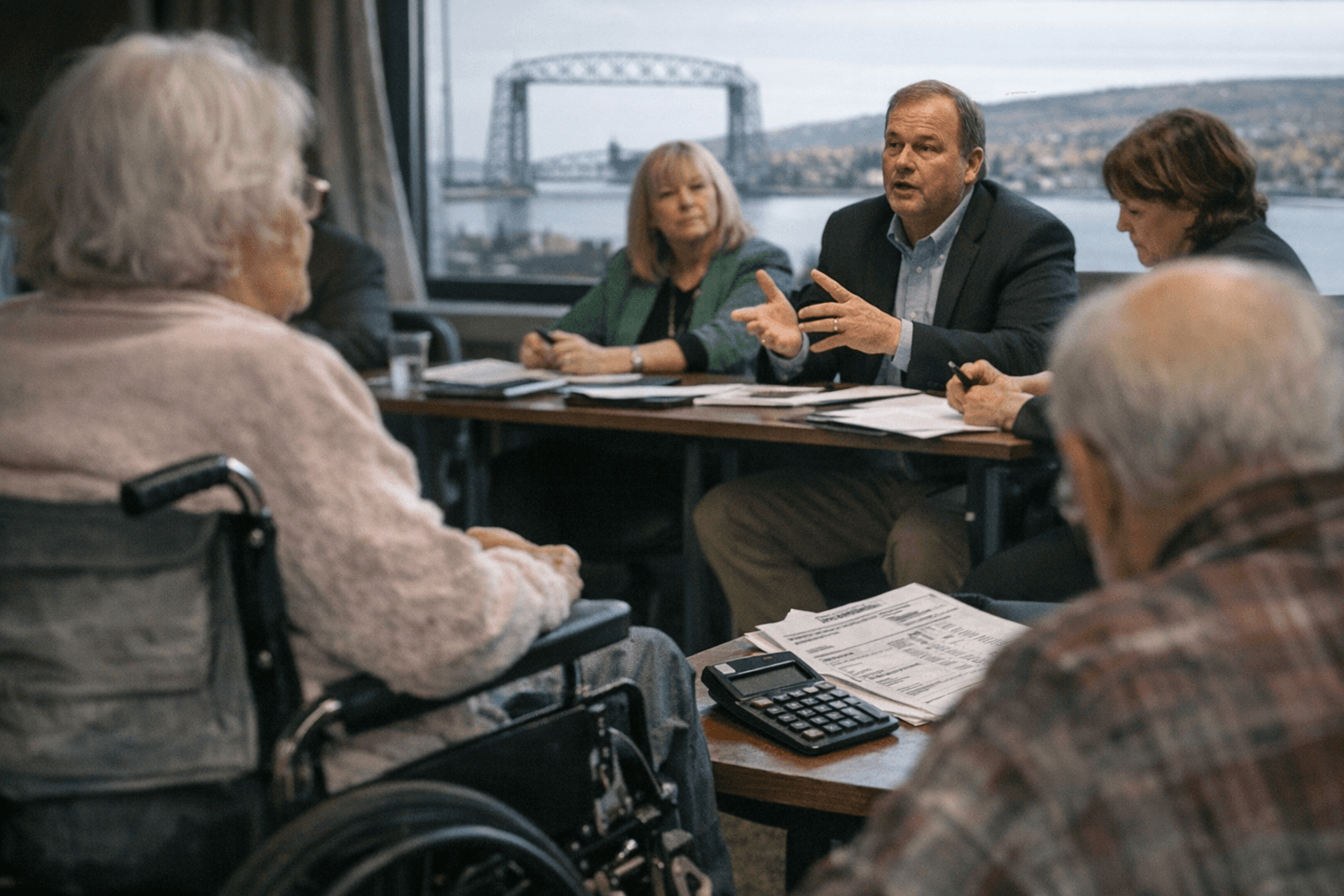
At about $48,000 for assisted living and more than $90,000 for a nursing home, the cost of aging is now a financial crisis for many St. Louis County families, even before they figure in housing, transportation and daily in-home help.
Minnesota lawmakers met in Duluth on Friday for a roundtable on how the state can better support older residents as the 65-and-older population keeps growing. The event, hosted by the Long-Term Care Imperative, brought together providers and bipartisan legislators for a discussion that centered less on ceremony than on who will pay when a parent can no longer manage at home.
The pressure is hard to miss in St. Louis County. The county’s population is 200,518, and 22.4% of residents are age 65 or older. It also has 104,926 housing units and a median gross rent of $1,013, a combination that leaves many older adults on fixed incomes trying to balance rent, care bills and the desire to stay close to family in Duluth and across the county.
Minnesota’s demographic shift is even larger. The State Demographic Center says the number of people turning 65 between 2010 and 2030 will be greater than in the previous four decades combined, and the 65-plus population is projected to double over that same period. The state now has more than one million residents age 65 or older, making elder care a statewide issue with immediate consequences for local facilities and families.
Sen. Grant Hauschild said families need to plan early and understand what care can actually cost. The clearest concrete help discussed in Duluth was the state’s free long-term care consultation service, which Minnesota Human Services says is available to people with long-term or chronic care needs even if they have not applied for public benefits. Those consultations can help families evaluate care options, weigh housing choices and plan transitions out of nursing facilities. Minnesota’s aging information line, now called Minnesota Aging Pathways, is another free statewide tool for people trying to sort through services.
The staffing side of the crisis remains just as serious. Minnesota’s long-term care system is already dealing with 4,382 RN vacancies and 2,591 nursing assistant vacancies, according to LeadingAge Minnesota, which cites state workforce analysis. The group says federal minimum staffing standards for nursing homes would require 739 more full-time registered nurses and 3,540 more full-time nursing assistants in Minnesota alone. State analysts also project the number of seniors needing nursing home care will rise by more than 20% from 2025 to 2035.
For older residents and the people caring for them, the Duluth discussion underscored a blunt reality: Minnesota has tools to help families plan, but the state still faces a widening gap between what elder care costs and what the system can deliver.
This article was produced by Prism’s automated news system from verified source data, official records, and press releases, then run through automated quality and moderation checks before publishing. The system is built and supervised by the people who set the standards it runs under. Read our full AI policy.
Did this article answer your question?