Soudan Mine marks the start of Minnesota's iron-mining era
Soudan Mine marks the start of Minnesota’s iron-mining era, and its shaft, lab and state park still anchor St. Louis County identity.
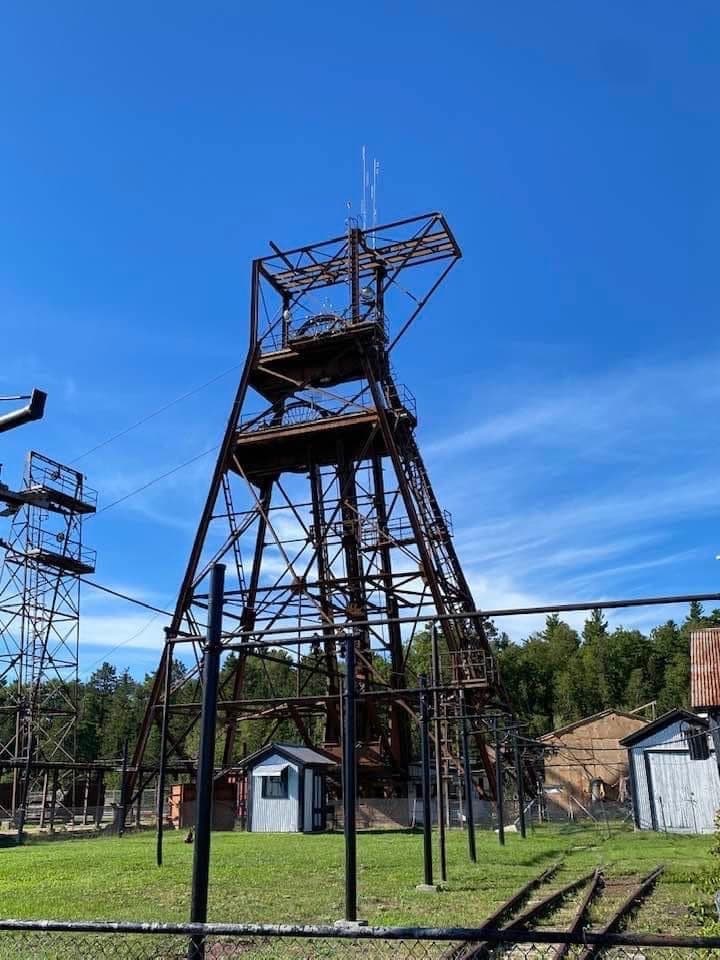
If Soudan Mine faded from view, St. Louis County would lose the place where Minnesota’s iron-mining era began and one of the clearest symbols of how Tower and the wider Iron Range were built. The first ore shipment from the Breitung pit on July 31, 1884 launched the state’s mining industry, and the site still carries that story through a 2,341-foot underground tour, a scientific lab and a state park built around the old workings.
Where Minnesota’s iron story begins
Soudan Mine opened in 1884 at the western edge of the Vermilion Range, about two miles northeast of Tower. MNopedia identifies it as the state’s first iron mine, and the historical marker at the site places Minnesota’s iron-mining beginning on July 31, 1884, when ore first moved out of the Breitung pit. That date matters because it ties St. Louis County to the start of a statewide industry, not just to one preserved shaft.
The mine’s significance reaches beyond Tower. The same ore body helped define the wider Iron Range economy that later shaped Ely, Virginia and Hibbing, and the Vermilion Range was the first iron range in Minnesota to open. MNopedia also describes it as the oldest of Minnesota’s three ranges, which is one reason Soudan sits so firmly in the region’s identity.
From seven open pits to the end of the Vermilion era
Soudan was first worked from seven open pits before underground mining took over. That progression from surface digging to deep extraction captures the way early Minnesota iron mining evolved, and it helps explain why the site still reads as a turning point in the county’s industrial history.
The broader market eventually changed the range’s fate. Mining-history material places the end of Soudan operations in 1962, while MNopedia dates the end of commercial mining on the Vermilion Range to 1967, after changes in steel-making and lower-cost taconite from the Mesabi Range shifted the economics of iron production. The result was a transition period in which the original range that started Minnesota’s mining era also became the first to leave commercial mining behind.
What still happens underground
The most striking part of Soudan now is how much of it remains active in a different way. Visitor materials say the underground tour descends 2,341 feet by cage to the 27th level, making it Minnesota’s deepest mine. That depth turns the old shaft into more than a history lesson, because the rock itself is now part of the attraction.
The University of Minnesota’s Soudan Underground Laboratory sits 2,341 feet beneath the surface in the old iron mine. Its setting shields sensitive particle-physics experiments from cosmic radiation, giving the site a scientific role that never existed during the ore-mining years. In practical terms, the same underground space that once moved iron now supports research that depends on isolation and shielding.
How the state park frames the site now
Lake Vermilion–Soudan Underground Mine State Park pulls the mine into a larger landscape of water, forest and recreation. MNopedia says the park covers more than 4,000 acres and includes the historic underground iron mine, Lake Vermilion and the surrounding landscape, which makes it one of the county’s clearest examples of industrial history folded into outdoor tourism.
A visit now works best when planned around the park’s layout and hours.
- The park has two main entrance areas.
- Visitor tips note that the Soudan Underground Mine gates close at 6 p.m.
- The park office is listed at P.O. Box 335, 1379 Stuntz Bay Rd., Soudan, MN 55782.
Those details matter because the site is no longer just a monument. It is a large, multi-use destination where visitors can move from the underground mine to the lake country setting in the same trip.
Why the place still matters to St. Louis County
Soudan Mine reached its 140-year mark in 2024, and the site still appears in visitor materials because it remains useful to the county’s sense of itself. It links Tower’s local story to the bigger arc of Minnesota mining, from the first ore shipment to the rise of taconite and the shift toward heritage tourism, science and recreation. For St. Louis County, losing attention on Soudan would mean losing the clearest place where that full arc is visible in one landscape.
That is why Soudan endures as more than a preserved shaft. It marks the beginning of Minnesota’s iron age, shows how the Vermilion Range gave way to a new mining economy, and gives the county a place where history, research and lake-country travel still meet on the same ground.
This article was produced by Prism’s automated news system from verified source data, official records, and press releases, then run through automated quality and moderation checks before publishing. The system is built and supervised by the people who set the standards it runs under. Read our full AI policy.
Did this article answer your question?