St. Louis County historical society returns sacred items to Grand Portage Band
Four pipe bowls and two stems held in Duluth since 1939 were returned to Grand Portage, ending an 87-year wait for sacred items tied to Chief Joseph Maymaushkowaush.
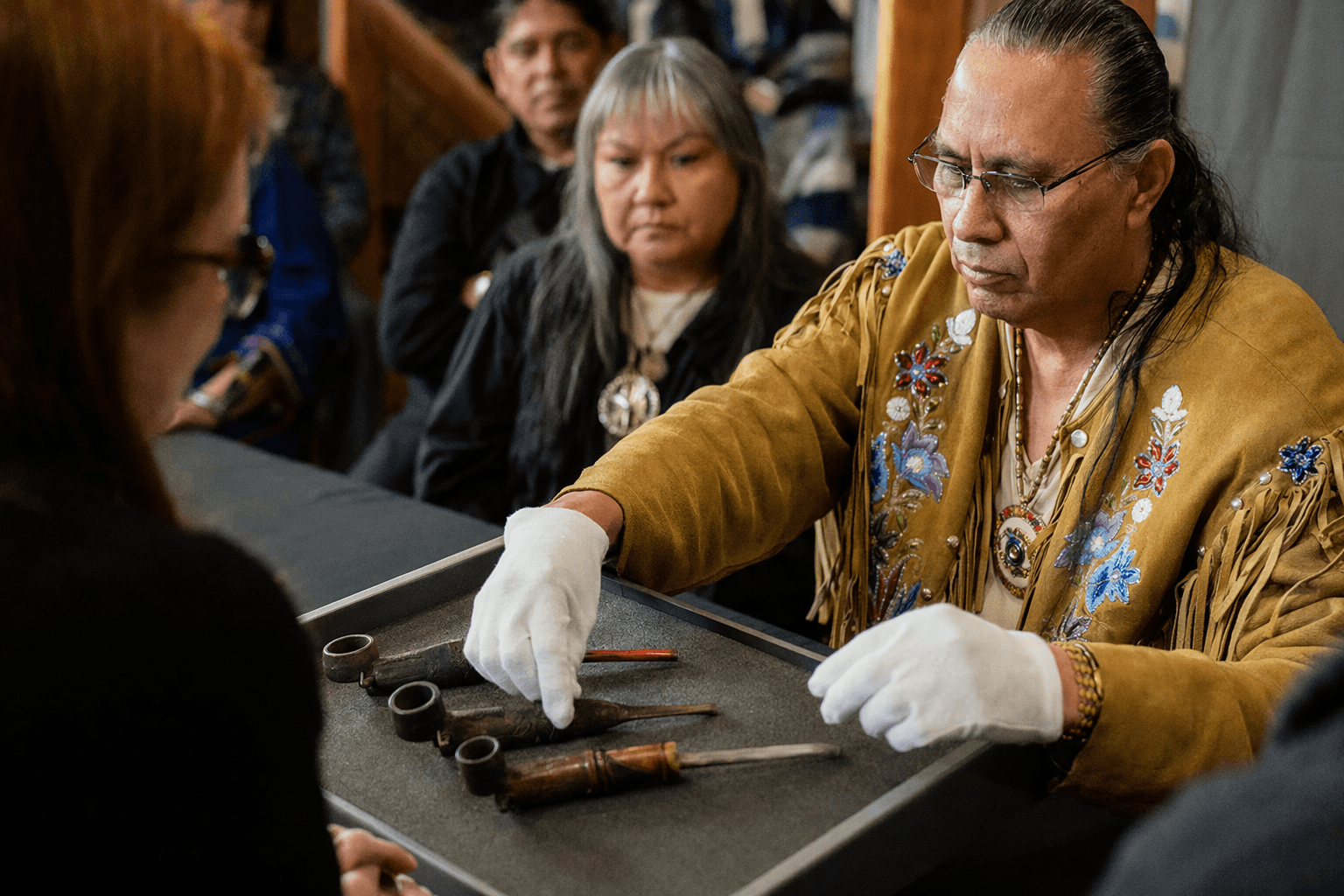
Sacred items tied to Grand Portage left the St. Louis County Historical Society and went home to the Grand Portage Band of Lake Superior Chippewa, ending a hold that began in 1939. The return involved four pipe bowls and two stems, objects linked in the record to Chief Joseph Maymaushkowaushkowaush, the last hereditary chief of Grand Portage, and to a family history that reaches back to the 1854 Treaty of La Pointe.
The transfer took place at the Grand Portage Community Center during the Honor Our Elders Powwow, where the band marked the moment with a public handoff. The event listing named a 1:00 p.m. Grand Entry and a 5:00 p.m. feast, with Jim Misquart as MC, Brandon Deschampe-Morrison as arena director, Stonebridge Singers as host drum and Rick Defoe as spiritual advisor. For Grand Portage, the timing mattered as much as the objects themselves: the powwow setting placed the return inside a living community gathering, not behind museum glass.
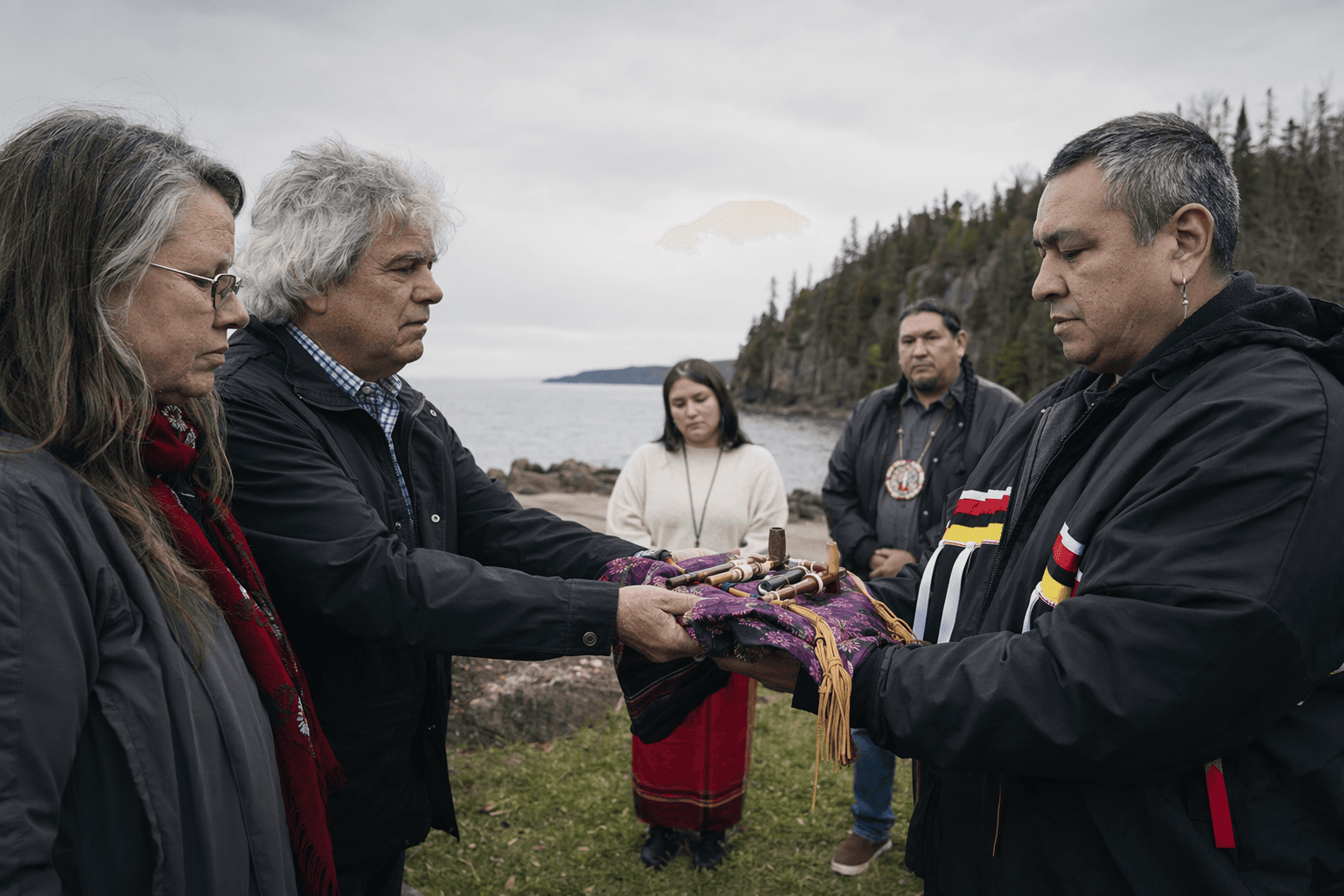
The St. Louis County Historical Society said the items were identified through inventory record research and repatriated with guidance from its American Indian Advisory Committee. The society’s notice, filed as a formal NAGPRA action, said the five cultural items meet the definition of objects of cultural patrimony, meaning they have ongoing historical, traditional or cultural importance central to the Grand Portage Band. The notice also identified pipe stem 39.3.10.2 as associated with Chief Joeseph Louis Memashkawash, reflecting spellings that vary in the historical record.
NAGPRA, enacted on November 16, 1990, requires museums and federal agencies to identify and return certain Native American human remains, funerary objects, sacred objects and objects of cultural patrimony. In this case, the law became the mechanism for repairing a nearly nine-decade separation. The items were sourced through WPA projects in Grand Portage, according to the federal notice, and have sat in a Duluth collection while the band continued to press the meaning of their heritage.
April McCormick, secretary treasurer of the Grand Portage Tribal Council, framed the return around the band’s understanding of treaties as sacred obligations between nations. That matters now because the 1854 Treaty of La Pointe still shapes land, reservation boundaries and rights central to Grand Portage sovereignty, and because the band, a federally recognized sovereign nation and part of the Minnesota Chippewa Tribe, sees the return as more than restitution. It is a correction in stewardship, respect and control over what belongs at home.
This article was produced by Prism’s automated news system from verified source data, official records, and press releases, then run through automated quality and moderation checks before publishing. The system is built and supervised by the people who set the standards it runs under. Read our full AI policy.
Did this article answer your question?