St. Louis County tests sprint medic program for faster rural emergency response
A six-minute paramedic response in Grant County is now the test case for whether St. Louis County can narrow rural emergency delays across 7,000 square miles.

St. Louis County’s 7,000 square miles and 194,454 911 calls in 2024 have made it one of Minnesota’s most demanding places to test whether a sprint medic can reach rural emergencies before an ambulance can cross the distance. The model is being tried in Grant County, Otter Tail County and St. Louis County, with the aim of getting paramedics to patients faster, starting treatment sooner and stabilizing people before transport.
The urgency of that test was visible in Grant County, where Lourens Nel, a contract farm laborer from South Africa, suffered a severe grain-bin injury that cost him a foot. Sprint medic paramedics reached him in about six minutes. A more conventional ambulance response might have taken 20 to 30 minutes or longer, a gap that shows why rural agencies are looking for a different way to cover long roads and scattered towns.
The state created the pilot in 2024 through HF 4738 and set aside $6 million in fiscal 2025 to pay for it. The Emergency Medical Services Regulatory Board is responsible for overseeing the pilot in St. Louis, Grant and Otter Tail counties, and the program is scheduled to expire June 30, 2027. State implementation materials say collaborative groups in each pilot area have been building operational plans.
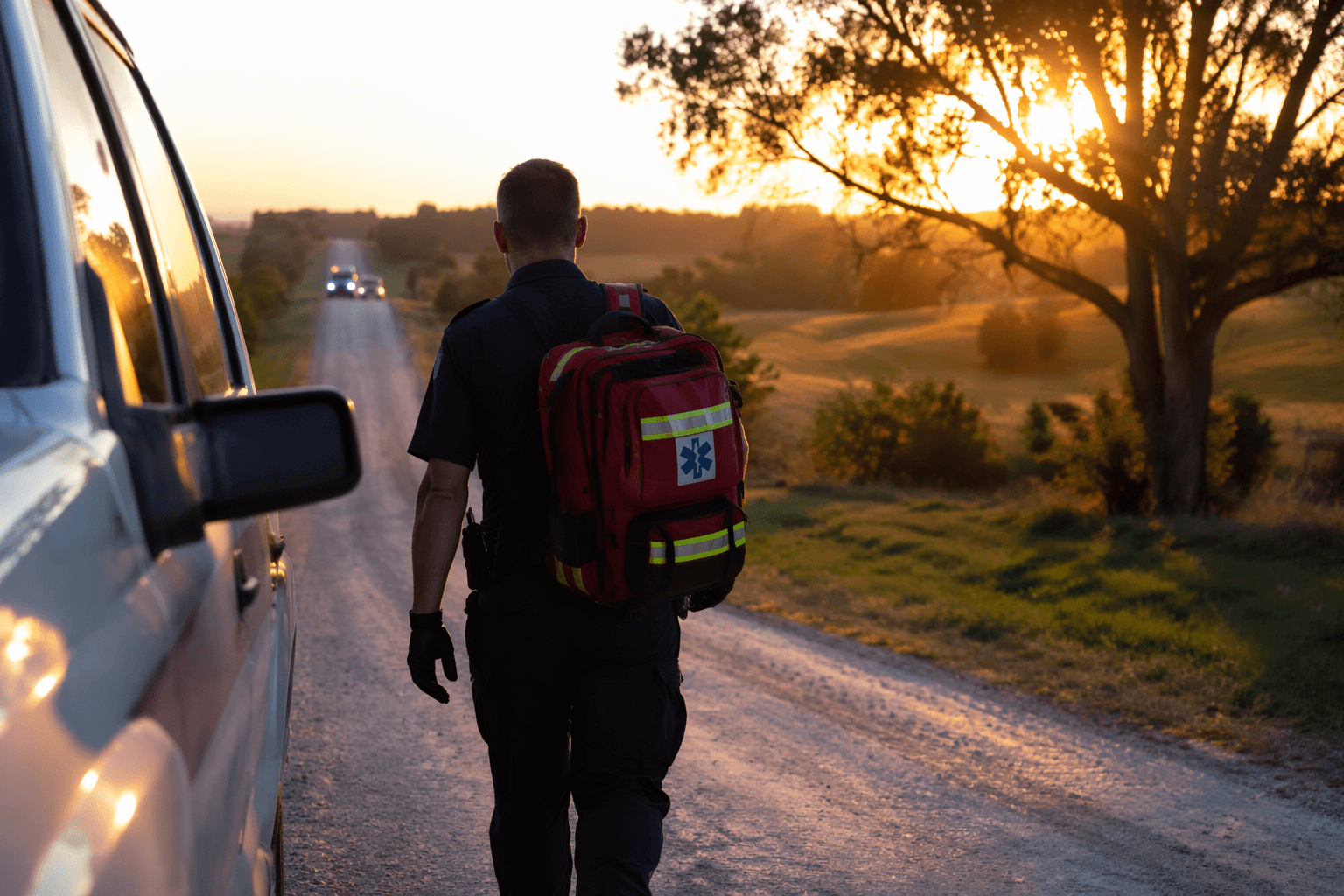
Under the sprint medic model, an equipped paramedic roams a service area and responds immediately while the partnering primary ambulance service travels to the scene. That structure is meant to address a problem familiar in northern Minnesota and other rural regions: the nearest advanced responder may be too far away when minutes matter. A University of Minnesota-associated rural EMS report found that rural and urban emergency call response times can differ by about 25 minutes.
For St. Louis County, the stakes are especially high because the county’s geography stretches from industrial sites and remote roadways to communities that can be far apart. The county’s sheriff’s office 911 Division handled more than 194,000 calls last year, a workload that makes every delay more consequential for crews and patients alike. The pilot is being tested alongside $24 million in short-term rural EMS aid approved in the same 2024 package, part of a broader state response to workforce shortages, geographic barriers and strained volunteer services across rural Minnesota.

Whether the program continues beyond June 2027 will come down to practical measures: how quickly paramedics get to the scene, how soon treatment begins and whether the model eases pressure on ambulance crews that spend too much time driving across counties instead of covering the next call.
This article was produced by Prism’s automated news system from verified source data, official records, and press releases, then run through automated quality and moderation checks before publishing. The system is built and supervised by the people who set the standards it runs under. Read our full AI policy.
Did this article answer your question?