56th Fort Seward wagon train set to roll out from Jamestown
The 56th Fort Seward wagon train rolled out from Jamestown on Monday, carrying the 1969 tradition across about 85 miles of the Diamond Willow Trail through June 28.

The 56th Fort Seward Covered Wagon Train rolled out from the historic Fort Seward Park in Jamestown on Monday and is scheduled to return Saturday, June 28, tracing about 85 miles along the Diamond Willow Trail.
What began in 1969 as a one-time experience has become one of Jamestown’s longest-running heritage traditions. Fort Seward, Inc., the nonprofit formed by local citizens that year, says the wagon train was created to preserve, protect and promote the history of the Fort Seward Infantry Post and North Dakota history, and it has been held annually ever since.
The event is built as much for families and first-timers as for longtime riders. Fort Seward describes it as a family-oriented covered wagon train with history talks, camping, nature lore and saddle horses permitted. Participants do not need to own or ride a horse to take part, which has helped keep the event open to a wider circle of local residents and visitors.
The daily routine is part trail ride, part community camp. Organizers say the schedule typically starts early, includes a noon lunch stop and ends with evening camp setup, followed by arts and crafts, camp-crafts, singing, skits, stories and history talks around the campfire. The route also includes stops at known historical sites, where participants hear brief explanations of why each place matters.
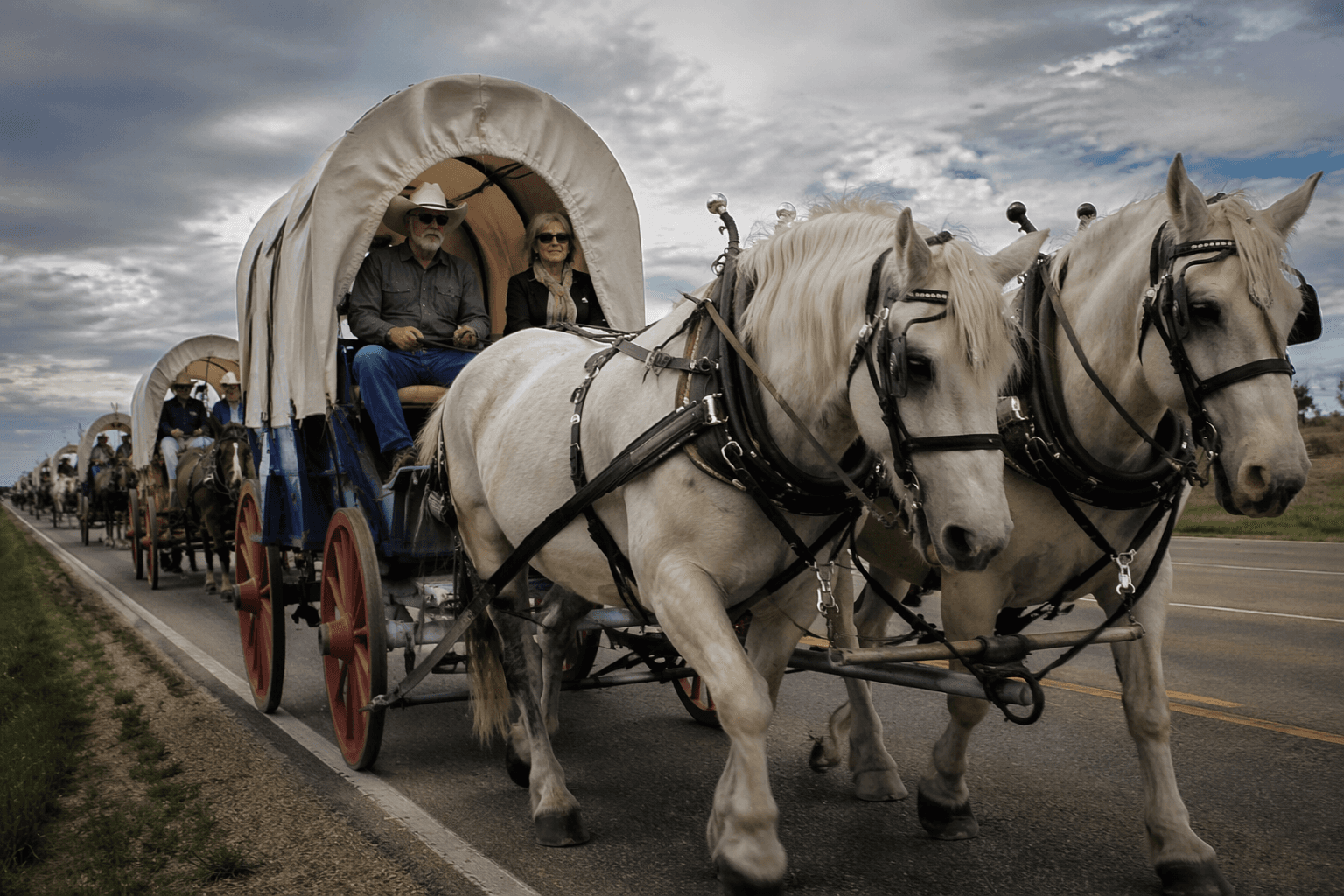
Fort Seward’s information also lays out the practical side of the week: campers are not allowed on the wagon train itself, and vehicles are parked in a designated Jamestown area. Only a limited number of saddle horses are allowed, keeping the train focused on the wagons and the shared pace of the trip.
Local tourism materials place the start at 615 10th Ave NW in Jamestown, the former site of a U.S. Infantry Post overlooking the city. That setting has made Fort Seward a year-round history stop and home to other Old West events, but the wagon train remains its clearest link between the past and the present. For Stutsman County, the train still works as a moving community, drawing people into the outdoors, into volunteer culture and into the stories that shaped Jamestown.
This article was produced by Prism’s automated news system from verified source data, official records, and press releases, then run through automated quality and moderation checks before publishing. The system is built and supervised by the people who set the standards it runs under. Read our full AI policy.
Know something we missed? Have a correction or additional information?
Submit a Tip