Crystal Springs watershed plan heads to Legislature for review
A Bismarck hearing could help Stutsman County push the Crystal Springs plan toward design, with I-94 flooding, cabin access and farm ground still at risk.
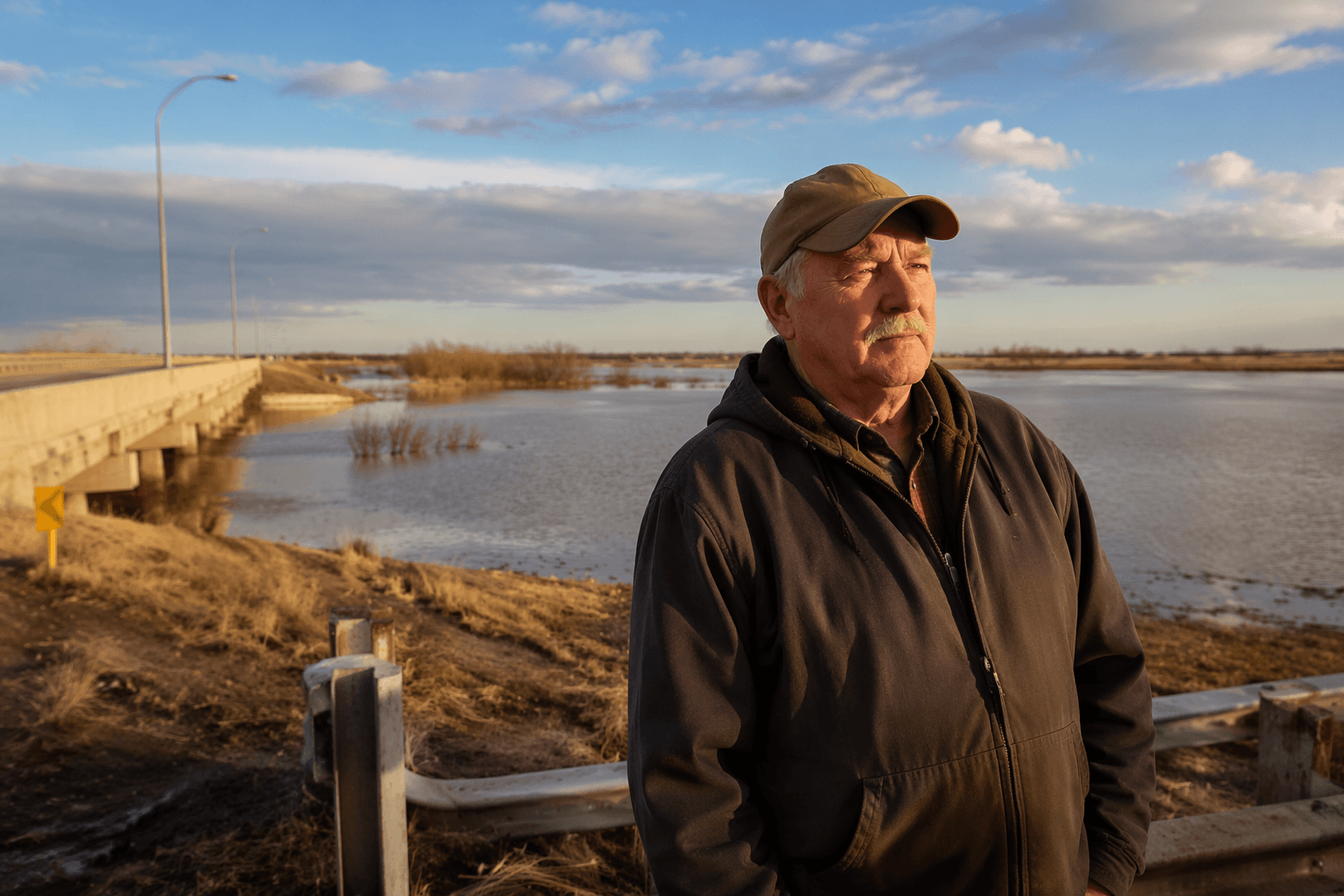
If state lawmakers give the Crystal Springs watershed plan more momentum, the payoff could be felt back home in Stutsman County, where rising water has already threatened Interstate 94, farm fields, cabins and access to Crystal Springs Bible Camp.
Representatives tied to the project are set to make that case Wednesday, June 10, before the Legislature’s Water Topics Overview Committee in the Roughrider Room at the State Capitol in Bismarck. The presentation is expected to explain what the project is, what support it needs, how much local funding is already in place and whether any unresolved issues could slow it down.
The watershed problem is not new. Stutsman County says the water issue has stretched on for several decades and involves surface water, groundwater and precipitation. County materials also say the problem has affected Interstate 94 near Crystal Springs and east of it, turning what once looked like a drainage concern into a countywide planning issue involving roads, rural property, recreation and long-term capital costs.
The steering committee has drawn in a wide range of interests because the consequences are spread across the county. Its contact list includes Stutsman County, the Stutsman County Water Resource District, Kidder County representatives, the Stutsman County Highway Department, the North Dakota Department of Transportation, BNSF, Crystal Springs Bible Camp, the Reule Lake Homeowners Association and agricultural landowner interests.
The project has already advanced beyond the first round of study. In February 2025, meeting minutes showed local funding had been secured, the feasibility study was authorized to proceed and the project had been added to both the Stutsman County and Kidder County Hazard Mitigation Plans. That step opened the door to possible HMGP funding, with a 75% federal, 10% state and 15% local split if the work qualifies.
By July 30, 2025, Houston Engineering said the feasibility study was nearly complete and preliminary engineering would be next. The preferred alternative at that point was a pipeline about 83,000 linear feet long, moving water from Stink Lake to Long Lake Refuge. Engineers identified a target removal elevation of 1,750 feet and a natural overflow elevation of 1,744 feet, with a system designed for 20 cubic feet per second and a 30-inch pipe.
The price tag remains significant. Preliminary engineering was estimated at $976,000, total project cost at about $24.6 million and annual upkeep at about $250,000. The Stutsman County Water Resource Board said it was levying 0.24 mills, could levy up to 4 mills and had about $100,000 accumulated. In June 2025, the North Dakota State Water Commission approved $18,000 in cost-share funding for the Crystal Springs Watershed Initiative.
For Stutsman County, the June 10 presentation is a key checkpoint. If lawmakers see the plan as ready for the next phase, the county could move closer to design and funding decisions that shape whether flood pressure eases around Crystal Springs, or continues to build.
This article was produced by Prism’s automated news system from verified source data, official records, and press releases, then run through automated quality and moderation checks before publishing. The system is built and supervised by the people who set the standards it runs under. Read our full AI policy.
Know something we missed? Have a correction or additional information?
Submit a Tip