Federal Changes, Shutdown Create Medicaid Backlog Across North Dakota
A backlog of 15,000 work items has overwhelmed North Dakota human services agencies after federal changes, a government shutdown, and Medicaid enrollment collided.

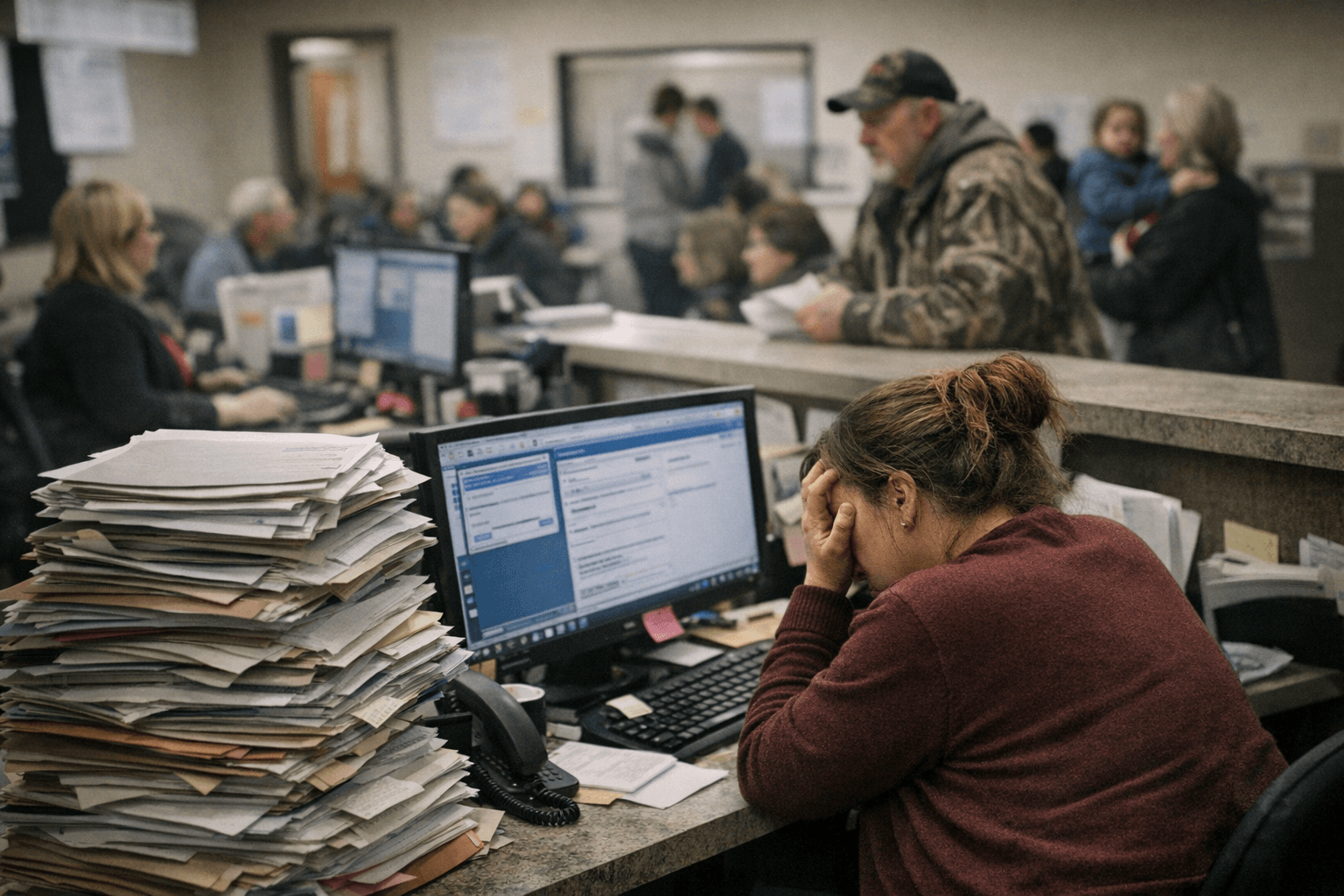
Approximately 15,000 work items have piled up across North Dakota human services agencies after federal requirement changes, the U.S. government shutdown, and Medicaid's recent open enrollment period converged into what Grand Forks County Human Service Zone Director Tammy Knudson called a "perfect storm."
Knudson laid out the scope of the problem at a Human Service Zone Advisory Board meeting Tuesday, March 17. The backlog spans applications and related paperwork for SNAP, LIHEAP, and Medicaid, programs that deliver food, energy, and health assistance to low-income families throughout the state.
"It's not that substantially more people have applied, or staff aren't putting in the work," Bakke said at the meeting, pushing back against any suggestion that the backlog reflects a failure of effort. Knudson echoed that framing. "Unfortunately, we just had a perfect storm," she said.
To work through the backlog, 15 employees statewide have volunteered to focus exclusively on expedited SNAP applications, including one based in Grand Forks. Expedited SNAP applications receive priority processing because the applicant's income, assets, and expenses are low enough to warrant assistance within no more than seven days. Support staff review incoming applications and flag which ones meet that threshold before routing them to the volunteer processors.
Agencies have also made procedural adjustments to redirect staff attention toward the backlog. On-demand SNAP interviews for clients who miss their scheduled appointments have been paused, and supervisors have stopped performing random error proofing, a task they previously handled alongside their regular duties. The state is expected to eventually replace that function with five dedicated error proofing employees and one supervisor.
Knudson said the shift would benefit frontline workers in the meantime. "I think that'll free up our supervisors to provide more one-on-one to our staff who want more support," she said.
She expressed confidence that agencies would reach the other side of the crunch. "This is a point in time that we're going to get past, and it'll get to the point where we're caught up and people are asking for work, and looking for it," Knudson said.
What remains unclear is how long that will take. No timeline has been given for restoring paused on-demand interviews or for the state to finalize its error proofing staffing plan.
This article was produced by Prism’s automated news system from verified source data, official records, and press releases, then run through automated quality and moderation checks before publishing. The system is built and supervised by the people who set the standards it runs under. Read our full AI policy.
Did this article answer your question?