Front Porch Chat at museum explores Battle of the Big Mound
Randy Perkins opened the museum’s 2026 Front Porch Chats with a free talk on Big Mound, tying Jamestown’s past to a contested Dakota Territory battle.
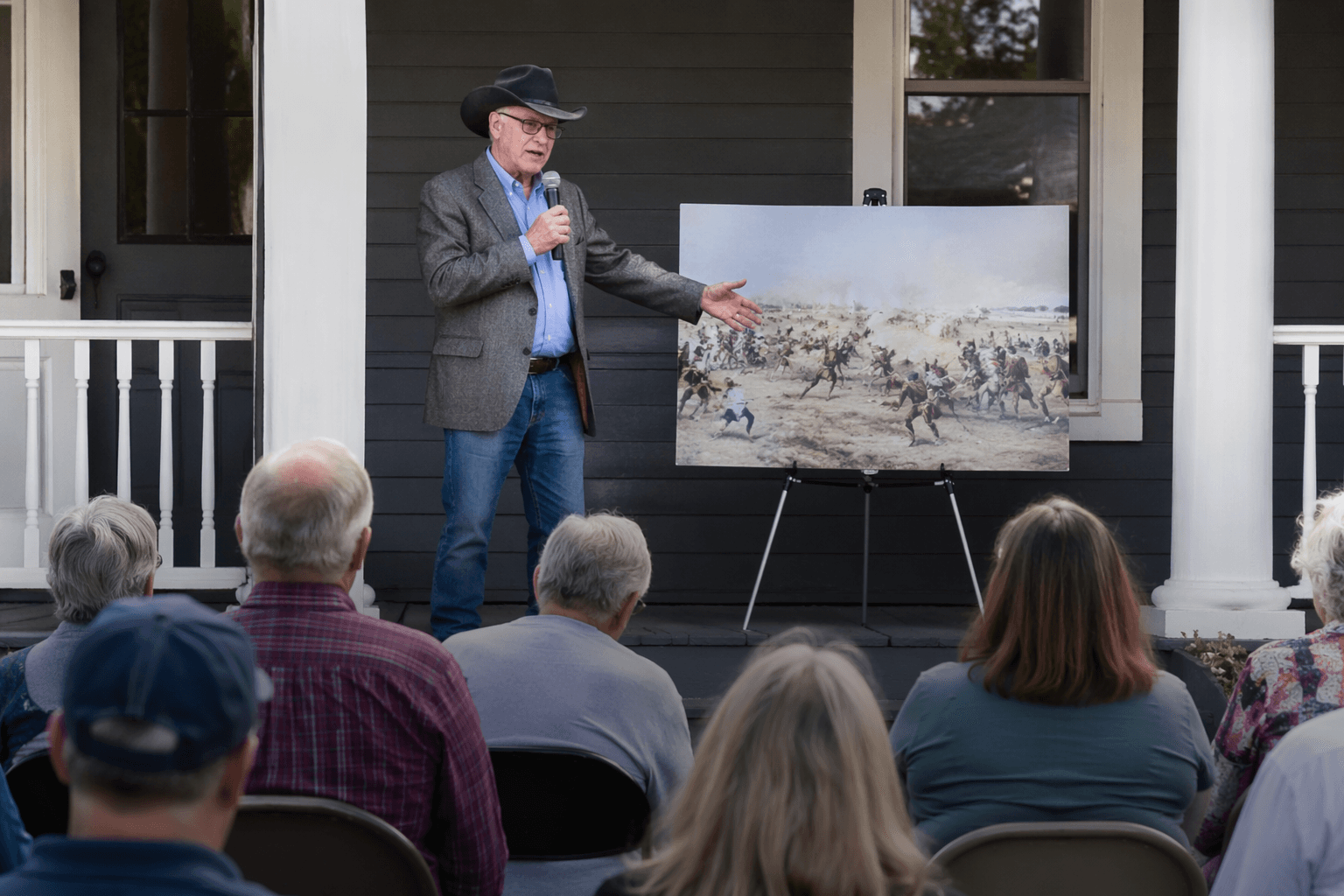
Randy Perkins drew a crowd to the Stutsman County Memorial Museum on Sunday afternoon with a free talk on the Battle of the Big Mound, turning a summer history program into a closer look at one of the region’s most contested chapters. The first Front Porch Chat of the 2026 season began at 2 p.m. at the museum in the Lutz Mansion at 321 Third Ave. SE in Jamestown.
That setting matters in Stutsman County, where the museum’s four floors of pioneer, railroad, military, household, agricultural, medical and archaeological exhibits already anchor a broad view of local life. The Front Porch Chats run at 2 p.m. on Sundays from early June through the end of August, and admission to the museum is free, making the programs one of the easiest ways for residents to connect with the county’s past. Stutsman County was organized in 1873, and Jamestown remains the county seat, so the museum’s historical programming sits squarely in the civic center of the county’s story.
Perkins’ topic reached far beyond a battlefield name on a map. The Battle of Big Mound took place on July 24, 1863, and the State Historical Society of North Dakota says it was the first major battle fought in Dakota Territory by General Henry H. Sibley’s Minnesota volunteers. The battle began a week-long series of running battles in Sibley’s and Sully’s Northwest Indian Campaigns of 1863, a reminder that the conflict was not a single clash but part of a wider military campaign across the Northern Plains.
The Big Mound Battlefield State Historic Site, about ten miles north and east of Tappen in Kidder County, overlooks the area where Native people were present for seasonal buffalo hunts. The State Historical Society identifies leaders associated with the area including Tȟatȟáŋka Nážin, also known as Standing Buffalo, Ožúpi, also known as Sweet Corn, and Iŋkpáduta, also known as Scarlet Point. It also notes that Dr. Josiah S. Weiser was shot during attempted parleys before the fighting escalated, ending any chance for a peaceful outcome.
The battle is often summarized as a Union victory, but the human cost was severe. Prairie Public reports four U.S. casualties and about eighty Dakota dead or wounded. For Jamestown and the rest of Stutsman County, that history helps explain why a simple museum talk can carry real weight: Big Mound is not just a distant event from 1863, but part of the layered history that still shapes how the region understands land, conflict and memory.
This article was produced by Prism’s automated news system from verified source data, official records, and press releases, then run through automated quality and moderation checks before publishing. The system is built and supervised by the people who set the standards it runs under. Read our full AI policy.
Know something we missed? Have a correction or additional information?
Submit a Tip