Gussner Elementary fifth graders bring historical figures to life in costume
Gussner fifth graders turned history into a live performance, dressing as famous people and building confidence, public speaking skills and pride in Jamestown's classrooms.

History steps out of the textbook
At Gussner Elementary, fifth grade history did not stay on the page. In the classroom project highlighted in The Jamestown Sun’s “Historic characters,” students studied a famous person, learned what that figure accomplished and then stepped in front of classmates dressed in costume to present the story as if they had become the character themselves.
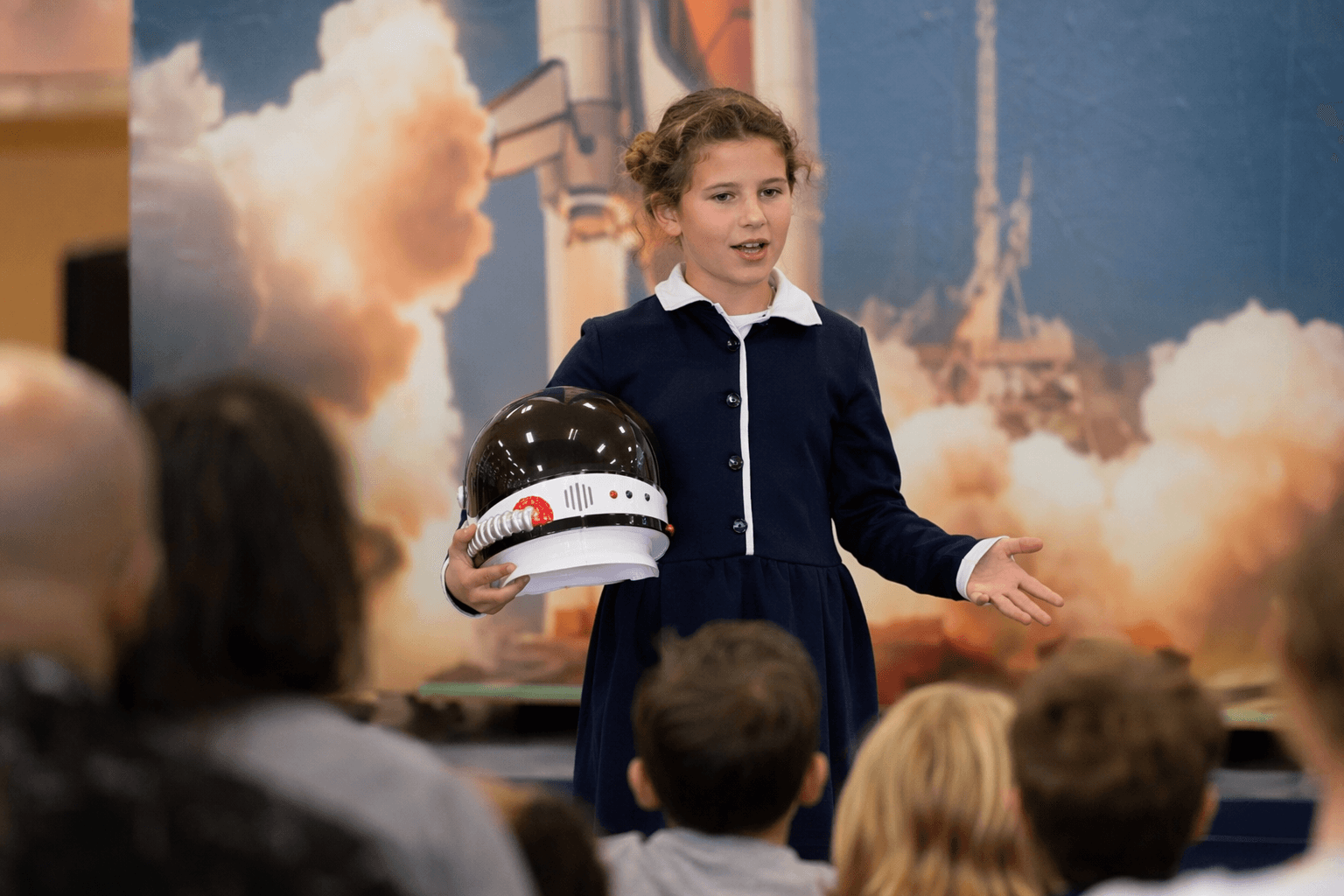
That simple format gave the lesson its power. Instead of memorizing names and dates in isolation, the students had to research, sort out the most important facts and explain why their chosen figure mattered. The costumes turned the work into a performance, which made the presentations easier to remember for classmates and more meaningful for the children doing the speaking.
A lesson built around confidence
The biggest payoff in a project like this is not just content knowledge. It is the moment a fifth grader has to look up, speak clearly and carry the story in front of an audience. That kind of practice helps students build public-speaking skills, confidence and comfort putting their own work on display.
It also changes how history feels. When a child has to embody a historical figure long enough to talk about that person’s life and achievements, history becomes personal instead of abstract. Students are not simply repeating a paragraph from a textbook. They are making decisions about what mattered, what to leave out and how to tell a story in a way other people can follow.
For a school community, that matters. The project gives teachers a way to see research, comprehension and presentation skills all at once, while parents and classmates get a more vivid look at what learning looks like inside the building.
Why the Gussner setting matters
William S. Gussner Elementary gives that project a distinctly local stage. The PK-5 school sits at 1509 4th St. NE in Jamestown and serves 274 students with 48 teachers and staff. Its colors are purple and gold, and its mascot is the Wildcats. Principal Luke Anderson leads the school, which is one of four elementary schools in Jamestown Public Schools.
Those details matter because Gussner is part of a district that is visible and closely tied to the community it serves. In a place like Jamestown, a classroom project can ripple beyond one grade level because families, neighbors and school staff are often connected through the same events, buildings and routines. A fifth-grade presentation about a historical figure becomes more than an assignment when it is happening in a school that is already a familiar part of daily life.
The result is a school moment that feels public in the best sense. Students are not hidden away while they learn. They are seen, heard and encouraged to present what they know.
A local school story with community reach
Jamestown Public Schools is located in the county seat of Stutsman County, and that gives the district a central place in local life. The district includes four elementary schools, a middle school, a high school, an alternative learning center and a transitional living program for students with disabilities. Gussner’s fifth-grade project fits into that larger system as one small example of how learning can be active, structured and visible.
The county itself gives the story added context. Stutsman County was organized in 1873 and today has a population of 21,593. It covers 2,298 square miles, making it the second-largest county in North Dakota. Jamestown sits at the intersection of Interstate 94 and Highway 281, a location that underscores how the city connects local life to larger travel and trade routes while still keeping a strong small-community identity.
That blend of scale and familiarity is part of what makes stories like this resonate. In a large rural county, a fifth-grade classroom can still feel like a central civic space. When students dress as historical figures and present what they learned, the school becomes a place where history, family support and community pride meet.
Why this kind of project sticks
The strength of the “Historic characters” project is that it combines several kinds of learning at once. Students have to research, summarize, speak and perform. They also have to think about the human side of history, not just the dates and labels. A costume helps, but the deeper lesson is that historical figures were people with ideas, choices and consequences that still matter.
For Gussner, that kind of work reflects well on the teachers and families who support it, but it also says something larger about how learning happens in Jamestown. The classroom is not just a place for worksheets. It can be a place where children learn to speak in public, take pride in their work and connect with the past in a way that feels immediate.
At a school with Wildcats colors and a long-standing place in the district, fifth graders bringing historical figures to life is more than a one-day activity. It is a clear reminder that when students are given a chance to perform what they know, history can become something they carry with them long after the costumes are put away.
This article was produced by Prism’s automated news system from verified source data, official records, and press releases, then run through automated quality and moderation checks before publishing. The system is built and supervised by the people who set the standards it runs under. Read our full AI policy.
Did this article answer your question?