Holiday Recycling Surge Strains Regional Sorting Systems and Services
Recycling operations in the Fargo Moorhead region saw a sharp increase in materials following Black Friday, placing extra strain on sorting facilities and municipal programs. The surge matters to Stutsman County residents because shared recycling systems and transfer stations across eastern North Dakota face contamination, safety risks, and potential service impacts unless residents follow guidance on what to recycle and how to dispose of problem items.
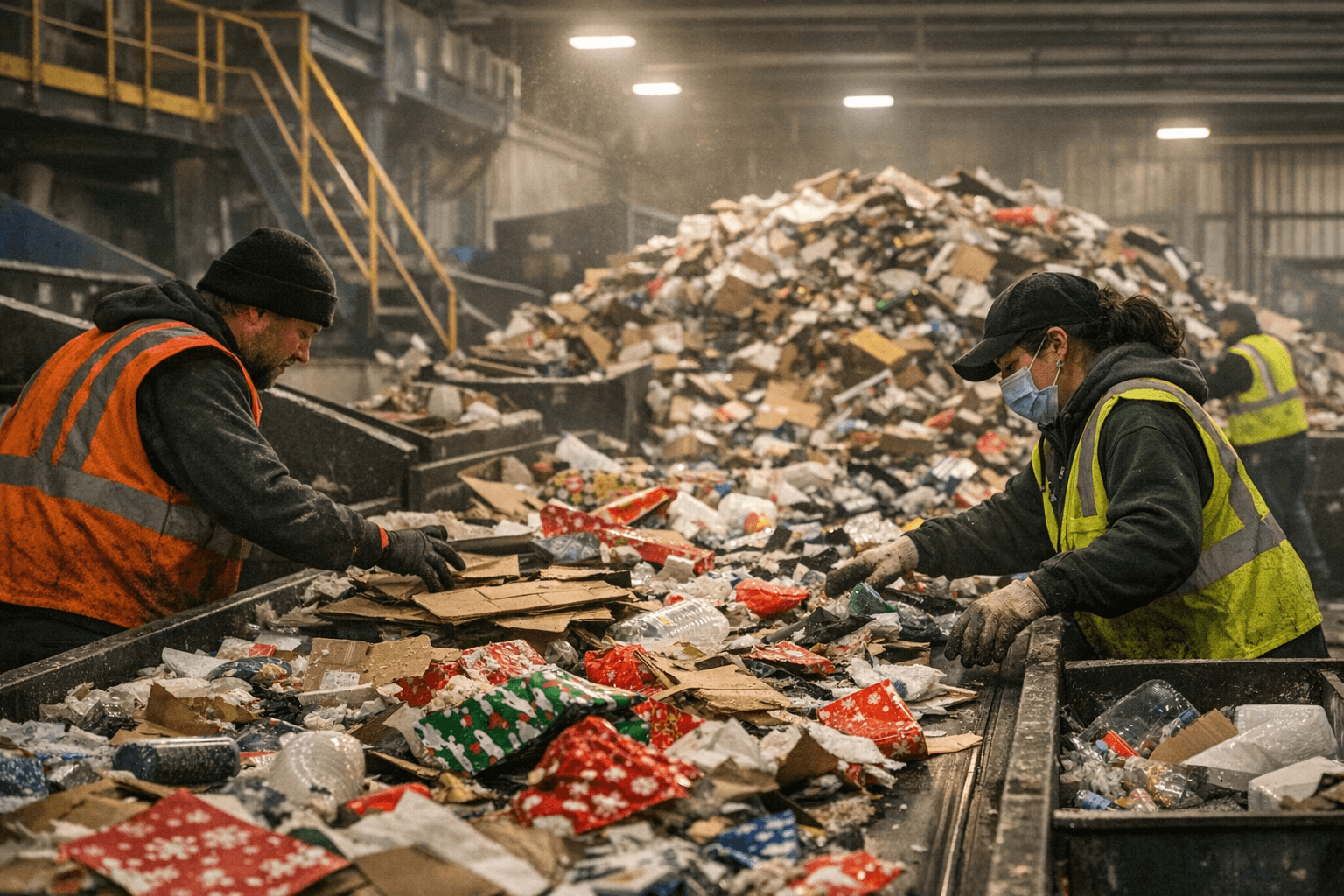
Facilities that handle curbside recycling in the Fargo Moorhead area experienced a notable uptick in material around the holiday season, municipal recycling coordinators and MinnKota EnviroServices reported on December 23. Cardboard volumes rose sharply after Black Friday and were expected to remain high through January. At the same time special collections, such as dedicated drop off events for holiday string lights, were used to remove problematic items that can damage sorting equipment.
The immediate operational concern was contamination and entanglement. Holiday lights, wires and other stringed decorations can tangle in sorting machinery, increase maintenance needs and create safety hazards for workers who must periodically halt equipment to remove them. Many types of gift wrap and poly mailers are not recyclable through standard curbside streams, yet they arrive mixed with cardboard and paper, lowering material quality and increasing the share that ends up in landfill.
For Stutsman County residents the impacts are practical and financial. Transfer stations and shared recycling systems that serve eastern North Dakota rely on sorted, relatively clean loads to operate efficiently. Increased contamination can raise processing costs and slow collections, and those costs are often passed along to municipalities and residents. Rural households that travel to drop off centers may face longer waits or reduced service windows if facilities must devote extra time to sorting and equipment repair.
Public health and social equity dimensions matter as well. Workers at sorting facilities face higher risk when handling tangled lights and contaminated loads, and smaller or underfunded municipalities may lack capacity to run special collections. Donation of usable items to thrift stores and community organizations reduces waste and helps households with limited resources, but access to donation options varies across the region.
To reduce pressure on regional systems residents were urged to recycle widely accepted materials like clean cardboard, avoid putting gift wrap and poly mailers into curbside recycling, use special drop off events for string lights and consider reuse and donation options for unwanted goods. Local policy responses could include clearer labeling, expanded special collection events, and funding support for rural transfer stations to protect workers, control costs and promote equitable access to recycling services.
This article was produced by Prism’s automated news system from verified source data, official records, and press releases, then run through automated quality and moderation checks before publishing. The system is built and supervised by the people who set the standards it runs under. Read our full AI policy.
Did this article answer your question?